Translate


Showing posts with label montgomery bus boycott. Show all posts

Friday, May 3, 2013

Rosa Parks, Martin Luther King, Jim Crow & Small Work Spaces

How much space do you need to change the world?

Rosa Parks, Martin Luther King, Montgomery Bus Boycott, Montgomery Improvement Association Meeting
Rosa Parks (center front) 
Montgomery Improvement Association Meeting
Led by Dr. Martin Luther King, Jr.
Freedom Walkers: 
The Story of the 
Montgomery Bus Boycott 

Rosa Parks and Martin Luther King used organizational skills to lead the Montgomery Bus Boycott.


"Do you think Rosa Parks and Martin Luther King had grand offices with marble floors and beveled glass windows and doors to conduct Montgomery Bus Boycott business and the Civil Rights Movement?" My mother asked. "Of course they didn't! And without any luxuries, they went about the business of civil rights to kick open some doors for you! Do you think Jim Crow cared about the size of their office or if they hold meetings sitting on folding chairs? You think they needed a big office or even chairs to do what they were doing? No!"

My mother took no nonsense when it came to entitlements and me begging for a larger share of our small house to spread out my things. She was strict in her belief that one had to take what one had and do the most they could with it before even daring to think they would get some bigger or better. As she was preaching to me, I realized I would not get a shelf in another room for my stuff. And she made me feel so bad about my little problem that I stopped begging for better accommodations and decided to do more with my space. Looking at those streamlined corners made me want to go on and do something important, like devoting time on a regular basis to cleaning my room.

It was 10 years after all that fussing, my mother's words were still with me as they are still with me today and I see her point. Martin Luther King, Rosa Parks and the rest of them made something really important happen to in the nation and the world in their Montgomery Bus Boycott meeting rooms, that were small and temporary, moving from place to place because of finances and politics. Although the Montgomery Bus Boycott lasted more than a year 1955-56, they led communities all over the nation to use nonviolence and morality to gain racial change in the United States, leading eventually--ten years later--to President Lyndon Johnson signing the Civil Right Act in 1964 and the Voting Rights Act in 1965. 


Lyndon Johnson signs 1964 Civil Rights Act


Paying for College without Going Broke, College Admissions Guide
Paying for College
Without Going Broke
 2014 Edition
(College Admissions Guides)
"You think a president can become president without organizational skills or a plan? Do you think Miss Rosetta can keep her beauty shop running without organizational skills or a plan? You think I can keep this house running without organizational skills or a plan?" 

Oh, that's where she's going--organizational skills. "Why do I need a college education?" I asked her. 

"So when things change," she said, "You will be ready. And if they don't change, don't you know want to know how to do things anyway? Oh, yes! You are going to college! And you will get a scholarship! I can't go broke sending you to college. I'm already broke!"

I never thought I was listening to my mother, but I must have been paying closer attention than I thought. I owe my organizational skills and abilities to plan to my mother. She was as orderly in her professional and domestic habits as she was in her beauty habits. With little money, she taught me to live large in a small space and manage the space as meticulously as I would a mansion. 

"Everything depends on your plan and organizational skills; messy room, messy mind," my mother said.


I hated those talks about how small my study space had to be and that I had to make the best of it anyway because my little room was not going to grow any bigger in our tiny house. "If you're not organized, you can't get a college education, let alone get a scholarship to help pay for a college education." I never had anything to contribute to those discussions and I never understood where my mother was leading me. No one I knew needed or used their college education. We weren't allowed to do anything meaningful when I was growing up--janitor, cleaning lady, cook, driver, preacher, shoe shiner, barber, beautician or teacher in black schools. But I listened to her anyway. I knew there was a lesson in all her talk, somewhere.


We lived in a very small cottage with no built-in closets, just shallow alcoves where my mother devised ingenious ways of storage and called it her style, ship living

How much worse could living on a ship have been, I thought. Dolls and dogs had more room in their houses than we did. My room was like a small box and even my mother had to be inventive to make it work, especially with an array of relatives always on hand needing a place to sleep for a few days and sometimes much longer.

"Everything has a place," she said. "So, let's make sure we put everything back in its place. You don't need much to organize a place to work or study," she said, helping me arrange the little office. "Some boards, nails, a curtain and paint will do it."

My mother arranged file storage in shoe boxes under her bed and had a tiny make-shift office with a desk and shelves in the corner. To save space, she later ordered a corner desk from a mail order company and relocated her tiny make-shift office into my room. It fit nicely into a portable closet my father had made when he was learning cabinetmaking in Veteran's School after World War II. 

My mother believed in using every inch of space to maximum efficiency and she made me feel guilty by comparing me with great people like Rosa Parks. 


Google Custom Search


Clutter made my mother physically ill. She organized everything! And I will not even mention her kitchen. All spoons of the same size were kept together; pots with their lids stayed together. Dishcloths were folded in a drawer and stacked by color. My grandmother, who lived with us, was the only person allowed to touch my mother's kitchen. My father and I didn't mind. It kept us from having to wash the dishes.

All of these events influenced my mother's rearing techniques. She could see the changes and wanted me to be ready. A thing as seemingly benign as keeping my room clean and clutter free went a long way in preparing me for the coming changes and the competition those changes would bring. I am astonished by my mother's vision. She had no way of knowing the full impact technology would have on me. Although, I admit, she loved electronics and science. Each time new gadgets came on the market that she could afford, she got them. We had color television set when I was growing up and pretty sophisticated stereo systems. 

I can only imagine her enthusiasm with laptop computers and cellphones. By the time, the world became digitized, my mother had checked her interest in electronic gadgetry at the door. In her later years, she was only mildly interested in such things, although she was very curious about social media and how it would probably ruin the world. But I know she would have been delighted in the compact file storage of a flash drive. 

I'm not affected as severely by disorganization as my mother was, but disorganization causes me to feel vulnerable about my work and my life. When I am disorganized and surrounded by papers and business cards I have collected, some of which I no longer recognize, I lose concentration, start browsing the web, watching television, snacking or calling a friend. Avoid the dangers of disorganization and clutter by any means necessary! In the wake of Rosa Parks and the Montgomery Bus Boycott (1954-55), black families used every means to raise the future of their children and my mother was no exception. 


Sunny Nash
Sunny Nash
Bigmama Didn't Shop  At Woolworth's by Sunny Nash
Bigmama Didn't Shop
At Woolworth's

by Sunny Nash

Hard Cover
Bigmama Didn't Shop 
at Woolworth's

Amazon Kindle
Bigmama Didn't Shop 
at Woolworth's
Sunny Nash is the author of Bigmama Didn't Shop At Woolworth's (Texas A&M University Press), about life in the with her part-Comanche grandmother during the Civil Rights Movement. Nash’s book is recognized by the Association of American University Presses as essential for understanding U.S. race relations; listed in the Bibliographic Guide to Black Studies by the Schomburg Center for Research in Black Culture in New York; and recommended by the Miami-Dade Public Library System in Florida for Native American collections.

Nash is also a producer, photographer, blogger and a leading writer on race relations in America--writes books, blogs, articles and reviews, and produces media and images on U.S. history and contemporary American topics, ranging from Jim Crow laws to social media networking, using her book, Bigmama Didn't Shop at Woolworth's, chosen by the Association of American University Presses for its value to understanding of U.S. race relations, to relate experiences about life with her part-Comanche grandmother.  


© 2014 Sunny Nash. All Rights Reserved Worldwide.
~Thank You~


Wednesday, April 3, 2013

Woolworth Sit-ins & Jim Crow Laws

Rosa Parks, Martin Luther King and other sit-ins and demonstrations destroyed Jim Crow laws and changed civil rights.


Alexandria Library 
Sit-in & Arrest
Even libraries were 
segregated. Those 
participating in sit-ins 
were punished  and jailed.


George Zimmerman Family
Photo: CNN
Grandmother
Great Grandfather
Mother, the infant

Those historic civil rights actions are being remembered as protesters demonstrate against the George Zimmerman verdict.


How do the more recent demonstrations against Trayvon Martin's death in the Zimmerman case differ from historic civil rights marches? One difference is that historic protests were aimed at crushing Jim Crow laws, a specific set of statues written especially to discriminate against former slaves after the Civil War. These laws were supported, in part, by organized racist groups that were formed to enforce Jim Crow laws, outside the real law. On the contrary, protests of the George Zimmerman verdict in the shooting death of Trayvon Martin are not aimed specifically at any group of persons organized to destroy freedom of people of color or interfere with their ability to get an education. Right?

Some say that the system is structured against people of color and interferes with their education and their freedom. The question that arises in the Zimmerman case is: Who are the people of color? Certainly Trayvon Martin is a person of color. But what about George Zimmerman, whose great grandfather is said to be a black man? Wouldn't that make George Zimmerman a black man? The one drop rule would certainly apply here. Historically, if it can be shown by a person's appearance or demonstrated in a person's bloodline that African heritage is present, then the person is classified as black. If George Zimmerman is technically a black man, how can the death of Trayvon Martin be a white-on-black offense and not black-on-black? I'm simply asking questions. Please, provide your own answers.

The Woolworth Sit-ins starting in 1960 were not the only sit-ins or the first protests of Jim Crow laws. Throughout the  history of slavery in the United States, people demonstrated against violent treatment. After emancipation, people demonstrated against violent treatment and inferior access to services and facilities. One hundred years later, people were demonstrating to be allowed to vote.

This article is intended to look back at little known protests and figures leading up to the modern Civil Rights Movement, which some say stated officially when Rosa Parks ignited the Montgomery Bus Boycott and launch Martin Luther King as the leader of the movement.


In 1939, African-American civil rights attorney Samuel Wilbert Tucker, organizer of a sit-in to desegregate the Alexandria, Virginia library. Tucker, was born 100 years ago on June 18, 1913, the same year as Rosa Parks


Tucker, born in Alexandria, Virginia, rose to the rank of Major in the United States Army during World War II, spent most of life, since age 14 when he refused to give up his seat on a streetcar to a white passenger, fighting Jim Crow laws and leading the cause for civil rights.

Virginia public library case was an early example of the non-violent Civil Rights Movement, led by Martin Luther King, that would spread across the nation through the 1960s. These protests were intended to give the word public it true meaning that included African Americans and other people of color in the access to public facilities and services, and equal education, to prepare them for a college education.

That same year, 1939, Marian Anderson's attempt to defy Jim Crow laws launched her as the voice of civil rights. 


Marian Anderson was not just an important American singer, she was a U.S. civil rights leader in her own right. Choosing to sing opera and recital music, Anderson brought classical music to the African American community as well as to the world. Much of her career was centered in Europe because of Jim Crow laws in the United States.

First Lady Eleanor Roosevelt & Marian Anderson
On the eve of World War II (WWII), Anderson and many others--like A. Philip Randolph, labeled the most dangerous black man in America--played a crucial role in fueling the Civil Rights Movement when she and First Lady Eleanor Roosevelt put their heads together and arranged for the Lincoln Memorial performance after Marian Anderson was snubbed by the Daughters of the American Revolution (DAR, the organization in charge of Constitution Hall in Washington DC. When Jim Crow laws prevented Anderson from singing at Constitution Hall, First Lady Eleanor Roosevelt helped to arrange a concert for Anderson at the Lincoln Memorial, where the African American opera singer drew an audience of more than 75,000. Read more about Marian Anderson, Jim Crow laws and Civil rights.


Search here for any information.


In 1942, the Congress of Racial Equality (CORE) sponsored sit-ins in Chicago, in St. Louis in 1949 and Baltimore in 1952.


Rosa Parks had challenged Jim Crow laws in Montgomery bus policy twelve years before she boarded the bus on December 1, 1955, and started the Nine months before the boycott, 15-year-old Claudette Colvin was dragged off a Montgomery bus by police, handcuffed and jailed on March 2, 1955. Her case, got little notice and no support. Review and purchase Claudette Colvin at links on left. In 1943, Parks refused to board the bus using a rear entry, the door for black bus riders. Parks and her mother had always refused to enter the bus through the rear door, while other black riders had to use the rear door. 

Book: Claudette Colvin: Twice Toward Justice
Claudette Colvin: 
Twice Toward Justice 
by Hoose, Phillip M. 
[Hardcover 
(Google Affiliate Ad)


On March 2, 1955, nine months before the Montgomery Bus Boycott, 15-year-old Claudette Colvin was dragged off a Montgomery bus by police, handcuffed and jailed, but her case, got little notice and no support. 

At the end of 1955, Rosa Parks ignited the Montgomery Bus Boycott and helped to launch Martin Luther King as the leader of the Civil Rights Movement. This legacy affected civil rights and race relations in America from Jim Crow city buses to black actors in Hollywood films

In 1957, a minister organized student non-violent sit-ins in Durham, North Carolina at the Royal Ice Cream Shop. The protesters were arrested for trying to occupy the whites only section of the business. After being convicted in North Carolina courts, the seven appealed their case in the United States Supreme Court. The high court refused to hear the case.

An Oklahoma I Had Never 
Seen Before: Alternative
Views of Oklahoma His
(Google Affiliate Ad)


On August 19, 1958, Clara Luper, private citizen and mother of two, staged the most effective anti-Jim Crow law luncheon counter sit-in in American history before the Woolworth sit-ins some two years later. Luper, frustrated with segregation in her hometown of Oklahoma City decided to take action. 


By the late 1950s, the Civil Rights Movement had officially begun and individuals and groups nationwide were organizing protests of Jim Cow laws.


Clara Luper led twelve children from the Oklahoma City NAACP Youth Council, including her own children, to desegregate a drugstore lunch-counter. Clara Luper and the children began a six-year series of sit-ins at other lunch counters, restaurants, and cafes in Oklahoma City, leading to desegregation in three other states.


Woolworth Sit-ins in Greensboro, North Carolina, in 1960


Woolworth Sit-ins 1960
The Woolworth Sit-ins in Greensboro, North Carolina, in 1960 occurred two years after Clara Luper protested in Oklahoma City.

The Woolworth sit-ins were more influential in changing Jim Crow laws because they received national attention in the mainstream and black presses, drawing attention to the growing need to change Jim Crow laws. In some ways the Woolworth sit-ins were a culmination of the civil rights protests of the 1950s, which picked up in momentum in the 1960s and raised awareness to a new level under the leader of the Civil Rights Movement, Martin Luther King.

Rosa Parks
Woolworth's Sit-ins, Rosa Parks and Jim Crow LawsWoolworth's sit-ins, riding the waves of Rosa Parks and the Montgomery Bus Boycott, the Greensboro Four helped to destroy Jim Crow laws by integrating lunch counters and making getting into college and good public schools possible for black students.


Morrill Land Grant College Acts, Jim Crow & Woolworth'sThe 1890 Morrill Land Grant College Act required that former Jim Crow law Confederate states make getting into college possible for African Americans.

When we compare these historic civil rights struggles with crowds wandering aimlessly on the streets of some cities professing to protest the shooting death of Trayvon Marting at the hands of George Zimmerman, the motives seem a little week against those of Rosa Parks, Martin Luther King, the Greensboro Four, the Freedom Riders, Brown v the Board of Education, and so many others. You may begin to wonder, yourself, if this current protest is perhaps a mere hijacking of Trayvon Martin's death and the George Zimmerman verdict to use a boy who has died and his grieving family for selfish political reasons that have little to do with freedom, education or justice.


Search for here!
Google
Join Sunny Nash on Facebook
Join Sunny Nash on Face Book
When I wrote my book, Bigmama Didn't Shop At Woolworth's, there was no FaceBook, which requires precautions against political correctness.


Follow Sunny Nash @ Twitter
Follow Sunny Nash
Communications have changed and are light years ahead of the tools I used writing my book and columns on a personal computer. I had no idea how easy it would become to inflict  political incorrectness.


Join Sunny Nash on Huffington Post
Also join me on Huffington Post for my comments and discussions on civil rights, race relations, politics, style, entertainment and other pressing issues of the day.


Sunny Nash is the author of Bigmama Didn't Shop At Woolworth's (Texas A&M University Press), about life in the Brazos Valley with her part-Comanche grandmother during the Civil Rights Movement. Nash’s book is recognized by the Association of American University Presses as essential for understanding U.S. race relations; listed in the Bibliographic Guide to Black Studies by the Schomburg Center for Research in Black Culture in New York; and recommended for Native American collections by the Miami-Dade Public Library System in Florida. 


by Sunny Nash 
Kindle & Hardcover

Sunny Nash
Sunny Nash
Sunny Nash--author, producer, photographer and leading writer on U.S. race relations in--writes books, blogs, articles and reviews, and produces media and images on U.S. history and contemporary American topics, ranging from Jim Crow laws to social media networking, Nash uses her book to write articles and blogs on race relations in America through topics relating to her life--from music, film, early radio and television, entertainment, social media, Internet technology, publishing, journalism, sports, education, employment, the military, fashion, performing arts, literature, women's issues, adolescence and childhood, equal rights, social and political movements--past and present—to today's post-racism.


Lyndon Johnson Civil Rights Act of 1964 
Destroyed Jim Crow laws in the federal 
legal system of the United States.

-->


© 2013 Sunny Nash. All Rights Reserved Worldwide.
~Thank You~



Bookmark and Share


My Zimbio
Top Stories

Thursday, September 6, 2012

Autrilla Scott & A Place Called Hope

Autrilla Scott, like Rosa Parks, protested Jim Crow laws and fought for civil rights through education, and social and political activism. 


Autrilla Scott & Sunny Nash
Autrilla Scott (left) & Sunny Nash 

Autrilla Scott, like Rosa Parks, protested Jim Crow laws and fought for civil rights to change the world around her and to keep hope alive.  


I will miss Autrilla. She was a lovely person, a generous person with a goal to help other people. She, like Rosa Parks, lived through the era of Jim Crows laws and did not allow those racial restrictions to prevent her from living a satisfying life. In fact, like Rosa Parks, Autrilla Scott made great contributions in the city of Long Beach, California, toward removing barriers from the employment of both women and African Americans. "There was a Civil Rights Movement in California," Autrilla told me. "And I guess, I was a part of it."

BREAKING THROUGH Lighting the Way Edited by Sunny Nash
BREAKING THROUGH Lighting the Way
Edited by Sunny Nash

(l-r, rear) Evelyn Knight, Patricia Lofland
Bobbie Smith, Alta Cooke, Carrie Bryant
Vera Mulkey, Wilma Powell, Doris Topsy-Elvord
(seated l-r) Autrilla Scott, Maycie Herrington
Dale Clinton & Lillie Mae Wesley (not present) 

Limited Edition, Collector's Package Includes: 
Book, DVD, Signed Portrait


Autrilla Scott is among those in BREAKING THROUGH Lighting the Way, a book of historical profiles about women who made a difference in the history of Long Beach, California, The Foreword was written by Carolyn Smith Watts, who developed the concept for the project when she assembled the group for a photograph that was later displayed at an exhibition in the main gallery of the Historical Society of Long Beach.


These civil rights pioneers were part of the Civil Rights Movement in Long Beach, a movement with which few outside of the area are familiar. 


In fact, most people do not associate California with the struggle for civil rights because Civil Rights Movement efforts were concentrated in the Deep South, where Jim Crow laws were entrenched and had prevailed for centuries. 

For some time, California had remained outside the range of race riots, until the San Francisco riot in 1966 and the Watts Riots in 1965, the year that one of these women, Bobbie Smith, arrived in Los Angeles for her new job and found the city on fire. Later she was the first black woman in Long Beach to hold a public office, when she was elected to the Long Beach United School District. I had the opportunity to sit down and talk with these remarkable women about five years ago.


BREAKING THROUGH Lighting the Way

Like Rosa Parks, Autrilla Scott and the other women of BREAKING THROUGH Lighting the Way broke ground in civil rights and the destruction of Jim Crow laws.


Rosa Parks, Montgomery Bus Boycott


However, long before the Watts Riots, California, which also had a smattering of Jim Crow laws on its books, but had an abundance of racial intolerance. Autrilla told me about times that she was discriminated against in receiving services. Those types of issues could only be addressed through the Civil Rights Movement, initiated  by people like Autrilla Scott, Rosa Parks, the Montgomery Bus Boycott, Martin Luther King and other individuals and events in the Deep South.

The women in BREAKING THROUGH Lighting the Way are some of the first black women to hold certain corporate, governmental, political and business positions. For example, among them are the first black U.S. Chief Warfinger, the first black woman to chair a U.S. Defense Advisory Committee and the first black female Long Beach Vice Mayor. 

Martin Luther King Montgomery Bus Boycott
Martin Luther King
Montgomery Bus Boycott


One of these women marched with Dr. Martin Luther King, Jr., from Selma to Montgomery, Alabama. One of the women in this study, a clerk at the Tuskegee Airman School, became a nationally known historian of Tuskegee Airman History, collected by the University of California.

Like Rosa Parks and Martin Luther King, Autrilla Scott struggled against Jim Crow laws and fought for civil rights


Autrilla Scott was born in the cotton town of Hope, Arkansas, in 1930, the youngest of seven children. This was the height of the depression and Jim Crow laws, making opportunities scarce for everyone and particularly for African American females like Autrilla's. However, her family's economic struggle did not match the hardships and desperation of most of their southern black and white contemporaries. "My father was in the importing and exporting business," Autrilla told me. "Using his wagon, my father picked up goods from other parts of the country that the trains brought to Hope and then he delivered them to local stores. It was a good living, but as black people, we faced the same discrimination as other black families in the community and across the South."

Autrilla's father died when she was nine years old, leaving the family without primary support, forcing her mother to become head of the family and, for the first time, working outside the home. Autrilla's siblings, too, then joined the ranks of their impoverished neighbors. "My mother also took in washing and ironing for other people to take care of us," Autrilla said. "She worked very hard to help us go to school. Our education was important to her. When I was in in teens, and in high school, I cleaned houses and babysat to help my mother pay the bills, but she insisted I stay in school and finish."

"When I was a young woman, the only way out of poverty," Autrilla told me, "Was  through education and hard work. That's how people can keep hope alive, even today." 


Autrilla Scott Believed in Education
Autrilla Scott
Believed in Education
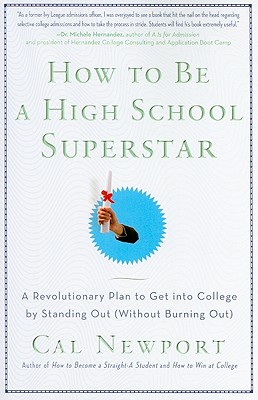
High School Superstars
How to Be a High School Superstar:
A Revolutionary Plan to Get Into Co
(Google Affiliate Ad)
However, the schools available to Autrilla and other black students were segregated and many were inferior because of lack of funding. This was the same situation Rosa Parks had faced nearly two decades before in Alabama. Civil rights crawled very slowly in education and other institutions in rural areas, as well as rapidly growing U.S. urban pockets nationwide. In addition, civil rights were stymied by Jim Crow laws, lynching, terrorism, false imprisonment and prohibition of voting rights of African Americans. Civil rights did not change--could not have changed--without people like Autrilla Scott; Rosa Parks, 17 years older and Autrilla; Martin Luther King, just one year older than Autrilla; and so many others before her. 

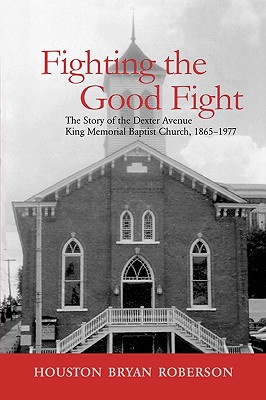
Fighting the Good Fight:
The Story of the Dexter
Avenue King Memorial
(Google Affiliate Ad)
Autrilla and others in BREAKING THROUGH Lighting the Way and around the nation were in the local trenches fighting for the same civil rights cause as those activists were fighting for on the national level. Local trenches, prevalent all over the country, made the Civil Rights Movement into a national movement and made a significant contribution to the success of that national movement. After all, the national movement that became the Montgomery Bus Boycott and whose victory in the courts began the dismantling Jim Crow laws, started as a local movement in Montgomery, Alabama, by a local woman named, Rosa Parks.

As a teenager, Autrilla Scott babysat Bill Clinton before he was William Jefferson Clinton.


Photo - Toddler Bill Clinton
Toddler Bill Clinton

During my interview with her, Autrilla told me how she met the man who would grow up to become the 42nd President of the United States, William Jefferson Clinton. 


"When I was in my teens," Autrilla said. "I took work cleaning houses so that I could stay in school and help my mother. One day when I was cleaning Roger Clinton's apartment, he came home with a little boy about two or three years old. He introduced the baby to me as Billy and asked me if I could babysit the child for a short time while he and the child's mother, Virginia Blythe, went on a date. I told him yes, I could." 

Autrilla babysat the future president many times after their first meeting. "He was a good little boy," she said. "And I didn't mind taking care of him. He was polite and very smart. knew even when he was quite young he would do something important with his life, but I have to admit I didn't know he would become President of the United States."

Bill Clinton & Autrilla Scott
Bill Clinton
& Autrilla Scott


After Roger Clinton and Virginia Blythe married, Billy eventually took his stepfather's last name, becoming William Jefferson Clinton. Autrilla Scott and Bill Clinton never forgot each other and the two of them met many times after those long ago days back in a place called Hope. 

There are special people like Autrilla Scott whose hands and heart have affected the great and small and left them better. When I see Bill Clinton, I smile because I know some of the good in him has something to do with Autrilla. It has to be that way because Autrilla affected people that way. 

After she graduated from high school, Autrilla married Olen Scott and, in 1950, moved to California. She was 20 years old. The couple had two children and five grandchildren. "I found discrimination here in California," Autrilla said. "I knew that discrimination was present in places other than the South, but I didn't expect racism to be as widespread as it was here in California." 

Autrilla moved to California five years before Rosa Parks ignited the Montgomery Bus Boycott and less than a year later moved with her husband, Raymond Parks, to Detroit, where they found racism and discrimination in housing, employment and education. Autrilla Scott like Rosa Parks, was dismayed by racial conditions in her new home. Both women went to work trying to improve those conditions and continued to work toward improvement of U.S. race relations throughout their lives and, even as older women, did not give up the fight. And in death, their fight lives on.

Another thing I loved about Autrilla was that she never thought a person was too old to learn or to start all over again. After retiring from her career as a nurse, she went back to school and learned to write, with emphasis in poetry, essay and short fiction. She entered her work into competitions; had reading events; appeared at book festivals; and challenged younger writers to work as hard at their craft as she did. In 2008, I was at the Leimert Book Festival in Los Angeles. Guess who was also there under the tent with her own book--83-year-old Autrilla Scott, holding court among all those young writers and dishing out welcomed advice to people more than half a century younger than her. I loved that woman!


In her two memoirs, I Remember When: A Town Named Hope, Arkansas, and Stories from the Past, Autrilla reminisces about Bill Clinton's childhood, her own childhood, her life in times past, education, her pursuit of accomplishment in her later years and her civil rights and civic activism. 

Autrilla Scott - I Remember When:  A Town Named  Hope, Arkansas
I Remember When:
A Town Named
Hope, Arkansas

Autrilla Scott - Stories from the Past
Stories from the Past
Autrilla never forgot the lessons of her hometown or the life she left behind when she left Hope, Arkansas, and moved West to blaze new trails.


"Growing up in Hope, Arkansas, was an experience that compares to nothing else I have ever done in my life," Autrilla said. "It laid the foundation for who I am today and taught me many valuable lessons about family, live, love, and faith." 

A student of the late poet Manazor Gamboa of Homeland Cultural Center, Autrilla has poetry published in the Homeland Neighborhood Cultural Center Books of PoetrySilver Pearls; The International Library of Poetry; and The National Library of Poetry; read poetry for Press-Telegram columnist Tom Hennessy's Poetry Fest; and held readings at Long Beach Museum of Art. 


Autrilla Scott & A Place Called Hope


Autrilla Scott Lane
Autrilla Scott Lane 
Autrilla Scott and Rosa Parks provided an example to others and certainly made a difference to the lives of oppressed people in the United States. Autrilla became a community activist and was the first Long Beach African American to have a street named for her honor.  

Autrilla was a civil rights pioneer in Long Beach and an activist who fought Jim Crow laws in the southern United States as well as Southern California, a social and political activist who did not mind taking her battle to the streets, and an artist who wrote to inspire. 
Long Beach, California
Lbc Euro Oval Sticker
(Google Affiliate Ad)


By Putting together this tribute to Autrilla Scott, I hope that others can see her example of how to leave a legacy. Although many people do not possess the courage or the persistence to see a job through and get it done right like Autrilla, maybe you can find some small contribution to make in your life to make a difference in someone else's. Autrilla Scott made a difference in my life. Thank you for letting me share her with you.

Long Beach and I will miss you, Autrilla. It is an honor to have known you.


Sunny Nash

Bigmama Didn't Shop
At Woolworth's


by Sunny Nash
Sunny Nash—leading author on U.S. race relations—writes on U.S. history and contemporary American topics, ranging from Jim Crow laws to social media networking, using her book, Bigmama Didn't Shop At Woolworth's, chosen by the Association of American University Presses for understanding of U.S. race relations.

When I wrote my book, Bigmama Didn't Shop At Woolworth's, there was no FaceBook, which requires precautions against political correctness. because communications one key stroke away from insulting someone.


© 2012 Sunny Nash. All Rights Reserved Worldwide.

~Thank You~

Join Sunny Nash on Facebook
Join Sunny Nash 


Follow Sunny Nash @ Twitter
Follow Sunny Nash


Join Sunny Nash on Huffington Post


Communications have changed and are light years ahead of the tools I used writing my book and columns on a personal computer. I had no idea how easy it would become to inflict  political incorrectness.


Also join me on Huffington Post for my comments and discussions on civil rights, race relations, politics, style, entertainment and other pressing issues of the day.


Increase traffic