Translate


Showing posts with label education. Show all posts

Tuesday, February 25, 2014

Martin Luther King on Education - I Have a Dream

Martin Luther King had a dream to destroy Jim Crow.


Martin Luther King, I Have a Dream, Lincoln Memorial
Martin Luther King delivered his I Have a Dream Speech at the Lincoln Memorial in 1963 before an audience of more than two hundred thousand. I Have a Dream was a speech that was developed over many years, starting when Martin Luther King joined the Montgomery Bus Boycott, sparked by Rosa Parks in 1955. 

The I Have a Dream Speech was a culmination of struggles that had been endured by, not just the man--Martin Luther King--but all African Americans. At the heart of the civil rights struggle were several civil rights that African Americans were prevented from enjoying. One of those crucial civil rights being denied by Jim Crow laws was an equal education. In fact, education in the African American community was not only unequal to that of whites, but it was inferior on its own. School supplies were lacking in black schools, teachers were under-trained in many cases and building facilities were without adequate space and even proper lighting and heating.

Martin Luther King - Lincoln University 1961
So, you see, the Civil Rights movement was about more than ridding the American vocabulary of the "N" word. Civil rights were about equal education and equality in all aspect of American life where rights for African Americans and other people of color were systematically denied. 


Equality in society cannot be attained without equal education.


The African American community from the time it was freed from slavery pushed their children to get as much education as possible. It was the belief of the black community that equal rights could only be gained through education. The uneducated, they believed, would always be relegated to unequal circumstances and poverty. 

Many African American families sacrificed to send their children to school and to college. They paid for tuition, textbooks and school supplies with meager earnings as farm workers, domestic help and common laborers. Martin Luther King, however, had advantages of security as a child with a prosperous father to support him and his siblings. In cases, like his, it was understood that the children would attend college. This meant room and board, train or bus transportation and school clothing.

Introduced during slavery, Jim Crow laws and black codes prohibited the instruction of bonded laborers in letters and numbers. Educated slaves, the owners believed, would no longer accept their status and possible would rebel. After emancipation, landowners who controlled sharecroppers in a similar manner as slaves, held the same beliefs. Although it was no longer against the law to educate former slaves, the economic system certainly discouraged their education. Jim Crow schools were designated separate but equal, a concept that had no meaning when it came to equality. Martin Luther King was an educated man who preached education for all. 


Rosa Parks and Martin Luther King arrested for disorderly conduct in Montgomery, Alabama.


Rosa Parks and Martin Luther King Arrest Photos 1954
Rosa Parks and Martin Luther King
Arrest Photos 1954
In fact, in many areas of the United States, Jim Crow laws did not provide for or require African American children to attend school. Education was thought to pollute the cheap workforce, making laborers desire a better life. Rosa Parks had to walk many miles to school as a child, even passing a white school whose students were bused from home.

The Montgomery Bus Boycott, which was ignited by Rosa Parks in 1954 and lasted for more than a year, hurled Martin Luther King, as a young pastor, into the national arena during. The Montgomery Bus Boycott was not just about maids and janitors getting to work without riding the bus. There were many students involved in the boycott walking miles to school instead of continued to be humiliated on public transportation. This was a movement within the larger Civil Rights Movement and helped energize the growing national struggle against Jim Crow laws. 


Martin Luther King was educated when he became a civil rights activist against Jim Crow laws during the Montgomery Bus Boycott, sparked by Rosa Parks.

I watched Martin Luther King, Rosa Parks, civil rights and the dismantling of Jim Crow laws unfold on the evening news on television along with every other American household that had a television in their living room.

See full video of Martin Luther King's 'I Have A Dream,' written after Rosa Parks sparked the Montgomery Bus Boycott and ignited the modern Civil Rights Movement against Jim Crow laws.

Martin Luther King: Dream Speech
Read full text of Martin Luther King's 'I Have A Dream,' written after Rosa Parks sparked the Montgomery Bus Boycott and ignited the modern Civil Rights Movement against Jim Crow laws.


Blogger, Sunny Nash, is a writer, producer, photographer and leading author on race relations in America. 


Sunny Nash produces blogs, media, books, articles and images on history and contemporary topics, from slavery, the Civil War, Jim Crow and civil rights to post racism, social media, entertainment and technology using her book, Bigmama Didn’t Shop At Woolworth’s, as a basis for commentary and research.

Bigmama Didn’t Shop At Woolworth’s by Sunny Nash on Amazon

by Sunny Nash
Hardcover & Kindle
Sunny Nash's book was selected by the Association of American University Press as a resource for understanding U.S. race relations and recommended for Native American Collections by the Miami-Dade Public Library System.

"My book, 'Bigmama Didn't Shop At Woolworth's,' began in the 1990s. I was writing for Hearst and Knight-Ridder newspapers. The stories are about my childhood with my part-Comanche grandmother, Bigmama, my parents, relatives, friends, and others; and my interpretation of the events surrounding the Jim Crow South before and during the Civil Rights Movement.

Robin Fruble of Southern California said, "Every white person in America should read this book! Sunny Nash writes the story of her childhood without preaching or ranting but she made me realize for the first time just how much skin color changes how one experiences the world. But if your skin color is brown, it matters a great deal to a great number of people. I needed to learn that. Sunny Nash is a great teacher," Fruble said.

© 2014 Sunny Nash. All Rights Reserved Worldwide.
~Thank You~

Top Stories


Sunny Nash – Race Relations in America

Sunday, January 20, 2013

The Education of Martin Luther King

Google

Martin Luther King became a civil rights activist against Jim Crow laws during the Montgomery Bus Boycott, sparked by Rosa Parks.


In remembering the role of Martin Luther King in the Montgomery Bus Boycott with Rosa Parks, also remember that MLK was more than a gifted speaker, who lectured America about the civil evils of Jim Crow Laws and segregation in the 1950s and 1960s. Well prepared academically, he began his career in civil rights activism during the Montgomery Bus Boycott, sparked by Rosa Parks in 1955. Through the NAACP, Martin Luther King and Rosa Parks worked together during the boycott to begin bringing down segregation in the 1950s.

Martin Luther King was a highly intelligent man, proof of which showed in his education and academic credentials. Early in his education, King skipped both ninth and twelfth grades, tested his way out of high school at age 15 before graduation. Because a college education was so prized in the African American community, King entered Morehouse College, where he earned Bachelor's degree in sociology. King received a Bachelor of Divinity from Cozier College, while also studying at the University of Pennsylvania. In 1955, three months before Rosa Parks sparked the Montgomery Bus Boycott and hurled King into national prominence, he received his Doctorate of Philosophy in Systematic Theology from Boston University.

Honorary Degrees from U.S. and international colleges and universities. during his lifetime and posthumously, Dr. King also was awarded:
1957 - Doctor of Humane Letters, Morehouse College; Doctor of Laws, Howard University; Doctor of Divinity, Chicago Theological Seminary
1958 - Doctor of Laws, Morgan State College; Doctor of Humanities, Central State College
1959 - Doctor of Divinity, Boston University
1961 - Doctor of Laws, Lincoln University; Doctor of Laws, University of Bridgeport
1962 - Doctor of Civil Laws, Bard College
1963 - Doctor of Letters, Keuka College
1964 - Doctor of Divinity, Wesleyan College; Doctor of Laws, Jewish Theological Seminary; Doctor of Laws, Yale University; Doctor of Divinity, Springfield College
1965 - Doctor of Laws, Hofstra University; Doctor of Human Letters, Oberlin College; Doctor of Social Science, Amsterdam Free University; Doctor of Divinity, St. Peter's College
1967 - Doctor of Civil Law, University of New Castle Upon Tyne; Doctor of Laws, Grinnell College, Grinnell, Iowa


At age 35, Dr. King was the youngest man in history to receive the Nobel Peace Prize. The second American after Theodore Roosevelt, Dr. King is also the second African American in history to be awarded the Nobel Peace Prize. The first African American to win the Nobel Peace Prize was Ralph Bunche in 1950 and the third black recipient of the Nobel Peace Prize is President Barack Obama

Photo: Martin Luther King Receives Nobel Peace Prize, Coretta King (right)
CREDIT: Rev. Martin Luther King congratulated
by Crown Prince Harald & King Olav
Mrs. Coretta King (right) 
UPI Photo 1964 Dec 10. Library of Congress
Scholarly and Leadership Awards received below and others listed in the Archives of the Martin Luther King, Center for Nonviolent Social Change, Inc. in Atlanta, Georgia.
1957 - Among Time’s most outstanding personalities
1957 - Who's Who in America
1957 - NAACP Spingarn Medal Recipient
1957 - National Newspaper Publishers’ Russwurm Award
1958.- Guardian Association of the Police Department of New York, Second Annual Achievement Award
1959 - Among New Delhi, India, Link Magazine’s sixteen world leaders who contributed most to the advancement of freedom
1963 - Time Man of the Year
1963 - Laundry, Dry Cleaning, and Die Workers International Union’s American of the Decade
1964 - United Federation of Teachers’ John Dewey Award
1964 - Catholic Interracial Council of Chicago John F. Kennedy Award
1968 - Jamaican Government Marcus Garvey Prize for Human Rights (posthumously)
1968 - Southern Christian Leadership Conference Rosa Parks Award (posthumously)

At the time Martin Luther King delivered I Had a Dream at the Lincoln Memorial in 1963, none imaged that fifty years would pass so soon and the projections of his speech would come true. However, Martin Luther King's projections did come true. Martin Luther King's was not the only prediction made in the 1960s about a black man becoming president. 

In 1968, Robert Kennedy predicted that a black man would become president in 40 years. That is precisely what happened forty years later. Barack Obama is living proof of Bobby Kennedy's prediction. In 2008, Barack Obama was elected president. 

Without the courage of Martin Luther King, Bobby Kennedy and so many others who died because of race relations in the tumultuous 1960s, there may not have been a Barack Obama presidency this soon.

More Articles on Martin Luther King 

by Sunny Nash


I watched Martin Luther King, Rosa Parks, civil rights and the dismantling of Jim Crow laws unfold on the evening news on television along with every other American household that had a television in their living room. 

See full video of Martin Luther King's 'I Have A Dream,' written after Rosa Parks sparked the Montgomery Bus Boycott and ignited the modern Civil Rights Movement against Jim Crow laws.

Martin Luther King: Dream Speech
Read full text of Martin Luther King's 'I Have A Dream,' written after Rosa Parks sparked the Montgomery Bus Boycott and ignited the modern Civil Rights Movement against Jim Crow laws.


Join Sunny Nash on Face Book

Follow Sunny Nash @ Twitter
Join Sunny Nash on Linkedin


Blogger, Sunny Nash, is a writer, producer, photographer and leading author on race relations in America. 


Sunny Nash produces blogs, media, books, articles and images on history and contemporary topics, from slavery, the Civil War, Jim Crow and civil rights to post racism, social media, entertainment and technology using her book, Bigmama Didn’t Shop At Woolworth’s, as a basis for commentary and research.

Bigmama Didn’t Shop At Woolworth’s by Sunny Nash on Amazon

by Sunny Nash
Sunny Nash's book was selected by the Association of American University Press as a resource for understanding U.S. race relations and recommended for Native American Collections by the Miami-Dade Public Library System.

"My book, 'Bigmama Didn't Shop At Woolworth's,' began in the 1990s. I was writing for Hearst and Knight-Ridder newspapers. The stories are about my childhood with my part-Comanche grandmother, Bigmama, my parents, relatives, friends, and others; and my interpretation of the events surrounding the Jim Crow South before and during the Civil Rights Movement.

Robin Fruble of Southern California said, "Every white person in America should read this book! Sunny Nash writes the story of her childhood without preaching or ranting but she made me realize for the first time just how much skin color changes how one experiences the world. But if your skin color is brown, it matters a great deal to a great number of people. I needed to learn that. Sunny Nash is a great teacher," Fruble said.

© 2012 Sunny Nash. All Rights Reserved Worldwide.
~Thank You~

Wednesday, December 5, 2012

Take Five - In Memory of Dave Brubeck


Dave Brubeck

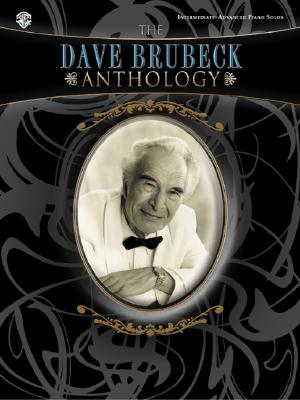
The Dave Brubeck
Anthology - Music Book
On summer evenings in the 1950s and 1960s when the air inside the kitchen was too stifling to turn on the stove and cook a meal, my mother made cold-cut suppers outdoors with the music of her favorite jazz artists lilting out of the house into the fading light of day and blending into her candlelit table setting.

This is how my mother made my life seem like a luxury, instead of the drudgery most people simply accepted. 


Outdoor Entertainment at Littie's was necessary because there was no indoor air conditioning. These were my family's evenings out and sometimes we had overnight company, traveling relatives or friends passing through town. At that time, there were no restaurant or hotel accommodations for black people, except ill-equipped, insect-infested flop-house rooms above nightclubs. My mother would never expose guests to rooms where sheets had never been laundered.or restaurants with rear Jim Crow entrances or walk-up windows to order food to be eaten while standing on the street. That was just not acceptable to her. 

To complete evenings out, my mother brought out music to play on a record changer she had bought at a yard sale. She connected her new electronic music device to a power source in the kitchen, set the box on a chair just inside the back door and put on her favorite music--Dave Brubeck--while she decorated the backyard for supper. 

"You can make your life better with a little effort," she said. "I already have the world out there screaming at me what I can and cannot do for a living; where I can and cannot sit in a restaurant; where I can and cannot live! Why would I want to come home from the job they do let me have and listen to a guy whining how bad life is to the sound of an out-of-tune guitar," she would say. I guess that music was too sad, reminding her of the Jim Crow realities under which we lived, at that time, and making her feel worse than the world already made her feel. 

"I do not need someone crying loud and yelling about a broken heart or a life gone wrong," my mother would say about Blues and Country Music, she wrote songs herself that were very much country. "I can look up the street and find real examples of failed love lives! I want to hear music that gives me hope and lightens my spirit." Dave Brubeck's song, Take Five, from his album, Time Out really lifted my mother's spirits after she went right out and bought it as soon as the studio released the music in 1959.

Dave Brubeck Quartet - Time Out
 Time Out
DAVE BRUBECK
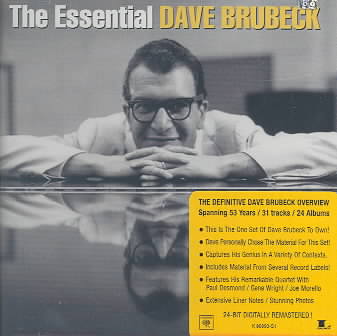
Essential Dave Brubeck


My mother's motto was, take five-- take time to enjoy yourself. Taking five always included the Dave Brubeck Quartet or some other of her favorite jazz artists who played "sweet and soft."


Listening to Brubeck's music allowed my mother and me to exchange feelings of sadness with feelings of joy. 


Dave Brubeck Quartet Take Five
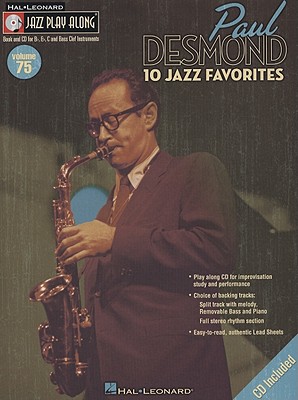
Paul Desmond, Saxophone


Just like my mother tried to make life better by creating her own fine restaurant in the backyard and playing her favorite music, all of America was yearning for hope during the 1950s and 1960s. Life under Jim Crow laws could make one feel pretty oppressed and I imagine the oppressor's burden was getting heavy, too. Although we all saw the changes over the horizon, the changes were yet to be fully realized.

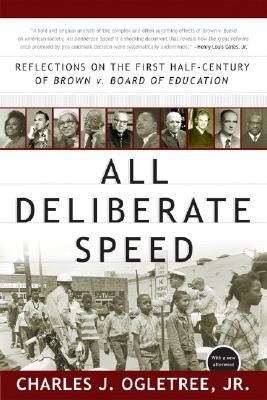
Brown V. Board of Education
All Deliberate Speed: 
Reflections on the 
First Half-Century 
of Brown v. Board 
of Education

When the Supreme Court decided Brown v the Board of Education in 1954, my mother thought the schools would be integrated and, finally, I would be issued new school books. 

When this was not the case, we all waited, patiently and some impatiently. And nothing changed. Long after the Court ordered school desegregation with aIl deliberate speed, I continued my education in a segregated school system using hand-me-down books from the white school until I graduated from high school ten years later. And ten years later and even today, we are all still the Offspring of Jim Crow. When their books were replaced, the black schools got them, marked up, pages missing and bindings loose. Then some of our teachers used books to play favorites, giving their pets the best of them. 

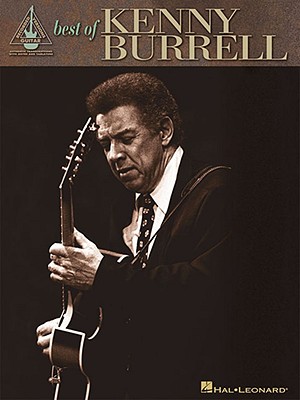
The Best of Kenny Burrell Playing Jazz Guitar

Paul Desmond

I could not use tattered books as an excuse. My mother never accepted that. "You have books," she said. "That's more than your ancestors had on the plantation! Now, go to your room and do your homework." 


My mother expected me to graduate from college one day and those books were all my school had to prepare me.


There was never any use arguing with my mother. She had all the answers, it seemed. So, I dragged those old beat-up books home from school every day and studied under her watchful eye while listening to the music of Dave Brubeck or Kenny Burrell or some other favorite jazz or classical artist of hers in the background.

My mother's mother, Bigmama who lived with us, had a brother, a school teacher in Houston. His wife was a traveling book and music seller, on the road sometimes seven days a week with a statewide route that included our town. Our great aunt stopped often at our house for a meal when she was in town and sometimes slept overnight 

Due to the lack of restaurants and hotels available to this black traveling sales executive, we became part of her accommodations network, providing evenings outdoors with delicious food and conversation about books, music, politics and current events; and listening to the latest jazz and classical music albums that she also sold from the back of her car to supplement her income. This was possible because, like most small towns in the 1950s, ours had The Record Shop downtown, a dark, dusty, dingy little hole in the wall that did not carry jazz or classical music and did not sell sheet  music, which I needed for my piano lessons

My mother also ordered my sheet music and her jazz and classical music recordings from our great aunt. She also bought lots of other product from our great aunt on installment plans, such as a set of reference books, because my school's encyclopedia were outdated and the public library was segregated. My mother bought subscriptions to national magazines, newspapers, journals and other periodicals like National Geographic

My father always wanted to know where my mother got all the money to make those purchases. She replied, "I manage."

After breakfast the next morning, before our great aunt left to continue her sales route to the next county, she gave my mother discontinued music recordings and book samples she no longer needed for display and demonstrations, which my mother eagerly added to our shelves. 

Our aunt made quite a good living for a number of years until record clubs and book-of-the-month deals in the backs of magazine ruined her business. It was just as well, she said. It had been a hard job for a woman. In fact, she was the only woman I knew who was a traveling salesman. Although she had a college education, professional jobs outside of the classroom for black women in her generation were scarce. When she and our uncle retired, I spent weekends with them in Houston. Over the years, the childless couple had amassed a small fortune and lived very well in a black upscale Houston neighborhood.

Books, newspapers, photo essays and television helped change U.S. race relations. 


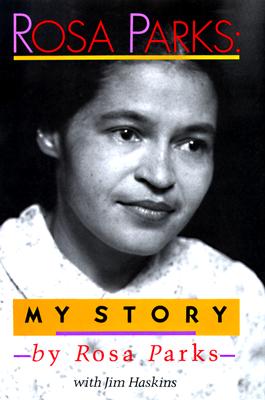
Photo: Rosa Parks
Rosa Parks
by Rosa Parks
& James Haskins

Rosa Parks had started the year-long Montgomery Bus Boycott and Dr. Martin Luther King soared to national prominence one year after Brown v the Board of Education failed to change the Jim Crow American educational system. And, again, I have to admit, there was little immediate change.

The Supreme Court said one thing and the American people said and did another. Some black Americans waited for others like Martin Luther King to test the new laws regarding U.S. race relations that had replaced Jim Crow and other black families sued districts, cities and states in efforts to receive equal access to better schools. People of all races were afraid of what was about to happen to their ways of life. 

School districts hired attorneys to guide them through the postponement game to avoid court rulings on a slew of Landmark Cases Affecting Jim Crow Laws in American Education. In the meanwhile, things stayed the same. For another decade, there were people in the United States of America who were not allowed to vote and there were still colored and white only signs at the movies, in waiting rooms and other places around the nation.

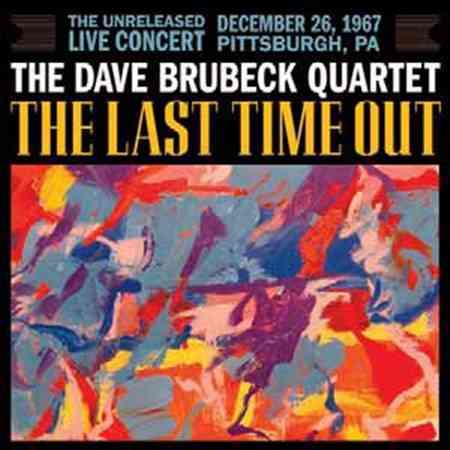
LAST TIME OUT  BY DAVE BRUBECK
Their Last Time Out
BY DAVE BRUBECK
When I was growing up, my mother exposed me to a world far different from the Jim Crow world in which we lived. She created a library in our house, took me on trips, sent me to ballet and piano lessons and took me to galleries and museums 100 miles away on a Greyhound Bus. 

In her planning for my education, the music of Dave Brubeck and other similar music figured in prominently. She believed this music along with classical selections would improve my mind by calming my thoughts while I studied my lessons in those hand-me-down books. And it worked. I became one of the first black women to graduate from Texas A&M University and I made the Dean's List several semesters while listening to the music that became the ambiance of my life. 

©

    Bigmama Didn’t Shop  At Woolworth’s  Sunny Nash

Hard Cover

Amazon Kindle
Sunny Nash author of bigmama didn't shop at woolworth's
Sunny Nash
Sunny Nash is an author, producer, photographer and leading writer on U.S. race relations. She writes books, blogs, articles and reviews, and produces media and images on U.S. history and contemporary American topics, ranging from Jim Crow laws to social media networking. Sunny Nash is the author of Bigmama Didn't Shop At Woolworth's (Texas A&M University Press), about life with her part-Comanche grandmother during the Civil Rights Movement.

Sunny Nash’s book is recognized by the Association of American University Presses as essential for understanding U.S. race relations. Nash's book is also listed in the Bibliographic Guide for black studies at the Schomburg Center for Research in Black Culture in New York; and recommended for Native American collections by the Miami-Dade Public Library System in Florida. Nash uses her book to write articles and blogs on race relations in America through topics relating to her life--from music, film, early radio and television, entertainment, social media, Internet technology, publishing, journalism, sports, education, employment, the military, fashion, performing arts, literature, women's issues, adolescence and childhood, equal rights, social and political movements--past and present—to today's post-racism.

ushistory.org homepage

© 2014 Sunny Nash. All Rights Reserved Worldwide.
 www.sunnynash.blogspot.com 
~Thank You~
Sunny Nash – Race Relations in America