Translate


Showing posts with label civil rights. Show all posts

Tuesday, December 13, 2016

Set Priorities for the New Year


Set priorities! Achieve goals, ignite career, sell books, enjoy life!


Sunny Nash, Author-Journalist

New Year resolutions are for other people. I set priorities that change as life changes to reach my goals.


Yes, it is coming upon that time again--the Holidays, eating too much and never-to-be-kept New Year's resolutions that do not work. 

When I first started my career, I made resolutions for everything from how many pages I would produce to how many query letters I would send out. Then I discovered resolutions were like promises--often made hurriedly to have something to recite at a New Year's Eve party or to my colleagues after the holiday--made to be broken. A popular new year resolution I hear people make, year after year, is to lose weight. Why? So you can fit into some long-out-of-style, ugly-by-current-standards outfit in the back of the closet? 


Read what people have said about new year resolutions.


Each day of the new year, I have a sub-set of my larger life or career goals, around which I set priorities for my day's activities. I continue this practice even as the year grows old. As a writer, I edit something or write a few new pages to be sure to further a project along each day. Usually, it is not my intention that day or any given day to finish anything, but I hope to push some work each day closer to the finish.

Set priorities to make sense of your life.


scales of justice
Setting Priorities
Resemble Scales 
Some Priorities Weigh 
More Than Others
Going through life without priorities must be like tumbling around in a vacuum cleaner with dust swirling all around your head. How does one organize dust? And who would want to? 


One priority I carry from year to year is learning. 


Without setting priorities, nothing much is possible, one reason for setting them and changing them as as life changes. I can't tell someone else how to live but I can tell you how I try to manage my goals and priorities. My goals and priorities include those elements that I know, enjoy and do not feel are a burden. However, I try to include the unfamiliar as a stimulant to increase my interest in the activity. The unfamiliar area makes me stretch my imagination and knowledge. Don't be afraid of research.

pic of making a lise
Setting Priorities and Goals
Helps Organize
Thoughts and Plans
I start with a detailed list of things I want to accomplish. From my detailed list, I extract a simpler working list, not written in concrete because I know I must remain flexible. Life requires flexibility. Setting priorities is an ongoing task that I edit and change as necessary.

One reason I write lists by hand on a piece of paper with a pen or pencil is that the writing exercise places me in direct contact with my goals and priorities, making the process a very personal communication with my soul. The contact I feel between me and my list produces a certain harmony of thoughts.

Tuesday, November 1, 2016

Rosa Parks, Jim Crow & Fashion

Rosa Parks set the fashion tone for the struggle against Jim Crow...


Delton Primitive Country Raggedy Ann Rag Doll with Cat, Green, 17"
Prim Primative Country 
RAGGEDY ANN RAG DOLL 17" 
Green Dress w/ Cat

But fashion in the 1960s was a cross between:
  • First Lady Jacqueline Kennedy
  • Rosa Parks
  • Twiggy 
  • Raggedy Ann  


In the 1960s, young women took their fashion cue not from Rosa Parks, but from the sophisticated First Lady Jacqueline Kennedy, whose impeccable appearance captured the entire world each time she stepped out of the White House. And behind the most glamorous scenes in America, outside of Hollywood, Jacqueline Kennedy's husband, President John F. Kennedy, was authoring the most sweeping civil rights legislation since Abraham Lincoln wrote the Emancipation Proclamation that freed the slaves one hundred years before. 

Twiggy - Fifty Fashion Looks  that Changed  the 1960's
Fifty Fashion Looks
that Changed
the 1960's
Teen magazines proliferated with stunning color covers of the latest celebrities and their fashions. No era in American history is more clearly marked by a range of fashion as the 1960s, where the mini skirt and guns met in an environment of violence and flower-power peace. The world became a big ball of politics where pop culture spun out of control and drugs became the new norm in some circles. With my mother's assistance, or shall I say insistence, my wardrobe reflected both Jackie and Twiggy, not too short to be indecent and not so long that I looked like my grandmother. 

"The clothing and music choices you make send messages," my mother said. "You can be stylish without looking and sounding like a street corner trinket."

To Kill a Mockingbird by Harper Lee
To Kill a Mockingbird
What was she talking about? I often asked myself. And when I asked what she meant by something, she would simply say, "Think about it." Days later, she would ask me what I came up with. My mother never forgot anything. And then we would discuss it. She sometimes even came up with an appropriate book on the subject for me to read. She read everything before passing it along to me. That always irritated me because I couldn't pretend to know what the book was about. That was the case with To Kill a Mockingbird. After reading the book, I was tempted to ask her if she wanted me to dress like Scout, the tomboyish heroin of Harper Lee's southern tale. I already knew the answer to that.

Sunny Nash, age 16
Sunny Nash, age 16

My mother liked the way the First Lady dressed. 


She said, "If I had a personal designer, I'd dress like that, too. But because I don't, I'll have to rely on my own taste and your father's wallet." And his wallet was not very big with no argument from him. My father accepted the fact that my mother wanted high quality clothing for herself and me. She preferred classic clothing in conservative colors, which she regarded as good taste and timeless, and had the same expectation for my attire. 

With the help of Oleg Cassini's timeless designs and a slender body, the First Lady changed the fashion world forever and skyrocketed his own career in fashion and turned most everything he touched into gold--from cologne to cars to luggage. Talking about setting priorities. First Ladies not only have access, but designers clamber at their doors to drape them in lush fabrics and jewels. They are First Ladies, after all.


First Lady Jacqueline Kennedy, Oleg Cassini her official designer
Oleg Cassini served as
The official designer
for First Lady
Jacqueline Kennedy

Born Oleg Cassini Loiewski, in Paris in 1913, he grew up in Florence, Italy. 


Cassini became an international star in the 1960s when he became the designer for First Lady Jacqueline Kennedy. “We are on the threshold of a new American elegance, thanks to Mrs. Kennedy’s beauty, naturalness, understatement, exposure and symbolism,” Cassini said when he was appointed by the White House to be the First Lady’s couturier. Everything after Cassini's appointment, he set a new standard in American beauty and history. Mrs. Kennedy's original gowns, suits and dresses, now at the Smithsonian in Washington DC and the John F. Kennedy Presidential Library in Boston, were copied by every other designer and want-to-be- designer on the globe.


The Montgomery Bus Boycott, Rosa Parks at Sewing Machine
Rosa Parks at Sewing Machine

"Montgomery Bus Boycott"

1960s fashion was not at the top of the list for us. Survival in our new world was my mother's priority. 


Politics caused upheaval in the country as the Civil Rights movement loomed. My mother was more concerned with getting me educated to meet the changes she saw over the near horizon than making a fashion statement. I saw reports of poor children in the Alabama and Mississippi who had poorer schools than the Jim Crow schools I attended. 

My mother brought home magazines with studies by psychologists and social workers evaluating racial attitudes of elementary school children. She said she did not found it hard to believe that little black children picked white dolls as their favorite toys. After all, at that time, white dolls were the only dolls little black children had ever seen, besides black handmade rag dolls. The Civil Rights Movement was about much more than dolls.

Every day on the evening news, there were reports of violence over integration  in the Deep South and newspaper stories of marches, protests, police violence against little back children and lynchings. 


Lynching of Jesse Washington,  Waco, Texas on May 15, 1916
Lynching of Jesse Washington, 
Waco, Texas

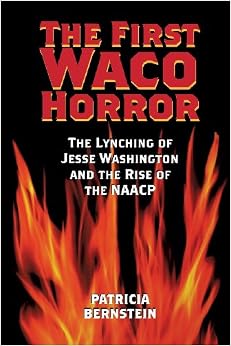
Bigmama and elders in the neighborhood remembered the lynching of Jesse Washington in 1916 like it happened yesterday, and talked about the young victim like they knew him personally. Bigmama was 16 years old at the time of the crime. And there were more incidents of violence closer to home that were reminders of the way things were and still were. 


If Jim Crow policies in some department stores did not allow us to try on the dresses or shoes before purchasing, we did not shop there. 


"That's what the Civil Rights Movement is all about," my mother said. "Keeping us safe in our homes and not just about sitting with white people at the movies or riding on the front seat of a bus or sitting at a lunch counter or trying on clothes in a department store. This is so much bigger than that! This is about getting a good college education so you can get a good job, live in a better place and have a brighter future."

I have to admit that I felt vulnerable growing up watching Walter Cronkite report and show these images. I had nightmares many times that woke me at night in a cold sweat. Now, looking back, one of the purposes of showing those images was to wake people up and shake them with the realities some of us lived with daily. 


There were stabbings and gunfights in my neighborhood on many drunken weekends at local establishments and private homes. People were frustrated with their lives and lack of ability to escape that other America.


I knew early I would face difficulties. No one had to tell me. I could see it all around. Children were dying for the movement, even little girls my own age in Birmingham, Alabama, were bombed and killed while they preparing for Sunday School. Could I be next, I thought? It was my mother, my father, my grandmother and Rosa Parks who would not let me use the circumstances of my country to be less than... "There are no excuses for not reading a book," my mother said. "There are no excuses for being a slob. There are no excuses for not doing the best you can with whatever you have, no matter how little you have. There are no excuses for living a sloppy life." 

Littie Nash
Littie Nash

My mother accepted no excuses for being trifling, as she called being lazy and careless. 


And she wasted compliments on me when I did what I was supposed to do. She reserved accolades to celebrate real accomplishments, not just because I dragged myself out of bed before noon on Saturday or because I made an 'A' on my report card. "Some things you have to do," she said. "And those things pass, not without notice, but without an all-day hullabaloo." To support me, Littie sponsored my piano, ballet, tennis and swimming lessons, dance performances, recitals, literary and classical music club memberships, summer camps, school trips and science fair exhibits, still managing to squeeze out of our tight budget money for the dentist to install braces on my teeth.

"If you don't like the way things are going, change your life," my mother said. "Education is a way out, not the only way out, but a good place to start. And you WILL get into college." I knew she meant that. It seemed her most important goal was to make me smart and successful at something. What a woman! It took courage and imagination during the era of Jim Crow laws for my mother to give me what she thought I needed to get a job that would support me when I grew up. Jobs in the African American community were scarce. Good jobs were mostly nonexistent. Black men were economically and politically marginalized and black women were publicly disrespected on a routine basis.

Read more about my mother: Great Mothering in Jim Crow's World. Also check out another of my blog posts about the significance my mother placed on a college education. She believed that ignorance was an illness that could only be cured by learning. "People can learn on their own if they know how to read," she said often. "You do not have to go to college to learn and be educated. But education may help you get a better job." Read: College Education Was my Mothers Plan.
    
Littie Nash was one of the great thinkers, ultimate supporter, partner in adventure and inspiration for learning to live well on a shoestring. She gave me life, curiosity, imagination, courage and pride, even in a world that, at the time of my growing up, did not accept me as a full citizen. "You are who you think you are," she said. "Not who someone else thinks you to be. But remember, people form an opinion of you by the way you present yourself." I knew she meant, the way I dressed. 

Bigmama Didn’t Shop  At Woolworth’s  Sunny Nash
Bigmama Didn’t Shop 
At Woolworth’s 
Sunny Nash

Hard Cover
Bigmama Didn't Shop 
at Woolworth's

Amazon Kindle
Bigmama Didn't Shop 
at Woolworth's
I was young when I began to realize that there was a frightening world outside my home. Of course, I knew the frightening things that sometimes happened in my own neighborhood, like my cousin being murdered by her boyfriend because a stranger in a car whistled at her one evening coming from the store. I wrote about this tragedy in book about life with my part-Comanche grandmother during the Civil Rights MovementBigmama Didn't Shop at Woolworth's (Texas A&M University Press and available on Amazon Kindle)among collections of the Association of American University Presses as a resource for understanding U.S. race relations and recommended by the Miami-Dade Public Library System for Native American Collections.

Robin Fruble of Southern California said, "Every white person in America should read this book! Sunny Nash writes the story of her childhood without preaching or ranting but she made me realize for the first time just how much skin color changes how one experiences the world. But if your skin color is brown, it matters a great deal to a great number of people. I needed to learn that. Sunny Nash is a great teacher," Fruble said.


Sunny Nash is the author of Bigmama Didn't Shop At Woolworth's (Texas A&M University Press), about life with her part-Comanche grandmother during the Civil Rights Movement. Nash’s book is recognized by the Association of American University Presses as essential for understanding U.S. race relations; listed in the Bibliographic Guide to Black Studies by the Schomburg Center for Research in Black Culture in New York; and recommended for Native American collections by the Miami-Dade Public Library System in Florida. 

Join Sunny Nash on Huffington Post
Also join me on Huffington Post for my comments and discussions on civil rights, race relations, politics, style, entertainment and other pressing issues of the day.


Sunny Nash author of bigmama didn't shop at woolworth's
Sunny Nash

Sunny Nash--author, producer, photographer and leading writer on U.S. race relations in--writes books, blogs, articles and reviews, and produces media and images on U.S. history and contemporary American topics, ranging from Jim Crow laws to social media networking, 

Nash uses her book to write articles and blogs on race relations in America through topics relating to her life--from music, film, early radio and television, entertainment, social media, Internet technology, publishing, journalism, sports, education, employment, the military, fashion, performing arts, literature, women's issues, adolescence and childhood, equal rights, social and political movements--past and present—to today's post-racism.

© 2013 Sunny Nash. All Rights Reserved Worldwide.
~Thank You~


Bookmark and Share
Sunny Nash – Race Relations in America

Wednesday, July 20, 2016

First Black Female Olympics Medal Winner

In 1948, Audrey Patterson became the first African American woman to win an Olympic medal.


Audrey "Mickey" Patterson, President Harry S. Truman The White House 1948
Audrey Patterson & President Harry S. Truman
The White House 1948

Audrey Patterson


Audrey Patterson was the first African American woman to win an Olympic medal--bronze--in 1948. 


With all that gold being earned by African American women at the 2016 Summer Olympics in Rio, we should remember the first African American women to win Olympic medals, lest we forget that Audrey Patterson helped lay the groundwork for black female gold medalists in the 2016 Summer Olympic in Rio. 


Audrey Patterson was born in 1926 in New Orleans, Louisiana, in the heart of Jim Crow America. 

The Olympic Games were cancelled in 1940 and 1944 as many Americans were glued to the radio listening for developments of war with Germany. Audrey Patterson was in high school at the world was fighting in the European and Pacific theaters. No doubt, Patterson knew black soldiers in her family, her community or her school--although not allowed to enter combat in a meaningful way due to Jim Crow laws.  

African American men nationwide were on the cusp of gaining important civil rights for themselves in the military, as well as for other American blacks back home. 


During WWII, the Tuskegee Airmen, a unit of black pilots was organized at the instigation of black activist, A. Philip Randolph. The Army trained these men for air combat.Their proficiency proved so strong that they led to the desegregation of the U.S. Army by the Executive Order of President Harry S. Truman. After WWII ended in 1945, the next time a black American woman competed in the Olympics was in 1948. This was just before the official opening of the modern Civil Rights Movement when Rosa Parks and Martin Luther King burst onto the scene in Montgomery, Alabama, in 1954. In the meanwhile, black Americans were on the hunt for heroes to use in the fight against Jim Crow laws and the Olympics seemed as good a place as any. Female Olympians were training at both Tuskegee and Tennessee State in the tradition of former Olympic competitors.

Black females had been qualifying for the Olympics since 1932 in integrated track and field teams.


1936 U.S. Female Olympic Track & Field

Trained at Tuskegee Institute, Tydie Pickett and Louise Stokes entered competition with the 1932 Los Angeles Olympics and the 1936 Berlin Olympics teams. Both times, Pickett and Stokes were replaced at the last minute by white teammates they had previously defeated.These political decisions were made by Olympic officials and seemed to have something to do with race.

The Berlin Olympics of 1936, however, belonged to black male track star, Jesse Owens, who won four individual gold medals at the Olympics. Legend has it that Jesse Owens was snubbed by Adolph Hitler. However, Owens said in his biography that he felt more of a snub by his own country upon his return from the Berlin Olympics. Touring with his Olympics team, he was discriminated against in hotel accommodations, restaurants and transportation due to Jim Crow laws in the United States. 

Further, Jesse Owens was not invited to the White House until many years after his victory when he was invited to the White House by President Dwight Eisenhower and appointed Athletic Ambassador. Owens when around the world promoting the goodwill of the United States by speaking to school children. Owens also made the rounds among schools in the United States, especially in the south where Jim Crow laws still prevailed.

Audrey Patterson said she felt that 1936 Olympic gold medal winner, Jesse Owens, was speaking to her in 1944 when he told a group at Gilbert Academy, "There is a boy or a girl in this audience who will go to the Olympics."In 1947, Patterson enrolled at Wiley College in Marshall, Texas, where she became a track star, winning the Tuskegee Relays in the 100- and 220-yard dashes and the Amateur Athletic Union National Indoor Title in the 220-yard event. In 1948, Patterson transferred from Wiley to Tennessee State in Nashville, where she dominated the American record with another undefeated season. Patterson went to Providence, Rhode Island, for trials in the 1948 Olympics and earned a position on the U.S. Women's All-American Track & Field Team for the London Olympics. Patterson was one of the nine black females on the 12-member team.

At the time of the 1948 Olympics, Audrey Patterson, also known as Mickey, was a 22-year running beauty, who got cheers whenever the crowd caught a glimpse of her. And Mickey did not disappoint her international fans. By edging out Shirley Strickland of Australia, Patterson won a bronze medal for the 200-meter dash in the first Olympic Games that offered women the 200-meter race for competition. Fanny Blankers-Koen of the Netherlands won the race, her third gold medal. A few days later, African American track and field star from Tuskegee Institute, Alice Coachman, won a gold medal for the high jump.

When Audrey Patterson returned from the Olympics, her hometown newspaper, The Times-Picayune, did not mention her victory, which was interpreted by the black community as a snub because Patterson was an African American. The mayor did not attend her celebration ceremony, sending a certificate in his stead. However, President Harry Truman invited Patterson to the White House for a congratulatory visit after her history-making Olympic performance. 


Google

In 1948, Rosa Parks had started her civil rights career with the Montgomery, Alabama, branch of the National Association for the Advancement of Colored People (NAACP) as a principal investigator in rape cases involving black Alabama women. Rape was a primary offense against black women during the era of Jim Crow laws, used to control activities and suppress esteem in the black community. It was during the next decade, that Rosa Parks and Dr. Martin Luther King led the Montgomery Bus Boycott that led to the dismantling of Jim Crow laws across America.

Although, during this same period changes were occurring nationally in race relations. The Tuskegee Airmen, a unit  of black pilots had helped the United States win WWII and President Harry Truman had desegregated the U.S. Army. Both of these events were brought about by the encouragement of former First Lady Eleanor Roosevelt and black activist, A. Philip Randolph, labeled the most dangerous black man in America.

1948 U.S. Female Olympic Track & Field

At the 1948 London Olympics, nine of the 12  members of the U.S. Women’s All-American Track & Field Team were African American. Audrey "Mickey" Patterson of Tennessee State became the first African American woman in Olympic history to win a medal. 

Audrey Patterson was born in 1926 in New Orleans, Louisiana, in the heart of the Jim Crow south, steeping in discrimination against African Americans. 

Audrey Patterson won a bronze medal for the 200-meter dash in the 1948 Olympics. That was the first time the 200-meter race was included in Olympic competition for female runners. In that 1948 Olympic Games, another African American female became the first black American woman to win a gold medal in Olympics history; Alice Coachman won the high jump and was inducted into eight athletic Halls of Fame. Later that year, the Amateur Athletic Union announced that Audrey Patterson had been named Woman Athlete of the Year

In 1965, Audrey Patterson founded Mickey's Missiles track club for girls six to 18, and produced Olympic track star, sprinter Jackie Thompson, who competed in the 200-meter Olympics in 1972. In 1982, Patterson founded the Martin Luther King Freedom Run in San Diego and was inducted into the Louisiana Sports Hall of Fame. Audrey Patterson died in 1996.


________________________________________________


Thank you for visiting. 

Please come again. 

SUBSCRIBE & FOLLOW


    Bigmama Didn’t Shop  At Woolworth’s  Sunny Nash

Hard Cover

Amazon Kindle
Sunny Nash author of bigmama didn't shop at woolworth's
Sunny Nash is an author, producer, photographer and leading writer on U.S. race relations. 

Sunny Nash writes books, blogs, articles and reviews, and produces media and images on U.S. history and contemporary American topics, ranging from Jim Crow laws to social media networking. Sunny Nash is the author of Bigmama Didn't Shop At Woolworth's (Texas A&M University Press), about life with her part-Comanche grandmother during the Civil Rights Movement.

Sunny Nash’s book is recognized by the Association of American University Presses as essential for understanding U.S. race relations. Nash's book is also listed in the Bibliographic Guide for black studies at the Schomburg Center for Research in Black Culture in New York; and recommended for Native American collections by the Miami-Dade Public Library System in Florida. Nash uses her book to write articles and blogs on race relations in America through topics relating to her life--from music, film, early radio and television, entertainment, social media, Internet technology, publishing, journalism, sports, education, employment, the military, fashion, performing arts, literature, women's issues, adolescence and childhood, equal rights, social and political movements--past and present—to today's post-racism.


© 2015 Sunny Nash. All Rights Reserved Worldwide.
 www.sunnynash.blogspot.com 
~Thank You~

Sunny Nash – Race Relations in America

Tuesday, February 25, 2014

Martin Luther King on Education - I Have a Dream

Martin Luther King had a dream to destroy Jim Crow.


Martin Luther King, I Have a Dream, Lincoln Memorial
Martin Luther King delivered his I Have a Dream Speech at the Lincoln Memorial in 1963 before an audience of more than two hundred thousand. I Have a Dream was a speech that was developed over many years, starting when Martin Luther King joined the Montgomery Bus Boycott, sparked by Rosa Parks in 1955. 

The I Have a Dream Speech was a culmination of struggles that had been endured by, not just the man--Martin Luther King--but all African Americans. At the heart of the civil rights struggle were several civil rights that African Americans were prevented from enjoying. One of those crucial civil rights being denied by Jim Crow laws was an equal education. In fact, education in the African American community was not only unequal to that of whites, but it was inferior on its own. School supplies were lacking in black schools, teachers were under-trained in many cases and building facilities were without adequate space and even proper lighting and heating.

Martin Luther King - Lincoln University 1961
So, you see, the Civil Rights movement was about more than ridding the American vocabulary of the "N" word. Civil rights were about equal education and equality in all aspect of American life where rights for African Americans and other people of color were systematically denied. 


Equality in society cannot be attained without equal education.


The African American community from the time it was freed from slavery pushed their children to get as much education as possible. It was the belief of the black community that equal rights could only be gained through education. The uneducated, they believed, would always be relegated to unequal circumstances and poverty. 

Many African American families sacrificed to send their children to school and to college. They paid for tuition, textbooks and school supplies with meager earnings as farm workers, domestic help and common laborers. Martin Luther King, however, had advantages of security as a child with a prosperous father to support him and his siblings. In cases, like his, it was understood that the children would attend college. This meant room and board, train or bus transportation and school clothing.

Introduced during slavery, Jim Crow laws and black codes prohibited the instruction of bonded laborers in letters and numbers. Educated slaves, the owners believed, would no longer accept their status and possible would rebel. After emancipation, landowners who controlled sharecroppers in a similar manner as slaves, held the same beliefs. Although it was no longer against the law to educate former slaves, the economic system certainly discouraged their education. Jim Crow schools were designated separate but equal, a concept that had no meaning when it came to equality. Martin Luther King was an educated man who preached education for all. 


Rosa Parks and Martin Luther King arrested for disorderly conduct in Montgomery, Alabama.


Rosa Parks and Martin Luther King Arrest Photos 1954
Rosa Parks and Martin Luther King
Arrest Photos 1954
In fact, in many areas of the United States, Jim Crow laws did not provide for or require African American children to attend school. Education was thought to pollute the cheap workforce, making laborers desire a better life. Rosa Parks had to walk many miles to school as a child, even passing a white school whose students were bused from home.

The Montgomery Bus Boycott, which was ignited by Rosa Parks in 1954 and lasted for more than a year, hurled Martin Luther King, as a young pastor, into the national arena during. The Montgomery Bus Boycott was not just about maids and janitors getting to work without riding the bus. There were many students involved in the boycott walking miles to school instead of continued to be humiliated on public transportation. This was a movement within the larger Civil Rights Movement and helped energize the growing national struggle against Jim Crow laws. 


Martin Luther King was educated when he became a civil rights activist against Jim Crow laws during the Montgomery Bus Boycott, sparked by Rosa Parks.

I watched Martin Luther King, Rosa Parks, civil rights and the dismantling of Jim Crow laws unfold on the evening news on television along with every other American household that had a television in their living room.

See full video of Martin Luther King's 'I Have A Dream,' written after Rosa Parks sparked the Montgomery Bus Boycott and ignited the modern Civil Rights Movement against Jim Crow laws.

Martin Luther King: Dream Speech
Read full text of Martin Luther King's 'I Have A Dream,' written after Rosa Parks sparked the Montgomery Bus Boycott and ignited the modern Civil Rights Movement against Jim Crow laws.


Blogger, Sunny Nash, is a writer, producer, photographer and leading author on race relations in America. 


Sunny Nash produces blogs, media, books, articles and images on history and contemporary topics, from slavery, the Civil War, Jim Crow and civil rights to post racism, social media, entertainment and technology using her book, Bigmama Didn’t Shop At Woolworth’s, as a basis for commentary and research.

Bigmama Didn’t Shop At Woolworth’s by Sunny Nash on Amazon

by Sunny Nash
Hardcover & Kindle
Sunny Nash's book was selected by the Association of American University Press as a resource for understanding U.S. race relations and recommended for Native American Collections by the Miami-Dade Public Library System.

"My book, 'Bigmama Didn't Shop At Woolworth's,' began in the 1990s. I was writing for Hearst and Knight-Ridder newspapers. The stories are about my childhood with my part-Comanche grandmother, Bigmama, my parents, relatives, friends, and others; and my interpretation of the events surrounding the Jim Crow South before and during the Civil Rights Movement.

Robin Fruble of Southern California said, "Every white person in America should read this book! Sunny Nash writes the story of her childhood without preaching or ranting but she made me realize for the first time just how much skin color changes how one experiences the world. But if your skin color is brown, it matters a great deal to a great number of people. I needed to learn that. Sunny Nash is a great teacher," Fruble said.

© 2014 Sunny Nash. All Rights Reserved Worldwide.
~Thank You~

Top Stories


Sunny Nash – Race Relations in America