Translate


Showing posts with label lynching. Show all posts

Tuesday, November 1, 2016

Rosa Parks, Jim Crow & Fashion

Rosa Parks set the fashion tone for the struggle against Jim Crow...


Delton Primitive Country Raggedy Ann Rag Doll with Cat, Green, 17"
Prim Primative Country 
RAGGEDY ANN RAG DOLL 17" 
Green Dress w/ Cat

But fashion in the 1960s was a cross between:
  • First Lady Jacqueline Kennedy
  • Rosa Parks
  • Twiggy 
  • Raggedy Ann  


In the 1960s, young women took their fashion cue not from Rosa Parks, but from the sophisticated First Lady Jacqueline Kennedy, whose impeccable appearance captured the entire world each time she stepped out of the White House. And behind the most glamorous scenes in America, outside of Hollywood, Jacqueline Kennedy's husband, President John F. Kennedy, was authoring the most sweeping civil rights legislation since Abraham Lincoln wrote the Emancipation Proclamation that freed the slaves one hundred years before. 

Twiggy - Fifty Fashion Looks  that Changed  the 1960's
Fifty Fashion Looks
that Changed
the 1960's
Teen magazines proliferated with stunning color covers of the latest celebrities and their fashions. No era in American history is more clearly marked by a range of fashion as the 1960s, where the mini skirt and guns met in an environment of violence and flower-power peace. The world became a big ball of politics where pop culture spun out of control and drugs became the new norm in some circles. With my mother's assistance, or shall I say insistence, my wardrobe reflected both Jackie and Twiggy, not too short to be indecent and not so long that I looked like my grandmother. 

"The clothing and music choices you make send messages," my mother said. "You can be stylish without looking and sounding like a street corner trinket."

To Kill a Mockingbird by Harper Lee
To Kill a Mockingbird
What was she talking about? I often asked myself. And when I asked what she meant by something, she would simply say, "Think about it." Days later, she would ask me what I came up with. My mother never forgot anything. And then we would discuss it. She sometimes even came up with an appropriate book on the subject for me to read. She read everything before passing it along to me. That always irritated me because I couldn't pretend to know what the book was about. That was the case with To Kill a Mockingbird. After reading the book, I was tempted to ask her if she wanted me to dress like Scout, the tomboyish heroin of Harper Lee's southern tale. I already knew the answer to that.

Sunny Nash, age 16
Sunny Nash, age 16

My mother liked the way the First Lady dressed. 


She said, "If I had a personal designer, I'd dress like that, too. But because I don't, I'll have to rely on my own taste and your father's wallet." And his wallet was not very big with no argument from him. My father accepted the fact that my mother wanted high quality clothing for herself and me. She preferred classic clothing in conservative colors, which she regarded as good taste and timeless, and had the same expectation for my attire. 

With the help of Oleg Cassini's timeless designs and a slender body, the First Lady changed the fashion world forever and skyrocketed his own career in fashion and turned most everything he touched into gold--from cologne to cars to luggage. Talking about setting priorities. First Ladies not only have access, but designers clamber at their doors to drape them in lush fabrics and jewels. They are First Ladies, after all.


First Lady Jacqueline Kennedy, Oleg Cassini her official designer
Oleg Cassini served as
The official designer
for First Lady
Jacqueline Kennedy

Born Oleg Cassini Loiewski, in Paris in 1913, he grew up in Florence, Italy. 


Cassini became an international star in the 1960s when he became the designer for First Lady Jacqueline Kennedy. “We are on the threshold of a new American elegance, thanks to Mrs. Kennedy’s beauty, naturalness, understatement, exposure and symbolism,” Cassini said when he was appointed by the White House to be the First Lady’s couturier. Everything after Cassini's appointment, he set a new standard in American beauty and history. Mrs. Kennedy's original gowns, suits and dresses, now at the Smithsonian in Washington DC and the John F. Kennedy Presidential Library in Boston, were copied by every other designer and want-to-be- designer on the globe.


The Montgomery Bus Boycott, Rosa Parks at Sewing Machine
Rosa Parks at Sewing Machine

"Montgomery Bus Boycott"

1960s fashion was not at the top of the list for us. Survival in our new world was my mother's priority. 


Politics caused upheaval in the country as the Civil Rights movement loomed. My mother was more concerned with getting me educated to meet the changes she saw over the near horizon than making a fashion statement. I saw reports of poor children in the Alabama and Mississippi who had poorer schools than the Jim Crow schools I attended. 

My mother brought home magazines with studies by psychologists and social workers evaluating racial attitudes of elementary school children. She said she did not found it hard to believe that little black children picked white dolls as their favorite toys. After all, at that time, white dolls were the only dolls little black children had ever seen, besides black handmade rag dolls. The Civil Rights Movement was about much more than dolls.

Every day on the evening news, there were reports of violence over integration  in the Deep South and newspaper stories of marches, protests, police violence against little back children and lynchings. 


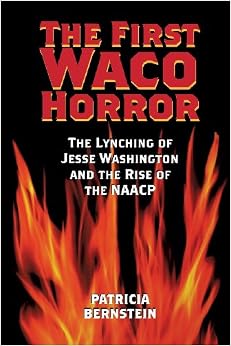
Lynching of Jesse Washington,  Waco, Texas on May 15, 1916
Lynching of Jesse Washington, 
Waco, Texas

Bigmama and elders in the neighborhood remembered the lynching of Jesse Washington in 1916 like it happened yesterday, and talked about the young victim like they knew him personally. Bigmama was 16 years old at the time of the crime. And there were more incidents of violence closer to home that were reminders of the way things were and still were. 


If Jim Crow policies in some department stores did not allow us to try on the dresses or shoes before purchasing, we did not shop there. 


"That's what the Civil Rights Movement is all about," my mother said. "Keeping us safe in our homes and not just about sitting with white people at the movies or riding on the front seat of a bus or sitting at a lunch counter or trying on clothes in a department store. This is so much bigger than that! This is about getting a good college education so you can get a good job, live in a better place and have a brighter future."

I have to admit that I felt vulnerable growing up watching Walter Cronkite report and show these images. I had nightmares many times that woke me at night in a cold sweat. Now, looking back, one of the purposes of showing those images was to wake people up and shake them with the realities some of us lived with daily. 


There were stabbings and gunfights in my neighborhood on many drunken weekends at local establishments and private homes. People were frustrated with their lives and lack of ability to escape that other America.


I knew early I would face difficulties. No one had to tell me. I could see it all around. Children were dying for the movement, even little girls my own age in Birmingham, Alabama, were bombed and killed while they preparing for Sunday School. Could I be next, I thought? It was my mother, my father, my grandmother and Rosa Parks who would not let me use the circumstances of my country to be less than... "There are no excuses for not reading a book," my mother said. "There are no excuses for being a slob. There are no excuses for not doing the best you can with whatever you have, no matter how little you have. There are no excuses for living a sloppy life." 

Littie Nash
Littie Nash

My mother accepted no excuses for being trifling, as she called being lazy and careless. 


And she wasted compliments on me when I did what I was supposed to do. She reserved accolades to celebrate real accomplishments, not just because I dragged myself out of bed before noon on Saturday or because I made an 'A' on my report card. "Some things you have to do," she said. "And those things pass, not without notice, but without an all-day hullabaloo." To support me, Littie sponsored my piano, ballet, tennis and swimming lessons, dance performances, recitals, literary and classical music club memberships, summer camps, school trips and science fair exhibits, still managing to squeeze out of our tight budget money for the dentist to install braces on my teeth.

"If you don't like the way things are going, change your life," my mother said. "Education is a way out, not the only way out, but a good place to start. And you WILL get into college." I knew she meant that. It seemed her most important goal was to make me smart and successful at something. What a woman! It took courage and imagination during the era of Jim Crow laws for my mother to give me what she thought I needed to get a job that would support me when I grew up. Jobs in the African American community were scarce. Good jobs were mostly nonexistent. Black men were economically and politically marginalized and black women were publicly disrespected on a routine basis.

Read more about my mother: Great Mothering in Jim Crow's World. Also check out another of my blog posts about the significance my mother placed on a college education. She believed that ignorance was an illness that could only be cured by learning. "People can learn on their own if they know how to read," she said often. "You do not have to go to college to learn and be educated. But education may help you get a better job." Read: College Education Was my Mothers Plan.
    
Littie Nash was one of the great thinkers, ultimate supporter, partner in adventure and inspiration for learning to live well on a shoestring. She gave me life, curiosity, imagination, courage and pride, even in a world that, at the time of my growing up, did not accept me as a full citizen. "You are who you think you are," she said. "Not who someone else thinks you to be. But remember, people form an opinion of you by the way you present yourself." I knew she meant, the way I dressed. 

Bigmama Didn’t Shop  At Woolworth’s  Sunny Nash
Bigmama Didn’t Shop 
At Woolworth’s 
Sunny Nash

Hard Cover
Bigmama Didn't Shop 
at Woolworth's

Amazon Kindle
Bigmama Didn't Shop 
at Woolworth's
I was young when I began to realize that there was a frightening world outside my home. Of course, I knew the frightening things that sometimes happened in my own neighborhood, like my cousin being murdered by her boyfriend because a stranger in a car whistled at her one evening coming from the store. I wrote about this tragedy in book about life with my part-Comanche grandmother during the Civil Rights MovementBigmama Didn't Shop at Woolworth's (Texas A&M University Press and available on Amazon Kindle)among collections of the Association of American University Presses as a resource for understanding U.S. race relations and recommended by the Miami-Dade Public Library System for Native American Collections.

Robin Fruble of Southern California said, "Every white person in America should read this book! Sunny Nash writes the story of her childhood without preaching or ranting but she made me realize for the first time just how much skin color changes how one experiences the world. But if your skin color is brown, it matters a great deal to a great number of people. I needed to learn that. Sunny Nash is a great teacher," Fruble said.


Sunny Nash is the author of Bigmama Didn't Shop At Woolworth's (Texas A&M University Press), about life with her part-Comanche grandmother during the Civil Rights Movement. Nash’s book is recognized by the Association of American University Presses as essential for understanding U.S. race relations; listed in the Bibliographic Guide to Black Studies by the Schomburg Center for Research in Black Culture in New York; and recommended for Native American collections by the Miami-Dade Public Library System in Florida. 

Join Sunny Nash on Huffington Post
Also join me on Huffington Post for my comments and discussions on civil rights, race relations, politics, style, entertainment and other pressing issues of the day.


Sunny Nash author of bigmama didn't shop at woolworth's
Sunny Nash

Sunny Nash--author, producer, photographer and leading writer on U.S. race relations in--writes books, blogs, articles and reviews, and produces media and images on U.S. history and contemporary American topics, ranging from Jim Crow laws to social media networking, 

Nash uses her book to write articles and blogs on race relations in America through topics relating to her life--from music, film, early radio and television, entertainment, social media, Internet technology, publishing, journalism, sports, education, employment, the military, fashion, performing arts, literature, women's issues, adolescence and childhood, equal rights, social and political movements--past and present—to today's post-racism.

© 2013 Sunny Nash. All Rights Reserved Worldwide.
~Thank You~


Bookmark and Share
Sunny Nash – Race Relations in America

Thursday, November 1, 2012

Martin Luther King and Jim Crow Laws

When I learned about Martin Luther King, Rosa Parks, civil rights and Jim Crow laws, American schools, movies, television and politics were also black and white in racial terms.


Jim Crow Laws in America

Martin Luther King changed television pictures of black America by helping place racism in the 1950s and '60s in every living room in the United States 


Black children my age being abused by southern white law officials like Bull Conner did not stop me from watching fifteen-minute national news broadcasts on television. That's what television was for me back then, a medium that led to change in the Jim Crow laws in America. 

Martin Luther King and Rosa Parks taught nonviolence in the Montgomery Bus Boycott, a tactic used later on television.

What I realized over the years is that black and white people were set in their ways of thinking. And their behavior was based on their ways of thinking. Whites were accustomed to being considered by society as superior; blacks in society were forced to pretend they were inferior. It takes a lot of energy and creativity on both sides of an issue to break old habits. But it can be done.


Martin Luther King is responsible for the change. His articulateness, education, polish, and do not forget confidence, made black and white America take notice. A new day was on the horizon. I looked at myself honestly when I first took notice of this man and asked myself, "Can I continue to be forced into a certain behavior?" Others, black and white, probably asked themselves the same question?

Television and movies were a big part of shaming people into changing their behavior and changing the way the America looked at itself. Even the staunchest haters and believers in inequality cringed at the sight of themselves and those who represented their views on screen. 

As a little girl watching the television images with a family trying to reassure me, I cringed, too. There were days when I was afraid to leave the house. I feared that I would be attacked by a mob. I had never seen a mob except on television. But mobs were real. My Jim Crow school district provided black students no school buses, so we walked to school in groups for security. Going to school and getting whatever education available to African American was never questioned. Education was the way in and the way out--the way into  a better life and the way out of a bad life. Even better than primary education was a college education. 


College was the goal during Jim Crow laws and still the lesson today.


After school, when one of us turned off alone to go home, as I did with no sisters or brothers, we ran as fast as our legs would carry us until we reached the front door. Yes, those old days frightened me deeply. I'm not sure when I grew out of that fear. In fact, I don't know that I ever did. I simply turned the fear into something I could use--courage not to be chased through my entire life by the ghost of Jim Crow dying before my very eyes on television when we were still Jim Crow's children.

Television meant that other Americans were seeing what I saw when Martin Luther King spoke on television or little children were attacked by police dogs and high-powered water hoses. Television meant change. Things had to change--change the way we went to school, change the lessons in the school books, change the politics of education and entertainment, change the way we were treated when we went outside our neighborhood. One reason my mother took me to the movies was to illustrate a different lifestyle, not the lifestyle of people I knew, but the lifestyle of people who did not have to worry about being spat upon or police dog attacks initiated by law enforcement officials.

Segregated Movie Theater

Segregated Movie Theater

Before the movie theater lights dimmed, as we were settling into hard, splintering veneer seats, I looked down below and saw red velvet draperies held in place by gold ropes, shiny like the long shimmering hair resting on the backs of soft upholstered chairs.

Taking me to the movies, traveling with me to other parts of the nation and reading about Martin Luther King, Rosa Parks and civil rights were my mother's insurance against my being satisfied with Jim Crow.


My mother took me to see all kinds of movies--"white movies" as well as "race movies" that featured black casts. She believed in knowing "what the world was up to out there." A lot had to do with fashion we saw in the movies, although some of her interest in movies was related to her interest in books, literature and media. For the same reasons, my mother had also arranged to buy a television on credit, but early television was still mostly Jim Crow like film and radio with African Americans being portrayed as servants and nannies or ridiculously inferior characters with speech difficulties. Before we had a television, we regularly listened to music and other programs on the radio.

In 1939, Ethel Waters, star of movies, radio and stage, became the first African American to appear on television, in her own special, "The Ethel Waters Show."


Ethel Waters First Black Woman on Television

Ethel Waters (Article)

In the early days of television, when the medium was still an experiment, radio was still the primary vehicle for popular dramatic programs and music distribution by jazz vocalists like Ethel Waters. That was before investors thought of television as a profitable new industry to rival radio. There were exceptions. Star of film and radio, Ethel Waters, became the Rosa Parks of television, opening doors for the generation of black actors and filmmakers.

But soon after Waters' television debut, Jim Crow invaded television as it had radio. Many black actors like Ethel Waters either left television and radio in protest or settled for demeaning roles as kitchen help, who sweated over household chores by hand and were the butt of jokes.

My mother subscribed to national news, homemaking and fashion magazines, and newspapers from around the country. That's how my mother was--curious. But more than that, she wanted me to know as much about the world in which I lived as possible, using movies, media and travel to other parts of the country to accomplish her goal. However, when we first started going to the movies, there were white movies in which black actors played subservient roles to white actors; and there were nationally distributed Black Hollywood movies, known as race movies with black casts produced by black filmmakers. 

One of the movies my mother and I went to see in 1963 was To Kill a Mockingbird


I'd already read the book, To Kill a Mockingbird, the year before when I received a copy for my birthday. I loved the way Harper Lee wrote the story of a white father, who was a lawyer, defending a black man who had been accused of raping a white woman. I must confess, though, I hated the theme of the story. Even as a child, I knew of cases where black men were accused of some insult to a white woman. 

One year after the 1954 Brown v the Board of Education ordered southern schools to cease its Jim Crow education, some white southern residents became angry, so angry, in fact, the life of the Supreme Court Chief Justice, Earl Warren, was threatened. All of this anger against changing race relations in America poured out on innocent black people and caused the massacre of a Chicago boy, Emmett Till, not much older than me at the time of his death. I was horrified to hear of this murder in 1955. My mother did not show me the pictures in the magazine, but I sneaked a peak while she was at work and saw them anyway, looking at her stash of books, which she kept under her bed. If this could happen to Emmett Till, what insurance did I have against that kind of violence happening to me? The signs were all around me, colored and white only. In the music I heard on the radio, blues singers moaned about how unfair and unhappy life was. 


Lynching and other forms of violence exemplified the lives of many African Americans in the United States during the era of Jim Crow laws, as late as the 1960s, nearly one hundred years after the Civil War was fought to end slavery. Emmett Till was just one of those cases that received national attention from the black media and ignited feelings of horror that led to an inquiry of his murder in the black community when photographs of the Till's brutalized body were published in the black magazine Jet. The NAACP was outraged. Look Magazine brought further attention to the case. 
Emmett Till had been beaten and tortured. When he was found, he had a heavy cotton gin fan tied around his neck with barbed wire before being tossed into the Tallahatchie River

Martin Luther King jailed
Martin Luther King

Four months after the Emmett Till case, Rosa Parks refused to give up her seat in 1955 and started the Montgomery Bus Boycottunder the supervision of Martin Luther King The Montgomery Bus Boycott, too, was under the heavy scrutiny of television, magazine and film. This protest and others to follow were spurred into action by the Till case.

In his speech on May 12, 1963, Martin Luther King preached about, ‘‘the crying voice of a little Emmett Till, screaming from the rushing waters." The Emmett Till case was reopened by the Justice Department in 2004.

My family tried to protect me from the harshest of it all but there was no insurance against it. As a result, there were places we didn't go. And that, I learned later, was to avoid the shame of it all. My mother only took me to segregated places that were absolutely necessary to my life--the doctor, bus station, movies, school and other public facilities where I needed to go. We didn't eat out very often. Restaurants required us to enter through a rear door, sit in an inferior location or walk up to an outdoor window to order and receive food with no place on premises to eat. My cousin, Joyce, reminded me the other day that at the bus station in her hometown required African Americans to eat their orders in the baggage room sitting at discarded desks retrieved from a local school.

Colored Sign, Movie Theater Austin Texas 1930
Movie Theater 
Austin, Texas
1930
One sacrifice my mother would not make was the movie theater. On Saturday mornings we got dressed in our best clothes and walked the couple of miles downtown. Now, we didn't dress like movie stars, but my mother liked nice clothes. In fact, my mother bought nice furnishings and other elements of home decor, and was the cleanest and most organized person I ever met. "Just because someone is poor doesn't mean they have to live in squalor," she always said. 

In summer, we had several floral sundresses each. In winter we snuggled into coats or rain gear and boots my father bought. My father worked on Saturday mornings and my mother had no drivers license at that time. Movies did not interest my father. He was an outdoors person and said, "I wouldn't sit that long in a dark room, even if I could sit downstairs with the white folks.". By the time my mother and I walked downtown our feet hurt. I felt like Rosa Parks and the Montgomery Bus Boycott protesters. the difference was, we didn't have a public transit system in our town. 

My mother and I climbed up the back stairs and went into the little blue door. We welcomed bad seats biting into our butts, stale seedy popcorn and no restroom a human being should be forced to use, so we could be transported into fantasies film created for a couple of hours.

Book: Bigmama Didn't Shop At Woolworth's by Sunny Nash
Bigmama Didn't Shop
At Woolworth's by Sunny Nash

Excerpt below from “Movies—Not Just Black-and-White,” an essay in my book, Bigmama Didn’t Shop At Woolworth’s (Texas A&M University Press).


I write about the first time my mother took me to lunch and the movies. It was about to rain that Saturday but my young mother agreed to take her little daughter to the movies anyway:

Without reply, my mother dug into her tiny cloth coin purse and paid. Time passed as slowly as it could before her change and our food arrived. “Y’all can’t eat in here,” the cook said. Without a word, my mother grabbed my hand and dragged  me to the back door. As we stood outside and ate in silence, I thought I saw a tear sparkle on my mother’s cheek as the day’s last sunlight stroked her face. With a few drops of rain falling on us, we took the short walk to the Palace Theater and stood at the ticket window outside the main lobby. The aroma of buttered popcorn floated through the little round hole in the glass where the ticket woman worked. To avoid getting wet in the shower, the moviegoers dashed through a glass front door into a dry, comfortable lobby filled with tiny white lights, velvet draperies, and red carpet. By the time my mother and I got our tickets, big drops of rain were splashing down on our heads. With her hair heavy with water, sliding into her face, my mother dug into her tiny cloth coin purse and paid. The little blue door on the outside of the theater slammed us inside the darkest place I’d ever been—like a coffin, I thought, holding my mother’s hand. 

Littie Nash

Littie Nash


My mother, Littie Nash, wrestled with Jim Crow laws during the 1950s and 1960s, while giving me the life of a little princess with imagination and without the luxury of having a lot of money for stylish fashions...Littie, the ultimate stage mother,  did not waste compliments on me or anyone else. She reserved accolades to celebrate real accomplishments, not just because I dragged myself out of bed before noon on Saturday or because I made an 'A' on my report card. "Some things you have to do," she said. "And those things pass, not without notice, but without an all-day hullabaloo."

To support my efforts, my mother sponsored piano, ballet, tennis and swimming lessons, dance performances, recitals, literary and classical music club memberships, summer camps, school trips and science fair exhibits, still managing to squeeze out of our tight budget money for the dentist to install braces on my teeth and pay for my health insurance. It took a great deal of courage to live with dignity and raise me to have aspirations. About my upbringing, Littie got it right, although I took detours of my own along the way. Read more atGreat Mothering in Jim Crow's World 

Sunny Nash

Sunny Nash

Sunny Nash—leading author on U.S. race relations--writes on U.S. history and contemporary American topics from Rosa Parks and Jim Crow laws to social media networking, using her book, Bigmama Didn't Shop At Woolworth's, chosen by the Association of American University Presses for understanding of U.S. race relations; listed in the Bibliographic Guide to Black Studies by the Schomburg Center for Research in Black Culture in New York; and recommended for Native American collections by the Miami-Dade Public Library System in Florida.


© 2012 Sunny Nash
All Rights Reserved Worldwide.


Sunny Nash – Race Relations in America My Zimbio

Saturday, July 7, 2012

The Chinese-American West

One must explore immigration laws of California and other western American states to see full wonders of western territories--natural and racial colors.

Great Fountain Geyser. Great Fountain Geyser in Yellowstone
Great Fountain Geyser, Yellowstone National Park
Photo; National Geographic
When I was a little girl, my mother introduced me to the wonders of the American West. She had a sister who had moved to Denver and a brother who had moved to Northern California in the 1940s to avoid Jim Crow laws. 

My mother and I visited many Colorado, California and other western resorts, parks and reservations when I was young to witness in person the beauty of the land and people and to experience freedom we were denied at home. 

My early education formed a disturbing picture on our visits to beaches, mountains, indigenous people and immigrants.

Until my mother and I began to travel, I simply wondered about and accepted their facial features and listened to the stories of people in the neighborhood who knew the truth. Traveling and learning about Asian ethnic groups revealed a hidden history of the American West.

Most Americans do not realize the integral role Chinese immigrant laborers played in building Yosemite National Park. Many of these workers were former workmen on California railroad and levee systems that had been completed in the state. Below is a video that documents their participation in the building of the park. Chinese immigrants took this work after completing other projects in American development and then experiencing severe discrimination.

The film was researched, narrated and produced 
by Yosemite National Park Ranger Yenyen Chan 
for the National  Parks Service.

Creating the National Park Service: The Missing Years
In the 1870s through the early 1900s, Chinese were lynched in Colorado, Arizona, Oklahoma, California and other western states in an effort to rid the West of the race. Yellowstone National Park was established as the first park protected by the United States government in 1872. The same decade that the United States established its national park system, Chinatown in Denver was raided by a racist mob after hearing a rumor that a Chinese had killed a white man.

The World Rushed In: 
The California Gold Rush Experience
News of the discovery in 1849 in the foothills of northern California's Sierra Nevada Mountains traveled to all points around the world rapidly. The California Gold Rush attracted non-Native American gold diggers, pioneers and immigrants, including thousands of Chinese indentured servants in search of a new life crowded onto ships headed to California to take part in the claiming of the rich mineral claimsCompetition in the mining business was fierce among the untamed mod of gold diggers and murders, producing an atmosphere of violence and fear. Lynching of Chinese miners and other ethnic groups increased to discourage their participation and to steal their claims.

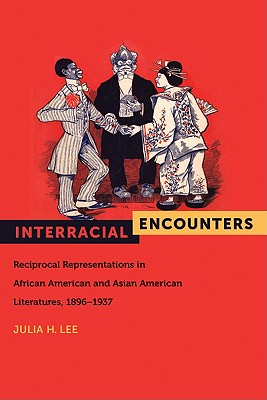
Interracial Encounters: 
Reciprocal Representations 
in African and Asian American 
Literatures, 1896-1937
It was during our travels that I learned the deep cultural connections between African and Asian Americans that began during the 19th century. Interracial Encounters: Reciprocal Representations in African and Asian American Literatures, 1896-1937 explores literary relationships and similarities between the experiences of Asian and African characters during history.

Chinese immigrants in Hop Alley between Blake and Market Streets were beaten and lynched in an effort to rid the state of that race. The Rocky Mountain News (Denver) reported that homes were burned, businesses were looted and Chinese were killed by more than 3,000 anti-Chinese rioters, which reportedly included Irishmen, African Americans and other races, yelling “Stamp out the yellow plague.” The mob dragged a man named Look Young down 19th Street; according to a doctor, Young died “from compression of the brain, caused by being beaten and kicked.

Washington Historical Society
Tacoma, Washington, 1892

Racial tensions and Jim Crow legislation affecting Chinese and other groups were prevalent in many parts of the West as in the rest of the rest of the nation, in areas that one would not have expected to find racism and discrimination in housing, employment, education, public transportation, landownership and other aspects of daily life. The sign to the right was an announcement of a Tacoma, Washington, meeting concerning the expiration of the Chinese Exclusion Act of 1882  


Although beatings, murder and lynching on the Western Frontier did involve former slaves and their descendants, much of this violence was not limited to African Americans and Native Americans. Cases of lynching in the West occurred for the same reasons they happened in other parts of the nation.  Many cases of lynching and murder in the West occurred as a result of property rights, territorial disputes, employment, ethnic differences, religion and political competition. Immigrants were often targets. 

Mississippi Delta  Chinese Farm Family
Chinese Farm Family, Mississippi Delta

After being forced from gold mines during the California Gold Rush, Chinese immigrants became the primary source of labor for other industries, such as the construction of roads, highways, railroads, telegraph lines and other  American infrastructure in the West. In the 1850s, thousands of Chinese laborers built levee systems, roads and the intercontinental railway in California

When this dangerous work was done on these projects, where the death toll had been heavy, the Chinese laborers were scorned by the general population, prevented from getting an education in American schools and driven from their homes and businesses, which some had established in their segregated neighborhoods.

Burned out and chased away by racist mobs under the influence of Jim Crow laws, many Chinese immigrants in California were threatened, tortured and murdered as examples to others who later fled to other states or back to their homeland in China. 

The plight of the Chinese attracted Mississippi Delta plantation owners to California to exploit and import displaced Chinese farm families to Delta farms to replace slaves after Emancipation. Through labor agents, the same tactic was used to import southern Italian, Lebanese and Syrian indentured servants to Delta plantations to pick cotton alongside black workers who had stayed on farms after being freed.


Yosemite National Park
Yosemite National Park 
Photo: National Parks Service 

When word spread of the resources and beauty of the American West.


Naturalist, John Muir, campaigned to have the area protected. Yosemite National Park in northern California was created in 1890 with the U.S. Army in command from 1891 until 1914, when the United States entered World War I. 


The Immigration Act of 1924 further restricted Chinese and other Asian groups from entering the United States. The Chinese Exclusion Act was repealed in 1943, but Jim Crow laws against Chinese people continued to limit their freedom and civil rights. People in my own family and neighborhood had Chinese and Japanese ancestry mixed in with their African ancestry. 

Until my mother and I began to travel, I simply wondered about and accepted their facial features and listened to the stories of people in the neighborhood who knew the truth. Traveling and learning about Asian ethnic groups revealed a hidden history of the American West.


Sunny Nash
In my Book, Bigmama Didn't Shop At Woolworth's, recognized by the American Association of University Presses for contributing to the understanding of U.S. race relations, I write about this Chinese immigrant experience in a story called: Voyage to America. Follow the Link to read the entire story. Here is an excerpt from the essay.


Don't forget to leave me a comment below and please use the LIKE button.


Sunny Nash – Race Relations in America