Translate


Showing posts with label kenny burrell. Show all posts

Tuesday, May 21, 2013

Kenny Burrell - Jazz & Blues Guitarist

Kenny Burrell, a calm jazz oasis, during the most dangerous decade of the Twentieth Century--the '60s!


Kenny Burrell's Man At Work on Vinyl
man at work LP

Kenny Burrell Still Playing Strong


Oh, please let there be a birthday bash and concert on PBS this year! My memories of Kenny Burrell go back to 1966. What a year.


In 1966, Dr. Martin Luther King questioned race relations in Chicago; the Vietnam War was cranking up; hippies became a movement with flowers as a mascot; hard rock and Motown fought for the airwaves; James Brown must have just discovered Colonics when he danced his way across the stage of the Ed Sullivan Show with I Feel Good!; and Kenny Burrell came out with Man At Work, 47 years ago. And, yes, Kenny Burrell's Man At Work was vinyl. That's what we had back then. And I hear, these days, that vinyl is making a comeback because digital can't match the warm sound of vinyl.
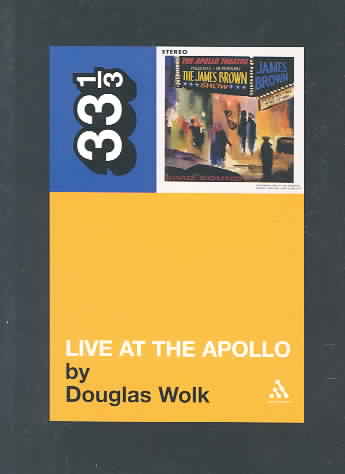
James Brown's Live at the Apollo
James Brown Live 
At The Apollo, 1962
I was there as the mini skirt got shorter and shorter; drugs got easier and easier to get; and the pill caused a sexual revolution.  My parents were there, too, wishing they were raising me in a different generation. They weren't. This was my time as I entered one of the most dangerous professions—the music industry--in a most dangerous time, a perfect storm, if you will, or at least it could have been for me, as it was for so many unfortunate others I met along the way and some I never met. 

Some aspiring musicians I knew when I first started out in the music business didn't have the talent to  make it big in the music industry, me included, or have the guts to stay in the music industry if they possessed the talent. They could feel their lack of talent and guts and still they did everything they could to stay in the music business, including getting high or worse with anyone they thought could give them a hand up the ladder. The hand never came disappeared and many were used up by age 21. The mid-level musicians, which I became part of, could hang on for a little longer because we worked harder at the music craft than those who thought they were too gifted to have to work hard.

In 1966, at the time of the release of Kenny Burrell's Man At Work, 45 years ago, I was 16 and starting her own music career in Houston, Texas, singing at jazz venues around the city such as the El Dorado Ballroom on Elgin Street with notables such as the 21-piece Conrad Johnson Orchestra, performing live on radio on Saturday nights, booked by Groovy George Nelson of KYOK. Yes, that's right. I picked up where my mother left off.

Musicians and vocalists, including me, loved Kenny Burrell's style and tried to copy and incorporate it into their own styling in some way, regardless of their instrument. Over the noise of the outside world, I listened to Kenny Burrell and tried my best to copy his phrasing with my voice. That’s how much his music moved me. Listening to this incredible musician, now, I still love his luscious sounds, 45 years later, with a special appreciation for the man who was then only 35 years old with so much of his life and career still to be explored. Kenny Burrell’s sound on his album, Man At Work, in 1966 was so rich, so mellow, so smooth, it was intoxicating.

I think I would have missed out on that music had it not been for my mother, who loved both jazz and classical music--the mellower, the better. She also loved Dave Brubeck, especially Take FiveSome of my friends thought my mother was being a bit pretentious, but her love for this music was real. And that's what we listened to at home when I was child, while my friends listened to this new thing, called Rock-and-Roll, in their homes, either on radio if they could receive a signal from Houston's black stations, KYOK or KCOH, or a record player if they had one.

We had a beat-up second-hand record player my mother picked up at a used furniture store. She placed the contraption in a corner of our living room beside her reading chair in front of the bookcase. No 
one--not me, my father or my grandmother--was allowed to touch my mother's records or her record player. She was very careful not to let the needle that touched the records become damaged. Once when I dropped the needle arm by accident on one of her records, I thought I would be banished from the house.

"A damaged needle," she said, "will scratch the records and they will become fuzzy with loosened vinyl and look something like a woolen sweater and I don't want you trying to play a woolen sweater on my record player." The end of her patience with me came when she caught me playing a borrowed scratched Chuck Berry record on her record player. The condition of the record dulled her needle. That's when she found another used record player for me to play my collection. I didn't get to play my records much because she was always playing hers. I finally lost interest in anything but jazz, especially jazz guitarist, Kenny Burrell, and jazz vocalist and organist, Jimmy Smith.

Kenny Burrell recorded Gee, Baby, Ain't I Good to You for his Midnight Blue album, recorded at the Van Gelder Studio, Englewood Cliffs, New Jersey, on April 6-7, 1963. Every singer who was a singer or was trying to be a singer covered that song. Some were good and some were, well let's say, were not so good. Gee, Baby, Ain't I Good to Youfirst recorded by Don Redman on November 5, 1929, in New York, was written by Redman and Andy Razat and later covered by Nat King Cole and Nancy Wilson. Those were the great versions of the song. 

I learned my version of Gee, Baby, Ain't I Good to You by listening to Nancy Wilson and then embellishing in a way that did not please my mother. She said she didn't think I was old enough or mature enough to sing that kind of song when I was 13 years old. "What do you know about that kind of feeling?" She asked. "Your heart has never been out of your chest." What was she talking about? Well, not too many years later I found out.

Kenny Burrell is a UCLA professor and Director of Jazz Studies, where he teaches jazz performance, jazz history, improvisation, composition, jazz combos, contemporary jazz ensemble, and ethnomusicology.

Kenny Burrell, jazz guitarist and ethnomusicology instructor at UCLA

Kenny Burrell, Classroom, UCLA 
Kenny Burrell MP3 Download Page
In 1978, Burrell developed a course on Duke Ellington, the first university course on Ellington in the United States. Burrell recorded a tribute, Ellington Is Forever, in 1975, one year after Ellington’s death in 1974. Known as Ellington’s favorite guitarist, although he never played with him, Burrell played banjo on Hot and Bothered by Ellington’s son, Mercer, in 1984.


African American National Biography

African American National Biography:
 12-Volume Set (African American
History Reference)

Sunny Nash was among 1,700 scholars 
to contribute to the 12-volume publication
Founder of the Jazz Heritage Foundation and the Friends of Jazz at UCLA, Kenny Burrell was named 2004 DownBeat Magazine Jazz Educator of the Year. Harvard and Oxford commissioned me to write Burrell's biography for their joint project, African American National Biography, published in 2008. Categories include performing arts, business, education, medicine, government, literature, law, music, religion, science and many others. 

In my category, Rhythm & Blues (R&B) and Jazz, I used my performing and studio experience, journalism education and understanding of the history of race relations in America, my biographies included jazz guitarist, Kenny Burrell; jazz trumpeter and flugelhorn player, Clark Terry; and pioneer R&B singer-songwriter, Ben E. King. R&B or soul music as it became known and the Civil Rights Movement were closely related during the 1960s. 

Gates and Higginbotham hope the books will be used by scholars and will have a place in schools, libraries, and in African American homes. Higginbotham says, “What better way to understand the richness, complexity, and depth of African American history than through biography, because people’s lives are so complex.” The African American National Biography is a compilation of more than 4,000 articles on the contributions of African Americans to the history of the United States and the world. Also on the link, see other related titles on this subject.


Custom Search Kenny Burrell, Jazz, Guitar or other Topics.

Google

Sunny Nash – Race Relations in America

Wednesday, December 5, 2012

Take Five - In Memory of Dave Brubeck


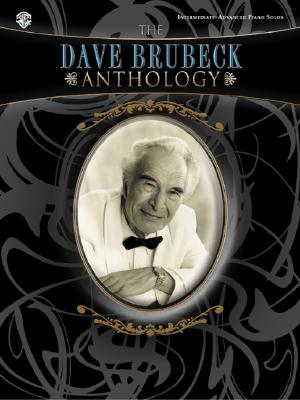
Dave Brubeck

The Dave Brubeck
Anthology - Music Book
On summer evenings in the 1950s and 1960s when the air inside the kitchen was too stifling to turn on the stove and cook a meal, my mother made cold-cut suppers outdoors with the music of her favorite jazz artists lilting out of the house into the fading light of day and blending into her candlelit table setting.

This is how my mother made my life seem like a luxury, instead of the drudgery most people simply accepted. 


Outdoor Entertainment at Littie's was necessary because there was no indoor air conditioning. These were my family's evenings out and sometimes we had overnight company, traveling relatives or friends passing through town. At that time, there were no restaurant or hotel accommodations for black people, except ill-equipped, insect-infested flop-house rooms above nightclubs. My mother would never expose guests to rooms where sheets had never been laundered.or restaurants with rear Jim Crow entrances or walk-up windows to order food to be eaten while standing on the street. That was just not acceptable to her. 

To complete evenings out, my mother brought out music to play on a record changer she had bought at a yard sale. She connected her new electronic music device to a power source in the kitchen, set the box on a chair just inside the back door and put on her favorite music--Dave Brubeck--while she decorated the backyard for supper. 

"You can make your life better with a little effort," she said. "I already have the world out there screaming at me what I can and cannot do for a living; where I can and cannot sit in a restaurant; where I can and cannot live! Why would I want to come home from the job they do let me have and listen to a guy whining how bad life is to the sound of an out-of-tune guitar," she would say. I guess that music was too sad, reminding her of the Jim Crow realities under which we lived, at that time, and making her feel worse than the world already made her feel. 

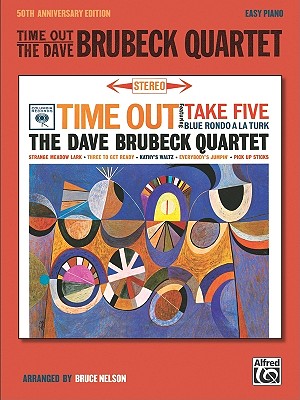
"I do not need someone crying loud and yelling about a broken heart or a life gone wrong," my mother would say about Blues and Country Music, she wrote songs herself that were very much country. "I can look up the street and find real examples of failed love lives! I want to hear music that gives me hope and lightens my spirit." Dave Brubeck's song, Take Five, from his album, Time Out really lifted my mother's spirits after she went right out and bought it as soon as the studio released the music in 1959.

Dave Brubeck Quartet - Time Out
 Time Out
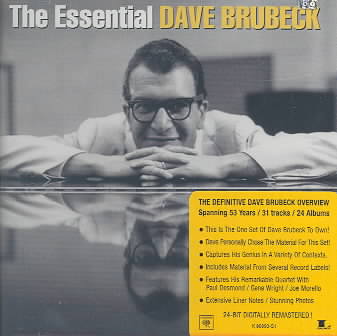
DAVE BRUBECK
Essential Dave Brubeck


My mother's motto was, take five-- take time to enjoy yourself. Taking five always included the Dave Brubeck Quartet or some other of her favorite jazz artists who played "sweet and soft."


Listening to Brubeck's music allowed my mother and me to exchange feelings of sadness with feelings of joy. 


Dave Brubeck Quartet Take Five
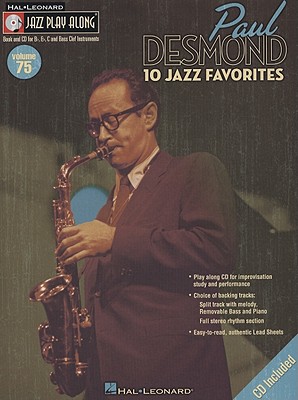
Paul Desmond, Saxophone


Just like my mother tried to make life better by creating her own fine restaurant in the backyard and playing her favorite music, all of America was yearning for hope during the 1950s and 1960s. Life under Jim Crow laws could make one feel pretty oppressed and I imagine the oppressor's burden was getting heavy, too. Although we all saw the changes over the horizon, the changes were yet to be fully realized.

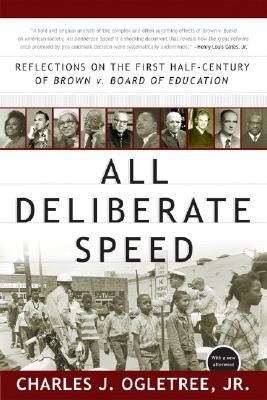
Brown V. Board of Education
All Deliberate Speed: 
Reflections on the 
First Half-Century 
of Brown v. Board 
of Education

When the Supreme Court decided Brown v the Board of Education in 1954, my mother thought the schools would be integrated and, finally, I would be issued new school books. 

When this was not the case, we all waited, patiently and some impatiently. And nothing changed. Long after the Court ordered school desegregation with aIl deliberate speed, I continued my education in a segregated school system using hand-me-down books from the white school until I graduated from high school ten years later. And ten years later and even today, we are all still the Offspring of Jim Crow. When their books were replaced, the black schools got them, marked up, pages missing and bindings loose. Then some of our teachers used books to play favorites, giving their pets the best of them. 

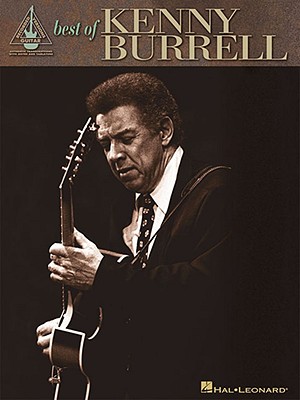
The Best of Kenny Burrell Playing Jazz Guitar

Paul Desmond

I could not use tattered books as an excuse. My mother never accepted that. "You have books," she said. "That's more than your ancestors had on the plantation! Now, go to your room and do your homework." 


My mother expected me to graduate from college one day and those books were all my school had to prepare me.


There was never any use arguing with my mother. She had all the answers, it seemed. So, I dragged those old beat-up books home from school every day and studied under her watchful eye while listening to the music of Dave Brubeck or Kenny Burrell or some other favorite jazz or classical artist of hers in the background.

My mother's mother, Bigmama who lived with us, had a brother, a school teacher in Houston. His wife was a traveling book and music seller, on the road sometimes seven days a week with a statewide route that included our town. Our great aunt stopped often at our house for a meal when she was in town and sometimes slept overnight 

Due to the lack of restaurants and hotels available to this black traveling sales executive, we became part of her accommodations network, providing evenings outdoors with delicious food and conversation about books, music, politics and current events; and listening to the latest jazz and classical music albums that she also sold from the back of her car to supplement her income. This was possible because, like most small towns in the 1950s, ours had The Record Shop downtown, a dark, dusty, dingy little hole in the wall that did not carry jazz or classical music and did not sell sheet  music, which I needed for my piano lessons

My mother also ordered my sheet music and her jazz and classical music recordings from our great aunt. She also bought lots of other product from our great aunt on installment plans, such as a set of reference books, because my school's encyclopedia were outdated and the public library was segregated. My mother bought subscriptions to national magazines, newspapers, journals and other periodicals like National Geographic

My father always wanted to know where my mother got all the money to make those purchases. She replied, "I manage."

After breakfast the next morning, before our great aunt left to continue her sales route to the next county, she gave my mother discontinued music recordings and book samples she no longer needed for display and demonstrations, which my mother eagerly added to our shelves. 

Our aunt made quite a good living for a number of years until record clubs and book-of-the-month deals in the backs of magazine ruined her business. It was just as well, she said. It had been a hard job for a woman. In fact, she was the only woman I knew who was a traveling salesman. Although she had a college education, professional jobs outside of the classroom for black women in her generation were scarce. When she and our uncle retired, I spent weekends with them in Houston. Over the years, the childless couple had amassed a small fortune and lived very well in a black upscale Houston neighborhood.

Books, newspapers, photo essays and television helped change U.S. race relations. 


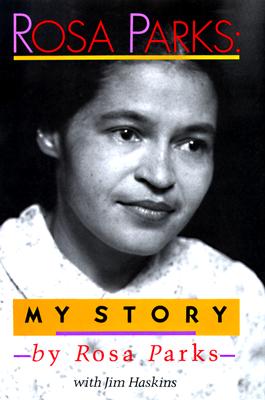
Photo: Rosa Parks
Rosa Parks
by Rosa Parks
& James Haskins

Rosa Parks had started the year-long Montgomery Bus Boycott and Dr. Martin Luther King soared to national prominence one year after Brown v the Board of Education failed to change the Jim Crow American educational system. And, again, I have to admit, there was little immediate change.

The Supreme Court said one thing and the American people said and did another. Some black Americans waited for others like Martin Luther King to test the new laws regarding U.S. race relations that had replaced Jim Crow and other black families sued districts, cities and states in efforts to receive equal access to better schools. People of all races were afraid of what was about to happen to their ways of life. 

School districts hired attorneys to guide them through the postponement game to avoid court rulings on a slew of Landmark Cases Affecting Jim Crow Laws in American Education. In the meanwhile, things stayed the same. For another decade, there were people in the United States of America who were not allowed to vote and there were still colored and white only signs at the movies, in waiting rooms and other places around the nation.

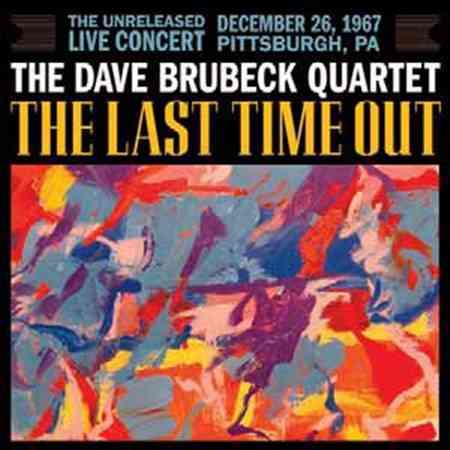
LAST TIME OUT  BY DAVE BRUBECK
Their Last Time Out
BY DAVE BRUBECK
When I was growing up, my mother exposed me to a world far different from the Jim Crow world in which we lived. She created a library in our house, took me on trips, sent me to ballet and piano lessons and took me to galleries and museums 100 miles away on a Greyhound Bus. 

In her planning for my education, the music of Dave Brubeck and other similar music figured in prominently. She believed this music along with classical selections would improve my mind by calming my thoughts while I studied my lessons in those hand-me-down books. And it worked. I became one of the first black women to graduate from Texas A&M University and I made the Dean's List several semesters while listening to the music that became the ambiance of my life. 

©

    Bigmama Didn’t Shop  At Woolworth’s  Sunny Nash

Hard Cover

Amazon Kindle
Sunny Nash author of bigmama didn't shop at woolworth's
Sunny Nash
Sunny Nash is an author, producer, photographer and leading writer on U.S. race relations. She writes books, blogs, articles and reviews, and produces media and images on U.S. history and contemporary American topics, ranging from Jim Crow laws to social media networking. Sunny Nash is the author of Bigmama Didn't Shop At Woolworth's (Texas A&M University Press), about life with her part-Comanche grandmother during the Civil Rights Movement.

Sunny Nash’s book is recognized by the Association of American University Presses as essential for understanding U.S. race relations. Nash's book is also listed in the Bibliographic Guide for black studies at the Schomburg Center for Research in Black Culture in New York; and recommended for Native American collections by the Miami-Dade Public Library System in Florida. Nash uses her book to write articles and blogs on race relations in America through topics relating to her life--from music, film, early radio and television, entertainment, social media, Internet technology, publishing, journalism, sports, education, employment, the military, fashion, performing arts, literature, women's issues, adolescence and childhood, equal rights, social and political movements--past and present—to today's post-racism.

ushistory.org homepage

© 2014 Sunny Nash. All Rights Reserved Worldwide.
 www.sunnynash.blogspot.com 
~Thank You~
Sunny Nash – Race Relations in America

Thursday, February 24, 2011

Kenny Burrell – Jazz Guitarist At Work


Kenny Burrell-- jazz guitarist, composer and educator--lectures and performs at 80-something.


Kenny Burrell, 2007
Kenny Burrell, 2007
Continues to Train Generations
of Jazz Artists for Stage
Studio, Film, Television & Beyond

Kenny Burrell’s sound on his album, Man At Work, in 1966 was so rich, so mellow, so smooth, it was intoxicating. 


I think I would have missed out on that music had it not been for my mother, who loved both jazz and classical music--the mellower, the better.

Some of my friends thought my mother was being a bit pretentious, but her love for this music was real. And that's what we listened to at home when I was child, while my friends listened to this new thing, called Rock-and-Roll, in their homes, either on radio if they could receive a signal from Houston's black stations, KYOK or KCOH, or a record player if they had one.

We had a beat-up second-hand record player my mother picked up at a used furniture store. She placed the contraption in a corner of our living room beside her reading chair in front of the bookcase. No one--not me, my father or my grandmother--was allowed to touch my mother's records or her record player. She was very careful not to let the needle that touched the records become damaged. Once when I dropped the needle arm by accident on one of her records, I thought I would be banished from the house.

"A damaged needle," she said, "will scratch the records and they will become fuzzy with loosened vinyl and look something like a woolen sweater and I don't want you trying to play a woolen sweater on my record player." The end of her patience with me came when she caught me playing a borrowed scratched Chuck Berry record on her record player. The condition of the record dulled her needle. That's when she found another used record player for me to play my collection. I didn't get to play my records much because she was always playing hers. I finally lost interest in anything but jazz, especially jazz guitarist, Kenny Burrell, and jazz vocalist and organist, Jimmy Smith.

Now, you've heard why my mother was fond of Kenny Burrell and Jimmy Smith recordings, such as their 1958, Softly as a Summer Breeze, and Blue Bash album in 1963. She said they met in a New York studio in the 1950s. That was about the time of the Montgomery Bus Boycott, initiated by Rosa Parks and lead by the emerging civil rights leader, Dr. Martin Luther King, Jr. The following link leads to books on Rosa Parks, written for children about the age I was when the Montgomery Bus Boycott occurred.

My mother read magazines like Jet to keep up with everything from civil rights issues to black entertainers. She wanted to know what was happening in our Jim Crow world, including the Woolworth's sit-ins, so we could protect ourselves. "If you don't read, you won't know," she always said, as she buried her face in a book. Education was very important to her. She went to college later in life but did not get a degree. Her goal was to see that I got a degree and I did. Out my generation of twenty-something cousins on my mother's side of the family, I was one of four of my cousins that I know about to receive a university degree--me, Annette, Finner and J.W.

Johnson Publishing Company of Chicago premiered Jet Magazine in 1951 as a publication focusing on African American stars in sports, movies, music, education, social activism and civil rights. Jet came after a number of other efforts, including Negro Digest in 1942 and Tan Magazine in 1950. After Jet Magazine, Johnson Publishing produced African American Stars and Ebony Jr. Jet remains the number one news weekly for African American readers.

I believe my mother harbored dreams of singing professionally. As I recall her singing her original songs to me when I was a child, she had the voice to have been a professional singer-songwriter, although her songs sounded more like country music than anything else. 

When my mother died I found her songbook of lyrics and melodies she had written throughout her life. The songs told of a time past, a young girl wanting to go places, love found and lost, unfulfilled dreams, very small stories, personal stuff, not great big anthems. And I was right, my mother wrote country music. In regard to music, my mother said, she needed to  calm me down with music after a day out in my very noisy world.

Littie Nash
My mother, Littie Nash, wrestled with Jim Crow laws while giving me the life of a little princess with imagination and without the luxury of having a lot of money...Littie did not waste compliments on me or anyone else. She reserved accolades to celebrate real accomplishments, not just because I dragged myself out of bed before noon on Saturday or because I made an 'A' on my report card. "Some things you have to do," she said. "And those things pass, not without notice, but without an all-day hullabaloo."

To support my efforts, my mother sponsored piano, ballet, tennis and swimming lessons, dance performances, recitals, literary and classical music club memberships, summer camps, school trips and science fair exhibits, still managing to squeeze out of our tight budget money for the dentist to install braces on my teeth. It took a great deal of courage to live with dignity and raise me to have aspirations. About my upbringing, Littie got it right, although I took detours of my own along the way. Read more at: My Mother & the Thinkers.

Robert C. Weaver & President Lyndon Johnson
Robert C. Weaver
& President Lyndon Johnson
Buy Robert C. Weaver Books
Visit LBJ Library

As I recall, the world was a very noisy place in 1966 when I first began listening to Kenny Burrell. The year began with the Civil Rights Movement already raging in the Jim Crow South and splashing across television sets all over America and Stokely Carmichael introducing Black PowerIn 1966, President Lyndon Johnson appointed the first black cabinet member, Robert C. Weaver, as Secretary of Housing and Urban Development.

In 1966, Dr. Martin Luther King questioned race relations in Chicago; the Vietnam War was cranking up; hippies became a movement with flowers as a mascot; hard rock and Motown fought for the airwaves; the mini skirt got shorter; drugs got easier; the pill caused a sexual revolution; and James Brown danced his way across the stage of the Ed Sullivan Show with I Feel Good!

I was there and my parents were wishing they were raising me in a different generation. They weren't. This was my time as I entered one of the most dangerous professions—the music industry--in a most dangerous time, a perfect storm, if you will, or at least it could have been for me and was for so many unfortunate others I met along the way.

Man At Work by Kenny Burrell, 1966
Man At Work by Kenny Burrell, 1966
In 1966, at the time of the release of Kenny Burrell's Man At Work, 45 years ago, I was 16 and starting her own music career in Houston, Texas, singing at jazz venues around the city such as the El Dorado Ballroom on Elgin Street with notables such as the 21-piece Conrad Johnson Orchestra, performing live on radio on Saturday nights, booked by Groovy George Nelson of KYOK. Yes, that's right. I picked up where my mother left off.

Musicians and vocalists, including me, loved Kenny Burrell's style and tried to copy and incorporate it into their own styling in some way, regardless of their instrument. Over the noise of the outside world, I listened to Kenny Burrell and tried my best to copy his phrasing with my voice. That’s how much his music moved me. Listening to this incredible musician, now, I still love his luscious sounds, 45 years later, with a special appreciation for the man who was then only 35 years old with so much of his life and career still to be explored.

Kenny Burrell, Classroom, UCLA
Kenny Burrell MP3 Download Page
Kenny Burrell is a UCLA professor and Director of Jazz Studies, where he teaches jazz performance, jazz history, improvisation, composition, jazz combos, contemporary jazz ensemble, and ethnomusicology.

In 1978, Burrell developed a course on Duke Ellington, the first university course on Ellington in the United States. Burrell recorded a tribute, Ellington Is Forever, in 1975, one year after Ellington’s death in 1974. Known as Ellington’s favorite guitarist, although he never played with him, Burrell played banjo on Hot and Bothered by Ellington’s son, Mercer, in 1984.

Founder of the Jazz Heritage Foundation and the Friends of Jazz at UCLA, Burrell was named DownBeat Magazine Jazz Educator of the Year in 2004 and included in the African American National Biography by Harvard and Oxford in 2008. 

African American National Biography
African American
National Biography
I was honored when assigned Kenny Burrell's biography by the editors of the African American National Biography, Henry Louis Gates, Jr., and Evelyn Brooks Higginbotham, and to be among 1,700 scholars to contribute. The many categories include performing arts, business, education, medicine, government, literature, law, music, religion, science and many others. My category was music: Rhythm & Blues (R&B) and Jazz. Using my knowledge of music, performing experience, journalism education and understanding of the history of race relations in America, my biographies included jazz guitarist, Kenny Burrell; jazz trumpeter and flugelhorn player, Clark Terry; and pioneer R&B singer-songwriter, Ben E. King.

According to Harvard, Gates and Higginbotham hope the books will be used by scholars and will have a place in schools, libraries, and in African American homes. “What better way to understand the richness, complexity, and depth of African American history than through biography, because people’s lives are so complex,” says Higginbotham. Review and purchase the African American National Biography, a compilation of more than 4,000 articles on the contributions of African Americans to the history of the United States and the world. Also on the link, see other related titles on this subject.

Cowels Women's History Special Collectors Edition
Cowels Women's History
Special Collectors
Edition
I wrote music biographies of Marian Anderson, contralto,  and mother of the blues, Gertrude “Ma” Rainey in 100 American Women Who Made A Difference, for a special issue of the Cowels publication, Women’s History Magazine; edited BREAKING THROUGH Lighting the Way, a book of profiles on black women who made a difference in the history of Long Beach, California.

My articles on Kenny Burrell, Clark Terry and Ben E. King appear in the eight-volume African American National Biography with more than 4,000 other historical biographies, covering 500 years, dating back to the arrival of Esteban, the first recorded African explorer to set foot in North America.  The African American National Biography is a collaborative project between the W. E. B. Du Bois Institute for African and African American Research at Harvard University, the Oxford University African American Studies Center and the Oxford University Press.

I have followed Kenny Burrell's career for many years. When  discovered that the former State Department Cultural Ambassador is teaming up with John Hasse, a leading jazz historian from the Smithsonian National Museum of American History, for a series of lectures and exhibitions to address jazz as a diplomatic tool to communicate to the world the importance of the art form as a ‘cherished aspect of American society and culture,' I thought it was worth bringing to your attention. The presentation is entitled Fowler Outspoken: Kenny Burrell and John Hasse on Jazz Diplomacy, at the UCLA Fowler Museum through August 14, 2011.

By the end of this series at Fowler, Kenny Burrell will have turned 80 years old, the new 60 by today's calculations. If I don't get to say it in person, I am saying it now, "Happy Birthday, Kenny! You have had a profound effect on my life and you changed the way I heard the world. Thank you."

Over all the noise, I heard the sound of his fingers gliding gently over the strings and striking sweet little chords among subtle harmonies fading slowly and disappearing into emerging and surprising resonance and, at the same time, emitting that hypnotic sound of skin on wood.


© 2011 Sunny Nash
All Rights Reserved Worldwide.

~Thank You~
________________________________

Or take a look at the Kenny Burrell Amazon display below.