Translate


Showing posts with label woolworth sitins. Show all posts

Sunday, November 20, 2016

Rosa Parks, Montgomery Bus Boycott & Jim Crow


Photo: Rosa Parks on bus after Montgomery Bus Boycott
Rosa Parks after Montgomery
Bus Boycott 1956
On December 1, 1955, a beautiful, smart, high-school educated, hard-working, 42-year-old seamstress, named Rosa Parks, boarded a bus after work. Like every weekday, she sat down on a seat designated 'black seating.' Stop to stop, the bus filled, leaving no vacancies in the white section. The bus driver, familiar with this situation, ordered Rosa Parks to move from her seat to allow more seating for white passengers.

Rosa Louise McCauley, born in 1913 and raised on her grandparents' farm in Alabama, was accustomed to inferior social treatment since she was a child, long before the start of the modern Civil Rights Movement began. In fact, Rosa Parks went on to become known as The Mother of the Civil Rights Movement.

In order to get an education, Rosa Parks walked to school because the same Jim Crow laws that prevented her from attending white schools in Alabama, also prevented her from riding  the school bus when she was a young student. The school buses were not permitted to transport black students in the Jim Crow South. Below is a video sketch of the education of Rosa Parks, an excerpt from a YouTube Biography Channel program.


Jim Crow laws were in effect from 1876 to 1965. For more videos on race relations in America, Subscribe to my YouTube Channel, iksunny.

Rosa Parks eventually went back and finished high school after she married Raymond Parks, who also encouraged her to join him in working with the Montgomery National Association for the Advancement of Colored People (NAACP).

Sign: No Spanish or Mexican  
Sign: No Spanish or Mexican
Rosa Parks wanted more opportunity. A person of color who had been denied decent treatment by society all of her life, Parks had finally had enough and refused to move when the bus driver ordered her to another seat. I can only imagine what must have been going through the mind of a woman who was fed up with it. I recognized the fed-up expressions on the faces of my mother, grandmother, father and others I knew when I had seen them in similar situations.

Again, the bus driver ordered Rosa Parks to move to another seat in his attempt to enforce a Jim Crow law that mandated racial segregation of all public and private facilities and separate but equal facilities for customers, clients, students, patrons, patients and  passengers who were black or people of color.


Photo: Segregated Birmingham, Alabama, Bus, Birmingham Public Library, via NPR
Segregated Alabama Bus
Source: Birmingham Public Library
Via: National Public Radio
Jim Crow laws required blacks to give up seats to whites, as needed, determined by bus drivers. If whites were standing because their section of the bus was filled, the driver corrected the situation by ordering black riders to move from their seats to allow whites to sit instead. When Rosa Parks would not move from her seat, the bus driver haled a policeman to assist him in the matter.

I was six when the Montgomery Bus Boycott began. I knew about it because the Nash family took newspapers from all over the country and they explained to me what was going on. "It's a way of life that is ending," my mother said. "Nothing personal, just the end of a way of life. Are you ready?" I had a vague notion of what this meant but not really.

My family tried to protect me from the harshest of it all. There were places we didn't go. And that, I learned later, was to avoid the shame of it all. My mother only took me to segregated places that were absolutely necessary to my life--the doctor, bus station, movies, school and other public facilities where my presence was needed. We didn't eat out very often because restaurants required us to enter through a rear door, sit in an inferior location or walk up to an outdoor window to order and receive food. My cousin, Joyce, reminded me the other day that at the bus station in her home town required African Americans to eat their orders in the baggage room at discarded desks retrieved from a local school.

Book: Bigmama Didn't Shop At Woolworth's by Sunny Nash
Bigmama Didn't Shop
At Woolworth's
by Sunny Nash
In the excerpt below from “Movies—Not Just Black-and-White,” one of the essays in my book, Bigmama Didn’t Shop At Woolworth’s, I write about the first time my mother took me to lunch and the movies. It was about to rain that Saturday afternoon but my young mother agreed to take her little daughter to the movies anyway:

Without reply, my mother dug into her tiny cloth coin purse and paid. Time passed as slowly as it could before her change and our food arrived. “Y’all can’t eat in here,” the cook said. Without a word, my mother grabbed my hand and dragged  me to the back door. As we stood outside and ate in silence, I thought I saw a tear sparkle on my mother’s cheek as the day’s last sunlight stroked her face. With a few drops of rain falling on us, we took the short walk to the Palace Theater and stood at the ticket window outside the main lobby. The aroma of buttered popcorn floated through the little round hole in the glass where the ticket woman worked. To avoid getting wet in the shower, the moviegoers dashed through a glass front door into a dry, comfortable lobby filled with tiny white lights, velvet draperies, and red carpet. By the time my mother and I got our tickets, big drops of rain were splashing down on our heads. With her hair heavy with water, sliding into her face, my mother dug into her tiny cloth coin purse and paid. The little blue door on the outside of the theater slammed us inside the darkest place I’d ever been—like a coffin, I thought, holding my mother’s hand. 

Littie Nash
Littie Nash

My mother, Littie Nash, wrestled with Jim Crow racism during the 1950s and 1960s, while giving me the life of a little princess with imagination and without the luxury of having a lot of money...Littie, the ultimate stage mother, did not waste compliments on me or anyone else. She reserved accolades to celebrate real accomplishments, not just because I dragged myself out of bed before noon on Saturday or because I made an 'A' on my report card. "Some things you have to do," she said. "And those things pass, not without notice, but without an all-day hullabaloo."

To support my efforts, my mother sponsored piano, ballet, tennis and swimming lessons, dance performances, recitals, literary and classical music club memberships, summer camps, school trips and science fair exhibits, still managing to squeeze out of our tight budget money for the dentist to install braces on my teeth. It took a great deal of courage to live with dignity and raise me to have aspirations. About my upbringing, Littie got it right, although I took detours of my own along the way. Read more at: Great Mothering in Jim Crow's World 

AS EARLY AS 1943, Rosa Parks refused to board the bus using a rear entry, the door for black bus riders. Parks and her mother had always refused to enter the bus through the rear door, while other black riders bad to use the rear door. Rosa Parks had challenged Jim Crow bus policy in Montgomery twelve years before she  boarded the bus on December 1, 1955, and started the Montgomery Bus Boycott. Nine months before the boycott, 15-year-old Claudette Colvin was dragged off a Montgomery bus by police, handcuffed and jailed on March 2, 1955. Her case, got little notice and no support. Review and purchase Claudette Colvin at links on left. 

Photo: Rosa Parks
Rosa Parks
On December 1, 1955, ordered by the bus driver to move, Rosa Parks refused. Did she make the decision alone? In her words, she says, we waited so long to make this protest, indicating the protest was decided, not by herself, but in concert with others. Why was Rosa Parks chosen to spark the boycott? Was it because she had a history of protest? Was it because she worked with the NAACP? Was it because she was part of a larger plan? 


"The only thing that bothered me," Parks said. "Was that we waited so long to make this protest."


“People always say that I didn't give up my seat because I was tired,” Rosa Parks wrote in her autobiography, “but that isn't true. I was not tired physically, or no more tired than I usually was at the end of a working day. I was not old, although some people have an image of me as being old then. I was forty-two. No, the only tired I was, was tired of giving in.”

Photo: A. Philip Randolph and Eleanor Roosevelt
A. Philip Randolph
& First Lady Eleanor Roosevelt,
Who, Like Randolph, 
Supported Civil Rights
in the Armed Services,
& Pilot Training Programs
At Tuskegee Institute
Rosa Parks was arrested, fingerprinted and paid a fine of fourteen dollars for refusing to follow bus driver’s orders, but was not jailed. Parks called Rev. E.B. Nixon, president of the Montgomery NAACP, a group with which Parks had worked diligently for some time as youth leader. Nixon called the Washington D.C. NAACP, a group that decided "to move on it today."  Read below to see that there was more to Rosa Parks's interest in the Civil Rights Movement than integrating buses. Rev. A. Philip Randolph and Dr. Martin Luther King, Jr., were brought into the Montgomery Bus Boycott quickly to organize efforts.

Asa Philip Randolph, born in 1889 in Florida, studied in New York and formed the Brotherhood of Sleeping Car Porters in 1925; helped form the Fair Employment Practices Committee; and threatened to organize a protest in Washington against discrimination in the armed forces and defense industries in the 1930s and 40s. In 1955, he joined the AFL-CIO executive council and was vice president in 1957. Randolph helped to organize the 1963 March on Washington. He died in 1979.

Dr. Martin Luther King, Jr., was in his mid-twenties at the time of the boycott, and had been the pastor at Dexter St. Baptist Church in Montgomery for only a short time when he became the official leader of the Montgomery Bus Boycott, which led him to later become the leading figure in the 1960s Civil Rights Movement in the United States.

Rosa Parks Booking Photo
Rosa Parks
Booking Photo
Photo: Martin Luther King Jailed
Martin Luther King
On December 5, 1955, the Montgomery Bus Boycott officially began. Signs and fliers announced to those who did not agree with policy that they should not ride. Rosa Parks, Martin Luther King, Jr., and 91 others were prosecuted for starting the bus boycott.

Because two-thirds of the bus riders in Montgomery were  black, the NAACP was well aware that this bus boycott would strike a serious blow to the financial condition of the bus system. The black population of Montgomery at the time was about 40,000. If the entire black population participated in the boycott along with whites who were supporting the boycott or those trying to avoid trouble, then the total participation could have exceeded 50,000, which was the estimate of the Montgomery Improvement Association (MIA). More on the MIA later. 

Photo: Montgomery Bus Boycott in Rain
Montgomery Bus Boycott
Rain, Shine, Sleet & Snow
People Walked to Work,
Church and Everywhere

In the dead of winter, most people around the nation were beginning to prepare for their annual shopping traditions, gift selecting and wrapping rituals, rich and savory family holiday dinners. While Christmas and all the celebrations were in the air, Montgomery bus riders tackled the weather in coats, hats, scarves and rain gear. But they stayed off the buses. Montgomery citizens lost jobs, either because they couldn’t get to work or they were fired out of hostility. Non-the-less, they simply refused old racist treatment. Following Rosa Parks and her courageous action, people used carpools and walked to work and every other place they had previously ridden buses. 

Photo: Montgomery Bus Boycott walking to school and work
Montgomery Bus Boycott
Protesters Walking to Work & School
Many white citizens were against the Montgomery Bus Boycott. It threatened racial status quo. What is slow to be revealed is that some white sympathizers tried to participate in the boycott by providing black workers rides to work. Some say this seemingly generous action was selfish on the part of whites who wanted the work done.

Observers of the historical event say the action of mostly white housewives may have started out as a way to get their maids to work, but ended up with them providing rides to other black workers, as well. I have not been able to locate any photographs of whites driving black workers during the boycott. Perhaps pictures of whites driving blacks are scarce because some whites in the Jim Crow South were careful not to be identified with the growing Civil Rights Movement, which would have made them vulnerable in their own racist communities.

Whites, along with blacks who were providing rides during the Montgomery Bus Boycott, were refused taxi permits to prevent them from carrying passengers in their private vehicles. When these white drivers provided rides anyway, they were harassed by Ku Klux Klan members who were often law enforcement and just as often their neighbors. Identified as bus boycott affiliates, black and white drivers reacted nonviolently. The Klan, however, turned violent, bombing the homes of Martin Luther King, Jr. and E.B. Nixon. 

Photo: Martin Luther King MIA Meeting, Rosa Parks in Front Row
Martin Luther King
Conducts MIA Meeting
Montgomery Bus Boycott

MIA was organized specifically to address the needs of the bus boycott. This predominately black community group was made up of  blacks and whites with a basic goal of improving race relations in Montgomery, Alabama. Martin Luther King, Jr., (right) conducts an MIA meeting in 1955. Rosa Parks is seated in the front row.

Through two consecutive Christmas Holidays, with me and the world watching, this non-rider policy in Alabama continued through rain, shine, sleet and snow and over again for more than a year, 381 days. On November 13, 1956, the Montgomery Bus Boycott ended when the United States Supreme Court decided that segregation laws were unconstitutional.

Photo: Rosa Parks boarding bus after Montgomery Bus Boycott
Black Montgomery Bus Boycotters Boarding Bus
Through Front Entry after Supreme Court Decision
Rosa Parks Leading the Way
Martin Luther King, Jr., wrote in his book, Stride Toward Freedom, "with a mixture of anxiety and hope, I read these words: 'The United States Supreme Court today affirmed a decision of a special three-judge U.S. District Court in declaring Alabama's state and local laws requiring segregation on buses unconstitutional. The Supreme Court acted without listening to any argument; it simply said 'the motion to affirm is granted and the Judgment is affirmed. At this moment my heart began to throb with an inexpressible joy. The darkest hour of our struggle had indeed proved to be the first hour of victory."

After her husband Raymond died, Rosa Parks co-founded the Rosa and Raymond Institute for Self Development, in February 1987 with Ms. Elaine Eason Steele, in honor of Raymond Parks (1903-1977), "the living legacy of two individuals who committed their lives to civil and human rights."

Rosa Parks is a hero, we all agree. Without her bravery and commitment, race relations in America would not have progressed at the speed it did. Parks, however, had a great deal of assistance in changing the the Jim Crow South. We have to remember in our quest for education on the civil rights era that there were churches, organizations and lots of people involved. Many individuals, who began with one sentiment, ended up with a totally different view of race.

What I now know that I did not know as a child  is that many white people also felt burdened by that way of life, some of whom grew up a few blocks from me and attended separate schools but, later, became my closest friends. They were children back then, just like me, inheritors of the tradition. These were the same people who joined the marches, broke the old hiring rules and changed their minds after generations of  careful conditioning by family and society.

Sunny Nash Articles Related to this Post


Other Related Articles by Sunny Nash

Rosa Parks and the Montgomery Bus Boycott, led by Dr. Martin Luther King, affected race relations in America and early Hollywood, in that, studios had to change with the new racial climate that had relegated black actors to servants' roles and mirrored pre-civil rights America.

In The Rosa Parks Story Angela Bassett becomes Rosa Parks in a portrayal of the legendary civil rights heroine that seems more real than performance. The article covers aspects of Rosa Parks' life and the Montgomery Bus Boycott with photographs and videos.

Woolworth's sit-ins by black and white college students in Greensboro NC between February and July 1960 integrated lunch counters cross the nation. 

Race relations in America and Southern California were changed by 12 African American women who made a difference in Long Beach, featured in historical profiles, BREAKING THROUGH Lighting the Way.


Saturday, August 6, 2011

Great Mothering in Jim Crow's World

Custom Search

During the era of Jim Crow laws, my mother taught me to navigate my racist environment, while also teaching me to be responsible for my treatment of other people--black and white.

Sunny Nash's Mother
Littie Nash (1928-2008)
Elegant in Everything She Did
Created Herself a Professional Career
My mother, Littie Nash, knew Jim Crow, as did Americans with a little too much tint in their skin, kink to their hair, slant to their eyes or accent in their speech. But Littie, like members of other persecuted ethnic and religious groups in America, figured out a way to survive and raise families in Jim Crow's world.

I grieve the loss of my mother. She had such an impact on me, when I was growing up in a racist environment. She planned the details for a successful life in a country that guaranteed a little black girl, at the time, no more than a career as a domestic worker, which my mother refused for herself and for me.

Along with survival skills to navigate Jim Crow laws, my mother also taught me something else just as important. I was six or seven years old, just starting school, when she noticed through childhood conversations with friends, my ability with words, and began cautioning me about my use of them. "You do not have the right to say whatever you wish to or about somebody," she said. "What you say can cut like a knife! And you will be responsible for the blood on the floor."

What was she talking about? I asked myself. "You are not so important that you can say anything you want without consequence," she said. "No one is that important." It took a while, but it finally came to me. Cutting people up and down with words is not a talent, even though it makes people feel powerful when they do it. But with power comes responsibility to restrain the temptation of words that flow easily, but cannot be unsaid. I learned through my mother's teaching and my own experience that restraint and reconfiguration of my thoughts and words make me feel even more powerful. That's what my mother meant. Responsibility to myself and others was the basis of her parenting. Everything else, she built on top of that.

As a child, I watched my mother go about life giving me an elegant example. Never preaching, she persuaded me to do well in school so I was eligible for activities in and outside of the regular academic routine. To support my efforts, my mother sponsored piano, ballet, tennis and swimming lessons, dance performances, recitals, literary and classical music club memberships, summer camps, school trips and science fair exhibits, still managing to squeeze out of our tight budget money for the dentist to install braces on my teeth. This preparation was all about getting into college and being able to get scholarships to pay for college.

 Brown v Board of Education


My mother and other mothers in a similar predicament, like the one sitting on the steps of the Supreme Court in 1954 with her daughter, did not let Jim Crow stop them from giving their children a good life and preparing them for a future they saw over the horizon, although Brown v the Board of Education did not immediately change the way America operated.

The Brown decision addressed education, not other segregation issues, such as housing, employment, transportation, public services, accommodations or entertainment. For many decades in Hollywood, the casting of black film actors was particularly troubling, due to the subservient and degrading roles available to African Americans. These roles as bumbling idiotic clowns reinforced stereotypical roles Jim Crow America cast for black citizens in real life.

 
Jim Crow Museum
Ferris State University
Museum of Racist Memorabilia
Big Rapids, Michigan
People associate Jim Crow with black people denied rights by policies that began in Early America before slaves were freed in the North. Many believe racism was at its height before and following the Civil War when slaves were freed in the South. However, for centuries, before and after the Civil War, Jim Crow treatment included groups that were not slaves and are no longer remembered--or seen in modern times--as ever having had marginalized social and economic status. Signs read: No Jews and 'no' to many groups.

Some American bigotry, not based on color, reduced the social status of white citizens to that of citizens of color. Unwilling to allow any of these people the benefit of full citizenship, Jim Crow refused many Americans a range of rights--from voting to employment to trying on clothes in stores. The Irish--distinguishable by accent and culture, although as white as any group on American soil--were segregated in America.

For a time, Boston did not welcome Irish immigrants like President John F. Kennedy’s great grandparents who arrived in the 1840s escaping the Irish potato famine. Settling near the waterfront, looking for work and better lives for their children, many immigrants took jobs cleaning private homes, yards and stables, unloading ships and pushing produce carts. They lived in crowded, unsanitary, moldy and flood-prone cellars; converted warehouses; abandoned shacks; or alleys until they could afford better. 

Sign Dated September 11, 1915
Two Years before Birth
of John F. Kennedy (1917-1963))
First Irish-Catholic U.S. President
Boston Sign Company

Throughout history, Jim Crow bigotry pitted one impoverished U.S. ethnic group against another. When the Civil War was raging in the South, one of the worse racial conflicts in U.S. history at the time occurred in New York, where slaves had been free for decades.

Poor Irish immigrants went into black New York neighborhoods attacking and killing free black New York residents. The attacks were sparked over the threat to Irish job insecurity and to express their objection to emancipation of southern slaves that would migrate to New York and present cheap labor competition in an already scarce labor market, known to discriminate against the Irish.

Mother of John F. Kennedy (JFK), the first Irish Catholic President of the United States,  Rose Kennedy was born in 1890. However, her struggle to raise her children without the stigma of racism and bigotry against the Irish was still a challenge. As a young mother, Rose Kennedy's  family was barred from residency in some Boston neighborhoods, and her children were unwelcome in some organizations and recreational facilities. Irish fathers played a significant role in the lives of their sons passing on to them businesses and newly acquired political connections. But what about the daughters?

Rose Kennedy (center); Daughters: Kathleen
& Rosemary, Buckingham Palace, 1938
From: Lisa's History Room

Rose Kennedy was an example to mothers like mine, driven to give their little girls' lives charm, meaning, value, exposure to cultural experiences, education and a brighter future than those of their ancestors.

The Kennedy's: Makings of a Dynasty: “Rose (Kennedy) reigned supreme in the household. Like most Irish Catholic mothers, it was her duty to her children to raise them well. So that they may be great successes in society. In later years, Rose would lend her voice to those times: "a mother knows that hers is the influence which can make that little precious being to be a leader of men, an inspiration, a shining light in the world."


Although Littie Nash did not have a dynastic Kennedy heritage behind her, she took her mothering lead from great mothers like Rose Kennedy and her own mother, my part-Comanche grandmother, Bigmama. As dignified a woman in her own right as any Rose Kennedy or other woman in American society, Bigmama taught my mother how to live a proper life, balanced with accomplishment and generosity.
 That's what great mothering is and Mothers' Day should be a daily celebration for these women.

Between the 1954 Brown  v the Board of Education and the 1960s Civil Rights Movement that eventually destroyed Jim Crow came other significant strides toward equality, such as  the 1955-56 Rosa Parks Montgomery Bus Boycott, the 1960 Woolworth's Sit-ins and race relations battles in unlikely places like Southern California.

My first grade through high school was segregated, but under the strict attention of teachers who, like my mother, saw a future for me not like the lives they lived. Mine would be a better life, they were all confident, in spite of seeing on television violence in the American south in 1963, a year that would bring much racial strife.

Racial violence strengthened White House commitment to civil rights until, in the summer of 1963, Rose Kennedy's son, President John F.  Kennedy, developed and introduced a bold new proposal to strike down Jim Crow in the United States. This new weapon would be strong enough to strike more than  the feeble blows of the past.

John F. Kennedy, Civil Rights Proposal


Littie Nash was watching all the events surrounding the Civil Rights Movement. And she made me, my father and Bigmama watch, too.

On the CBS Evening News, Walter Cronkite announced that President Kennedy was preparing to take significant steps toward ending racial discrimination in America through specific new laws affecting federal employment, housing and contracts.

New laws? What about the old laws?

This official announcement was confusing and a shock to me and much of black America. How could Walter Cronkite be so calm about "ending racial discrimination?" Then I remembered, Walter Cronkite was calm about everything. It was his job to tell the news, but I needed more than that. "What does ending racial discrimination mean?" I asked my mother. "Will I have to change schools?"

"Not right away," she said. "It will take a long time for anything Walter Cronkite or President Kennedy is talking about to actually take place. But it will take place. And then your life will change. But don't worry about it, right now." How could she say, don't worry about it? I couldn't help but worry about it. Everything I knew was turning up side down. I didn't like the way I was treated when I went out of our world to shop or go to the movies or something. But how would I be treated by those same people who were now going to be forced by a new law to let me in the front door?

"Is going in through the front door really any better than the back door?" I asked my mother. "They lead to the same place."

"No, they don't!" She snapped and then seemed to realize that she was talking to a child and softened her voice, whispering, "The front door is better than the back door. Why else have so many fought and died for so long so that, one day, you can go in through the front door instead of the back like I have all my life?"

That statement summed up everything my mother was trying to do for me when I was growing up in Jim Crow's world. And I just came to the full realization of that, right now as I am writing and wiping away the tears, wishing I could tell her I finally understand. I take comfort in the fact that my mother saw me coming to this point as she watched me raise my own child like I had been raised, like she had been raised. And mothering makes the full circle when I see my child raising her child like she had been raised, like I had been raised, and like Littie had been raised by Bigmama. It makes  sense to me now.

"You can't control most things in the world," my mother said. "But you can control your own actions and try to be ready for the changes when they do come. Your actions will change the outcome for you, good or bad." I knew what she meant--good grades. It always boiled down to good grades because my mother's theory was, "it is better to know how to open a door than not to know how to open a door."

Later, on the evening of June 11, 1963, President Kennedy addressed the nation from the White House and explained his proposal for the changes in the laws that governed race relations in America and what those changes would mean to the citizens of the United States of America. We sat stunned looking at the television screen and having our feelings and small personal acts of protest validated. We felt it was a victory. The question of race that had been plaguing the United States since the birth of this nation was finally being answered that evening after dinner. This turn of events ushered in a long hot summer in Jim Crow America, which Walter Cronkite brought into America's living room.

Birmingham, Alabama, 1963
On June 12, civil rights activist, Medgar Evers, was assassinated in Jackson, Mississippi. That was only the start. Night after night, more disturbing news came from those Deep Southern locations with their insidious habit of hatred for black people and their resentment of the changes in race relations that the president had proposed.

"The white people who do not agree with the way things are need to see this," my mother said. "They need to know how it is for us. Seeing it on television is the only way most white people can get any idea how bad it is for black people in this nation."

"I hate them!" I said. "And they hate me. I don't want to go to school with white kids!"

"Nonsense," my mother said. "You don't know them and they don't know you. You can't hate what you don't know. Littie was right.

Violent encounters led to the organization of the March on Washington (DC) on August 28, 1963, when Dr. Martin Luther King, Jr., inspired the Civil Rights Movement with his historic speech, I Have a Dream, at the Lincoln Memorial. As soothing as the speech may seem now by comparison to those dark days in American history, King's words fanned the flames in an ever-widening fire on the American social horizon.

September 15, 1963, Cronkite announced the murder of four little girls about my age in the Sixteenth Street Baptist Church bombing in Birmingham, so explosive, it earned a nickname, Bombingham. The Sixteenth Street Baptist Church bombing affected me more than other violence. When I saw the pictures of the little girls in the newspaper, they looked familiar to me for no reason. I didn't know them and then again, I knew them well. Those little girls could have been me and my friends.

I became more nervous than a cat when school started. Walking home backwards, I wanted to see danger coming up behind me, so I could run away before it caught up to me. I wondered how my family could protect me from all that lurked in the shadows. Suppose some mean people bombed our church or school? I stopped going out to play with my friends. I wasn't eating and began losing weight. "I know it's hard to pretend things are normal," my mother said. "But you can't go around the rest of your life being afraid to breathe. If you do, you won't have a life."

Allison Berg
In my examination of the subject of losing children in the Civil Rights Movement, I found a great book, Mothering the Race: Women’s Narratives of Reproduction, 1890-1930  (2001) by Allison Berg, professor of English at Michigan State University.

This book takes on the on the issues surrounding the notion of nurturing. Berg’s research focuses on twentieth-century American literature and culture, with an emphasis on African American literature and on issues of race, gender, class, and sexuality. The author examines fiction and its representation of motherhood and how this representation reflects broader public discussion on race, reproduction and female roles in society. Berg presents an argument in her book that motherhood in the early twentieth century shows black and white mothers as active managers of children in the household and wider environs rather than merely the producers of babies.

However, it was Walter Cronkite who mothered the nation on on Friday at 12:30 p.m. Central Standard Time, November 22, 1963, when President John F. Kennedy was assassinated in Dallas, Texas.

I was at school watching a small television set with teachers and students. Images of the president's parade were interrupted suddenly. Walter Cronkite's image came on the screen. It was plain to see on his face that something was desperately wrong. Something bad happened. He formed his words carefully and told us what happened. He took off his glasses as I am sure they were fogging up at that moment. The he tried his best to calm the grieving nation. 

I became grateful that the television screen was small and I couldn't see it well. I didn't want this news. I didn't want to be part of this history. Even as a child, I knew this history would live on beyond my own life and would affect me and the rest of the planet in ways I could not imagine. All I wanted to do at that moment was to get home to my mother and cry. I knew she would understand what I was feeling. But in retrospect, Walter Cronkite did a pretty good of mother the nation that day.

Purchase
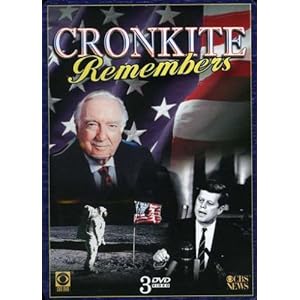
Walter Cronkite Remembers
In the three-DVD set, Walter Cronkite Remembers, the legendary news broadcaster's life and career are covered. Included in the account of this remarkable life, Cronkite's broadcast of the Kennedy assassination is detailed. In his autobiography, A Reporter's Life, the news anchor spoke of his feelings that day.

After school, I walked home confused. All of my classmates were silent, too. What would we do without President Kennedy? I thought.  "We don't have a president," I said to my mother. "That's not true," she said. "We have a president. His name is Johnson."

"Johnson will be the white people's president," I said. 

"Do you think Kennedy was the black people's president?" She asked. "Do you think Kennedy really liked black people? Do you think he really knew any black people who were not serving him a meal or cleaning his room?"

I did not know the answer.

"And it's not Mr. Kennedy's fault that he and his family didn't know any black people," my mother said. "This generation of Kennedy's was not raised in a way that they could know black people or know how black people or poor people live."

"This generation?" I asked.

"They weren't always rich," she said. "When the early ones got here from Ireland, they were as hungry as anyone and couldn't do much better than black people. No one wanted them in their neighborhoods or would give them a good job or a break of any kind."

"How did they get so rich?" I asked.

"I read that the daddy was in the moonshine business," she said.

"The moonshine business?" I laughed. "Like Uncle Tinney?"

"Yes, like Uncle Tinney," she said, laughing.

"Where's all of Uncle Tinney's money?" I asked.

"Uncle Tinney wasn't as good a business man as old man Kennedy," she said. "Old man Kennedy  pulled his family up so high to where it doesn't matter where the money came from--there's so much of it--and this generation of Kennedy's does not know poor people any better than Lyndon Johnson does, maybe even less because Johnson was the first in his generation to climb out of poverty."

Sunny Nash's
Cowboy Uncle
Read more about Uncle Tinney, one of the black cowboys in my family, and many other colorful characters who galloped through my life, in my book, Bigmama Didn't Shop At Woolworth's, a family memoir.

I write the personal stories of my life with my family, particularly my part-Comanche grandmother, Bigmama, before and during the 1960s Civil Rights Movement. And be sure to join this site for my latest posts on race relations in America today, the history of U.S. civil rights and associated significant and less known historical figures.

NOT THAT I DOUBTED Vice President Johnson as president of all of the United States. I just didn't know that much about him except that he was a Texan and could that be a good thing for black people? "We'll just have to see," my mother said about Johnson. "We have no choice. He's what we have now. And he is what he is, whatever that is." My mother liked giving people a chance to show themselves. She may have judged people but she never let me know that she did. "We'll see if Johnson can rise to the task or if he will sink like a rock under pressure."

For the next few days,  I was glued to the television interviews, scenes and photographs being shown over and over, trying to make sense of it all, trying to find answers to questions I was sure no one else could answer either. That Sunday, we went to Aunt Ruby's. I was watching television alone in the living room. Bigmama and my mother were in the kitchen with Aunt Ruby helping with the meal. My father was sitting on the porch with Aunt Ruby's friend. Aunt Ruby's daughter, Ruby Joyce, was away at college. Distressed by the president's assassination, Joyce had called Bigmama Friday night.


The television studio was filled with cigarette smoke as a reporter interviewed a witness who said he had seen Lee Harvey Oswald, the man accused of killing the president. New footage interrupted the interview. They said it was live action showing policemen escorting Oswald somewhere. The announcer said they were taking him to the county jail through the basement of the building. There were a lot of people in that dark hole of a place, I thought. Oswald looked frail and beaten up with a wound over his eye. I didn't feel sorry for him, though. 

   
Lee Harvey Oswald
Shot by Jack Ruby

Suddenly, short round Jack Ruby bounced into the scene with a gun and shot Oswald. I screamed! My world changed again, further shattered, the pieces spilling out on the floor. I felt like my brain was exploding; I saw streaks of light flying in front of my eyes and my breath went short. Everyone at the house came running into the living room to join me around the television--shocked. We couldn't believe the scenes that kept playing over and over. Everyone forgot about dinner. I don't remember eating the dinner or driving the 30 miles home later that evening.

Follow the link under the picture to read more and see videos about Lee Harvey Oswald and hear his interviews.

The events of this tumultuous period in history marked the official end of my childhood.  Oswald, only 10 years older than me, died and left a mystery behind that still haunts me to this day. I felt that Jack Ruby had cheated the world out of knowing the truth. My mother said, "Maybe the world is better off not knowing the truth about this." That was her way of saying, move on.

Although my mother was angry at the mainstream during those years for its treatment of African Americans, she analyzed the situation to see what was out there for her and how she could make it better for me. Systematically unraveling a problem, she always came up with the best solution available. "Getting mad and losing control of yourself is a waste of time," said Littie Nash, a card-carrying member of the problem solvers' club. "You could be using that time for something useful, instead of trying to make a trap for someone who's done you wrong and end up making a trap for yourself."

 
President Lyndon B. Johnson
& Dr. Martin Luther King, Jr.

THE NEXT YEAR, President Lyndon Johnson completed President Kennedy's civil rights legislation with the help of Dr. Martin Luther King, Jr., and many others. Pushing on some of his colleagues with the threats of shame if they did not vote his way, promises of reciprocation if they did, and squeezing others for political favors they owed, Johnson got his vote.

At the time, I didn't know about the behind-the-scenes negotiations. I did not learn about back-door deals until I hooked up again with my Aunt Lucille when I was grown and she got me involved in politics. All I knew back in 1964 was that Johnson signed the Civil Rights Act on July 2, 1964. I was spending the summer in Denver with Aunt 

I was not there when my mother died. I was at an airport awaiting a connecting flight to take me to her. During my wait at the airport, I listened to music on the intercom at the restaurant that reminded me of her. My heart wandered back in time when we were both still young. The music that I heard, Dave Brubeck, then Kenny Burrell, lilting through the speakers, gave me feelings of peace, a sense of calm like the music gave me when my mother played it in our home when I was a child. She loved calming music, saying the world was too noisy. "Leave all that noise at the door when you come inside," she told me repeatedly when I was growing up. "And take your shoes off, too," she'd say.

I am not sure how my mother managed, but there was always money for books, magazines, a piano, sheet music, piano and dance lessons, costumes, classical music and jazz recordings, a machine on which to play the records and travel all over the country by train and bus, and by air when I was older.

My heart still wanders back to times my mother and I had together, times I shall never forget. She was my best friend for the rest of her life and I believe beyond. She was always there for me, telling me I could do something that seemed to me at the time to be impossible and then I did it. She was right, as usual. Through her, I became capable of so much more than I would have, had it not been for my mother. I had a career in music and later in  journalism and now I am an author because my mother believed in me and said I could be somebody. And I am.

Bigmama Didn't Shop
At Woolworth's
by Sunny Nash
In  the 1990s, when I began writing a column for  the local newspaper, my mother encouraged me to focus articles around  the experiences her mother, my part-Comanche grandmother, Bigmama. My mother then advised me to use the local column to build my reputation as a writer. She was  right again. The local column led to a regional column, then a syndicated column and eventually gave birth to my first book, Bigmama Didn't Shop At Woolworth's (Texas A&M University Press). My mother was delighted when this book came out. The idea that I had written about her mother and other ancestors pleased her.

It took a great deal of courage to live with dignity and raise me to have aspirations. About my upbringing, Littie got it right, although I took detours of my own along the way.


JOIN THIS SITE - RIGHT SIDEBAR 
Latest Posts Covering:

The History of the U.S. Civil Rights Movement
Modern Race Relations in America

Sunny Nash
Bigmama Didn't
Shop At
Woolworth's
Sunny Nash has also co-authored, edited or compiled several books, written three newspaper columns, created a major photographic study and exhibition, produced and written for television, and conducted public speaking tours. “Fortunately, writing comes easy to me and I am able to produce all kinds of copy and media—movie treatments, television scripts, book manuscripts, proposals, commercial jingles, whatever a client needs,” Nash said. “I also produce video for broadcast and Internet marketing and distribution. My client list includes corporations, cities, chambers of commerce, nonprofit organizations, real estate companies and all kinds of groups and individuals, The balance for any artist is making sure their own work does not suffer, while giving the client the best work possible.”


© 2011  Sunny Nash
All Rights Reserved Worldwide.

~Thank You for Viewing & Reading~
My Zimbio

Bookmark and Share