Translate


Showing posts with label college education. Show all posts

Friday, December 25, 2020

My Mother & The Thinkers

Fine art appreciation, classical music and reading neutralized the sting of Jim Crow.
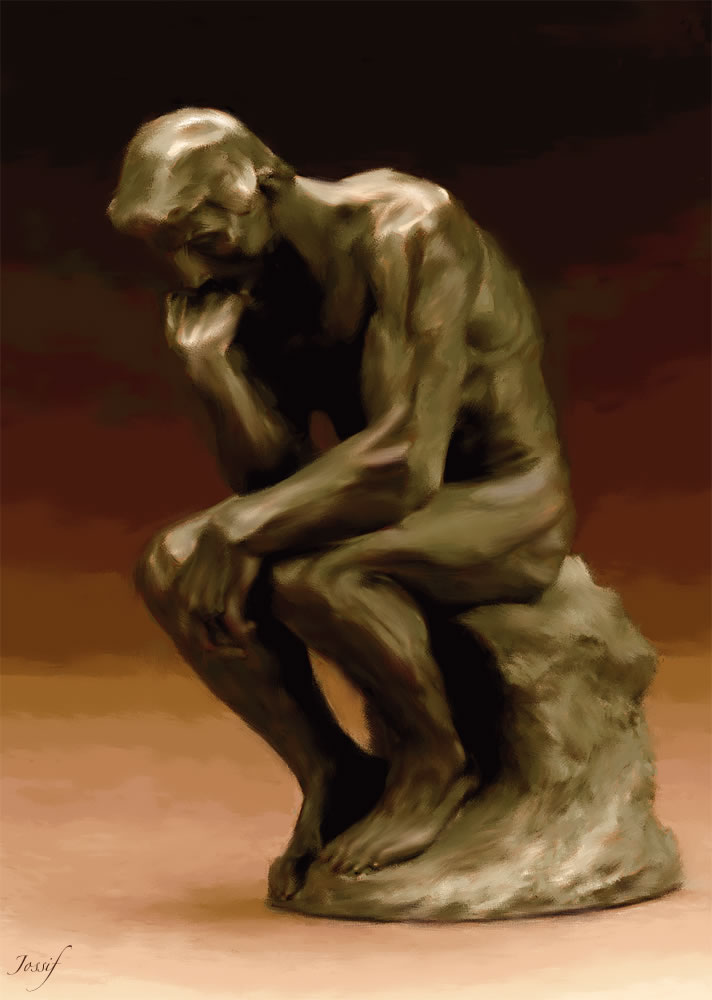

Rodin - The Thinker
Rodin - The Thinker

When I was nine, my mother brought home a book on the French sculptor, François-Auguste-René Rodin (1840-1917). 


My mother loved art, any art--books, literature, paintings, sculpture, music, film, dance, photography, architecture, history, philosophy and intelligent conversation. But I was as confused about her handing this book over to me after she had read it as I was about her making me take ballet and piano lessons, which I am now convinced she insisted upon so that I could notate music to the songs she was writing, another story for another time. 

I remember that on the cover of the book was Rodin's The Thinker, a bronze and marble sculpture, which is now in the Musée Rodin in Paris. "Why do I have to read this book about Rodin?" I asked, mispronouncing his name in my childish innocence and ignorance. 

"Because I said you have to read it," my mother answered. "And because I refuse to raise an ignorant child who can't pronounce Rodin correctly."

"Oh," was all I could muster. "But why do I have to read this?"

"So you will learn to say his name correctly... Rodin," she pronounced it for me again and made me repeat it. "You can't go to college mispronouncing famous names." I knew I did not dare argue with her or just pretend I to read the book because she would quiz me on it like she did everything else. So, I read it.

Rodin Museum in Paris, France: Thinker Statue by François-Auguste-René Rodin (1840-1917)
Rodin Museum in Paris, France
When Rodin was 76 years old, he donated his own works of art and his art collection by other artists to the French government. My mother told me about his donation, which is now in the Rodin Museum.

Rodin Museum: Le Baiser

My mother said people who create, participate in and appreciate art are better thinkers than those who do not. 


"Those interested in literature, music and art can handle conversation," she said. "It has to do with the way their brains work and how they decide to live; maybe because they use their minds in a different way."

Contrary to what I thought before starting the book about Rodin, I did find it interesting. Rodin's early education was not considered good enough to gain him entrance into the elite art academy and still he went on to be a foremost figure in the development of modern sculpture. His piece, The Thinker, became my favorite work of art, representing a superior intellectual quality like my mother's that I wished to possess. 
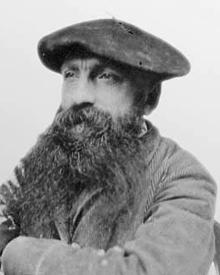
François-Auguste-René Rodin  (1840-1917)
François-Auguste-René Rodin 
(1840-1917)
How could my mother have known this man, this book and this sculpture would have that impact on me? 


Was she teaching me something about my own intellect, also considered inferior because I was attending a Jim Crow school at the time? 


My mother knew the book about Rodin was not the type of reading material our school library offered. 

She wanted me to know about people and places far away from my Jim Crow world, one of the reasons we traveled to other states where I could see what the rest of the world had to offer me. Starting when I was four years old my mother took me to the movies at the segregated theater downtown. Once the lights went down, I was transported to wherever the movie took me. . We would lose ourselves in the beautiful clothes and exotic locations. 

"Do not be afraid to explore art, film, books and traditions of other cultures," she always said. "That's how you learn." My mother believed in a global education.

While reading the book on Rodin, I learned that he was born in 1840 in Paris, France. That was the same time that, on this side of the Atlantic, slavery in America was still flourishing in the Deep South. Even as the Civil Rights Movement was in progress, it was unlikely that a little black girl would have been able to discover the genius of Rodin or others without someone like my mother to make the suggestion. At my mother's insistence on exposing me to higher concepts, I was reading about Rodin during the civil rights movement. 

There were people whom my mother admired in the world who were not directly associated with the sciences or the arts, but she believed if she could get inside their homes, she would find art hanging on the walls, many shelves of books and the music of the masters playing in the background. 


"Did you know Albert Einstein was also a musician?" My mother asked me.
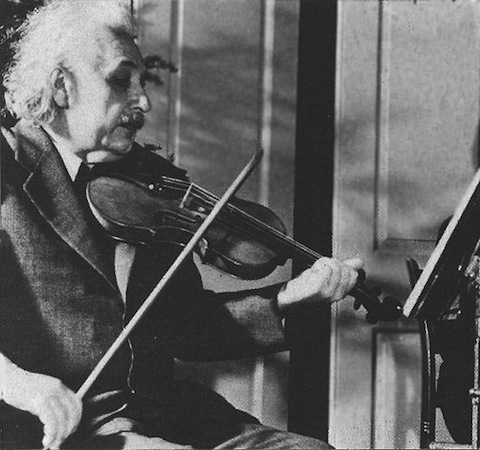


The Musical Mind of Albert Einstein:  Great Physicist, Amateur Violinist  and Devotee of Mozart
"Who is that?" I asked her.

The Spring before I started first grade, Albert Einstein died. My mother was anxious to have me understand not only what the world had lost when this genius died, but also what the world had in him. 

"A genius," she said. 

"What's that?"

"A very smart person," she said.

"Like you?" I asked.

She laughed. "No, much smarter than me. He loved Mozart and used his music to help him develop his theories." 

There she goes again, I thought. I didn't understand what all of that meant. I was only five years old! 

And my mother's intellectual admiration did not stop at theoretical physicists. "I'll bet Dr. Martin Luther King and Rosa Parks know who Albert Einstein is," my mother said. Rosa Parks started the Montgomery Bus Boycott at the end of 1955 after I was in first grade. My mother kept up with all that news the same way she had kept up with the Supreme Court ruling in Brown v the Board of Education. She bought magazines and newspapers on her way home from work.

Rosa Parks Booking Photo, Montgomery Bus Boycott
Rosa Parks Booking Photo, Montgomery Bus Boycott
"You can hear culture in people's voices and in the way they use language," my mother said. "Reserved and elegant, those are the thinkers. Thinkers become doers." 


As history has recorded, both Rosa Parks and Dr. Martin Luther King, Jr., wrote books about their lives and experiences during the Civil Rights Movement, documenting those thoughts and the resulting actions.

We had a television in 1955, but there were a couple of problems. In our town, there was only one local station and it was quite conservative and limited broadcasts to those that were none offensive to the majority community. That meant very little to no coverage of Rosa Parks, the Montgomery Bus Boycott, Martin Luther King and the Civil Rights Movement. Secondly, my mother had her doubts that sitting in front of a screen too much was safe for the eyes or the brain. So, she restricted my television viewing to her approved list of programming. 

Rosa Parks, Martin Luther King booking photos
Rosa Parks & Martin Luther King
(Articles)

My mother received civil rights news through delivery of national black publications to our home on a weekly basis. She required me to read articles and then discuss them with her afterwards. Topics were confusing to me and not always a pleasant experience. I always enjoyed our discussions of art history more, perhaps because, as a child, art history was less intimidating than civil rights. When my mother made me read articles and books she had selected, I read them to be ready for her quizzes.

I read books and articles, and examined art because my mother said a person could not be just a collector of books and art. Art hanging on walls or books on shelves did not pass my mother's sniff test. The person who possessed the books and art had to know something about what was in the books, know about the art or know something about the artist who produce the art. An amateur artist herself, she liked to paint animals, birds and landscapes. My really wanted to me to be interested in art, too.

Brownie Hawkeye Camera 1950s
Brownie Camera
My grandmother bought me a Brownie camera when I was eight in exchange for not bothering her gun again. 

She got really upset when I sneaked the gun out of the house and tried to buy bullets at the corner market. But the storekeeper called my house and told my grandmother what I was up to. I tried to explain that I had a good reason, but no one would listen. 

My grandmother said my punishment was to use the camera to shoot whatever or whoever I needed to shoot, but not without asking them first. "Do not go sneaking around behind people's backs taking pictures of them," she said. "That is a good way to make enemies and to lose your camera privileges." Like I lost my gun privileges, I thought, hoping she wouldn't tell my mother about the gun.

My mother didn't ask why my grandmother bought me the camera, but she restricted my photography even further: Do not photograph people! She felt I would not be sufficiently respectful of their privacy and she was probably right. Although, looking back on it, I wouldn't call what I was doing photography. My photographs were awful. But my mother was delighted that I was interested in photography. "It's a form of fine art," she said. 


I wrote a story, Shooting Without A Gun, in my book, Bigmama Didn't Shop At Woolworth's, about Bigmama's gun and the camera. Take a look and join my channel.


My mother didn't say much about the incident with me and Bigmama's gun, but I am certain she had all to do with my grandmother giving me that camera.
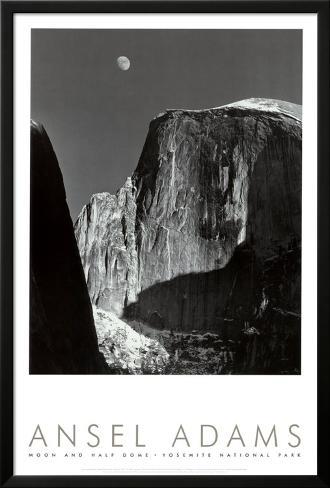

Ansel Adams Moon and Half Dome Yosemite National Park, 1960
Ansel Adams
Moon and Half Dome
Yosemite National Park, 1960
My mother was particularly fond of sunsets, water, night skies, old buildings and sand. When I was about 11 years old, my mother bought postcards with Ansel Adams photography, saying I should model my own style of photography on his style, which she thought was magnificent. 

I had no photographic style. "Aim high!" She scolded. "And be sure and pack your camera when we go to the beach next weekend." My mother had a friend in Houston who was from a wealthy mortuary family with property in Galveston and one son my age. During the season, we often met her and her son at their beach cottage for weekends. My mother was always happy when her friend's older son, who was a professional photographer, joined us at the beach and let me tag along while he photographed nature scenes and explained lighting and photo composition. 

The summer of my 15th birthday, Aunt Clara took me to the mountains, where I wasted rolls of film trying to take shots as my mother had instructed, only to find out after the photographs were developed that I was no Ansel Adams, nor was I even close. I was very disappointed when I got home from vacation, and my mother and I reviewed my shots. Then, I realized the photography exercise was for my benefit. She was trying to help me develop an eye. 


I did eventually develop an eye for photography. My images were published in a significant reference book on the history of  photography. 
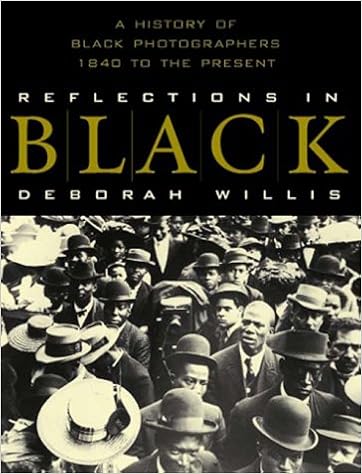


Reflections in Black: A History of Black  Photographers  1840 to the Present
Reflections in Black:
A History of Black 
Photographers
 1840 to the Present
My photography has been collected by a number of prestigious museums and libraries, published in books, newspapers and magazines, and exhibited around the world with a Smithsonian Exhibition, Reflections in Black: A History of Black Photographers 1840 to the Present. I credit my mother for my success by insisting that I take all those terrible pictures when I was a kid.

My mother was totally absorbed in art--the art of others in galleries, her own art creations, my crude and amateur photography or pictures in books. And she liked volumes, not just for the quantity, but for the matching binding. 

"Sets of books make you feel like you're in a library," she said. "The feel of art books and the smell of them make me want to paint or get knee-deep in some clay. You can't pretend to love art or know what's in books. Love and knowledge of these subjects come out in conversation, and if you're pretending, you will soon look the fool. Anybody with money can be advised on what art pieces to buy," she said. "The real test is finding a way to surround yourself with art if you are on a tight budget.

And a tight budget was something my mother knew all about. "But we can't let the lack of money keep us from enjoying the finer things," she said. "People need art in their lives, all people--rich and poor!" 

Bookmobile, converted bus
Converted Bus Bookmobile
When I was a little girl, our town did not allow us to use the segregated public library in the 1950s. Jim Crow laws ordered the public library to offer bookmobile services to neighborhoods. A bookmobile was a converted station wagon, van or bus with rows shelves with books, mostly outdated and tattered. The bookmobile was most active in summer and parked in public parks. 

Back then, until we were allowed to use the library, my mother and I took a Greyhound Bus 100 miles away to Houston to use the Houston Public Library. The trip to Houston was an all day affair, but worth it, even if we didn't qualify for library cards, not because we were not white, but because we were from out of town. We sat among all those art books on the shelves and read until it was time for us to catch our bus back home. My mother used the library, like she used movies, to imagine places we had never been, to see images from faraway places that one day we might see and to teach me to see myself as the Jim Crow south could not. 

From those movies and books, she imagined scenes, learned to paint oil landscapes and restored damaged art she bought in second-hand stores. She collected art, museum, gallery and exhibition books and often dragged me to out-of-town galleries and museums that allowed African Americans to enter if could afford a ticket. Afterwards, she bought greeting cards and program booklets that were not too expensive and she required me to make detailed critiques of shows we had seen.

My mother collected interior design,  architecture and art magazines, too. "Be careful with those," she told me. "They're not cheap." Sketching out plans for home improvement projects was a favorite past-time that my mother loved. Using her architecture and art magazines, and Vogue pattern decorating book, she measured and made multiple drawings before presenting them to my father to see if he could build whatever it was she wanted. Usually, he couldn't or wouldn't produce her final design or, if he did, she wasn't satisfied with the shortcuts he took. So, she went on to construct whatever small project she wanted to create. 

Art, music and literature were my mother's weapons against excuses, which she refused to accept. "Most often," she said, "You get what you give."

Auguste Rodin:  Master of Sculpture
I searched the Internet and could not find a copy of the Rodin book my mother gave me all those years ago. Perhaps the book is out of print. But I found some other interesting selections devoted to Rodin and others that trace art history from the Renaissance to Rodin and the birth of modern art.

Over the years, my mother's interests and book collections changed and I do not know what happened to the book about Rodin that she made me read. The book was probably not responsible for getting me a college scholarship or even getting me through Texas A&M University's Department of Journalism and Broadcast Communications. But my mother knew Rodin would have an influence on me at a time when I needed it most. 

~30~


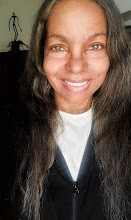
Sunny Nash Author of Bigmama Didn’t Shop  At Woolworth’s
Sunny Nash
Author-Journalist
    Bigmama Didn’t Shop  At Woolworth’s  Sunny Nash

Hard Cover

Amazon Kindle
Sunny Nash, former nationally syndicated newspaper columnist, is the author of a nonfiction book about life before and during the Civil Rights Movement with her part-Comanche grandmother, Bigmama Didn’t Shop At Woolworth’s, selected by the American Association of University Presses as a Book for Understanding U.S. Race Relations, and recommended by the Miami-Dade (Florida) Public Library System for Native American Collections.

Sunny Nash is an award winning writer and three-time winner of Arts Council for Long Beach Professional Artist Fellowship Awards: 2003, 2009 and 2014. Her most recent Arts Council for Long Beach award is a 2016 mini-grant for cultural heritage preservation programs, How a Child Build Legacy, designed to encourage young students to prepare archives of their accomplishments and plan for their future achievements.

Sunny Nash earned a Bachelor of Arts in Journalism & Mass Communication, Texas A&M University; Postgraduate Media Studies Certificate, Cronkite School of Journalism & Mass Communications, Arizona State University; Postgraduate Diploma, Instructional Technology, University of California, San Diego; Constitution Studies, James Madison’s Montpelier Center for the Constitution; and Postgraduate Digital Literacy Certificate, Simmons College Graduate School of Library & Information Science, Boston. Sunny Nash’s international studies include Intellectual Property Law, World Intellectual Property Organization Academy, Geneva, Switzerland; Diplomacy, Culture and Communication, United Nations; Research Methodology, Digital Preservation, Online Archival Information Systems, University of London; and Archival Data Governance, National Archives of Australia, Melbourne. 


© 2020 Sunny Nash. All Rights Reserved Worldwide.
 www.sunnynash.blogspot.com 
~Thank You~


Sunny Nash – Race Relations in America

Sunday, January 8, 2012

College Education & My Mother's Homeschooling Plan


School, book collection, music and reading history guided my mother when I was growing up. She wanted me to get into a good college. 


Sunny Nash age 16
Sunny Nash, Age 16
Reading Nancy Wilson Album Liner Notes
My mother made learning part of my life and, even though I attended public school, I was home schooled on top of it. She used history, music, art, media and anything she could turn into a lesson to bring education into our home. If she and my father could have managed for her not to have jobs outside the home, I believe she would have home schooled me, if there had been such a thing when I was growing up.

I had to read everything before I could use a product, eat a food or listen to  music.

My mother taught me extra and above what my school offered because, when I was in elementary and high school, Jim Crow laws still determined where American children would receive an education under separate but equal laws, which were put into place by the U.S. Supreme Court in 1896 when Plessy v Ferguson legalized Jim Crow laws. I grew up watching civil rights activists, Rosa Parks and Martin Luther King fighting to destroy Jim Crow and my mother wanted me to be ready when the Jim Crow education system fell and I would be eligible for good jobs. 

Education was not just about good jobs to my mother. She believed in using all of the mind, whether it led to good jobs or not.


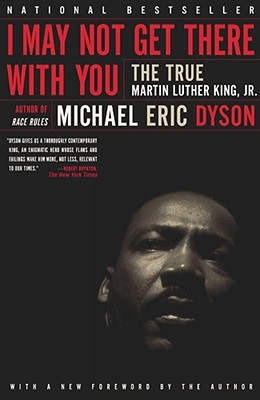
I May Not Get There With You by Martin Luther King
I May Not Get There with You: 
The True Martin Luther King Jr 
by Dyson, (Google Affiliate Ad)
Martin Luther King came into national prominence when Rosa Parks ignited the Montgomery Bus Boycott, which lasted for more than a year. The bus boycott became a few months after I started school and last until half way through my second year. My mother was all over that news. So much for  Jim Crow "Dick and Jane" hand-me-down reading books. My mother started me out reading newspapers and magazine articles about civil rights. She asked me if my teachers at school were talking about that subject. 

When I told my mother we were not talking about civil rights, she gathered up every Rosa Parks and Martin Luther King article she could find and she taught me to read them. From that time on, I kept up with every news item and all the media coverage our local television station carried, which wasn't much. My mother bought a tall antenna for our television and turned in to the stations in Houston for better media coverage. When I hear excerpts from King speeches, I May Not Get There With You, it still or I Have a Dream (full speech video), they still brings tears to my eyes.


My mother was not critical of my school for not teaching us about Dr. Martin Luther King, Jr., and Rosa Parks. She simply told me they probably had their reasons. But I overheard her saying to Bigmama and my father, teachers were cautious about bringing up civil rights, for fear they may lose their jobs. She also realized my teachers were limited in textbooks, media subscription, art programs and teacher training in history, languages, science and math. And the teaching profession in Jim Crow schools did not pay top salaries even though those jobs required a college education.

In fact, books issued to us at our Jim Crow school had always been used by white students before we got them because budgets for my school were far less than money laid out for our white counterparts. My mother supplemented at home what I got in school and did her best to support my schools in terms of extracurricular programs, academic activity development and volunteering without interfering with the established curriculum or taking away my independence.

Some people think that volunteering, as noble as it sounds, is only for wealthy people who may not have enough activity to fill their empty days or others who have days off from good jobs and want to fill their lives by volunteering some community service. However, my mother and others like her volunteered to lend support in our Jim Crow schools that were deficient in funding.


Preparing for college meant doing well in school, but not to the exclusion of my music lessons and entertainment such as movies and travel.


College Preparation and Scholarships
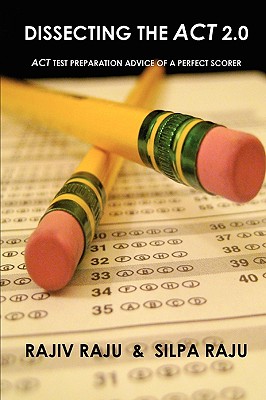
Dissecting the ACT 2.0: ACT Test Preparation Advice of a Perfect Score (Google Affiliate Ad)
Certain I would be offered scholarships to Jim Crow black colleges, my mother wanted my education to be college preparatory so I could attend a white college, offered scholarships or not. She wanted me to SAT preparatory, especially math, and ACT preparatory instruction. When she asked at school how to prepare me, the teachers were not sure. So, my mother went out and asked people she worked for who had children in good colleges how they studied for those tests. 

"Times are changing," she said. "You must be ready to get in there and make it. You have to find something you do well and do it alongside the best of them. You have to decide what that will be and go to school for it." My mother let me make some decisions, but she made the important and immediate decisions that affected every day life and my education.

Before letting me listen to music at home, my mother made me read album liner notes. "Liner notes teach you history," she said. "Someone researched and wrote the biographies of those musicians. Take a minute to learn what you don't know." At first, I didn't care to read about the music or the artists who played and sang the music. I just wanted to listen to the music. But if reading the album liner notes was the only way I could listen, I read them. I was careful about how I answered my mother's questions, remembering that she had read about Rosa Parks, Martin Luther King and the Woolworth Sit-ins before handing the article or book to me.

My mother was right, of course. I learned artist history and music data, such as origin, instrumentation, studio, performance, radio information, lyrics, industry trends and label announcements. Knowing this information was like having the inside track into the music business. I got so hooked that I read the music notes on my own with my mother's prompting. "See," my mother said. "I told you music notes  made interesting reading."

My mother's lesson plan, different from that of my school, took every day items and turned them into problems for me to solve or a book for me to read and understand.


Herbal teas, homeopathic medicine and organic beauty potions were all within my mother's interests. She developed these interests from her part-Comanche mother, Bigmama, whom I wrote about in my book, Bigmama Didn't Shop At Woolworth's. From my book, an essay about a family beauty secret was included in Stirring Prose: Cooking with Texas Authors, a collection of stories by 39 of Texas' best writers, including Kinky Friedman, Liz Carpenter and Molly Ivins.

Sunny Nash Biography on Amazon

My mother's vast knowledge of history, art, math, science, astronomy, geography and literature constantly surprised me. How could she know so much? I thought. Now, I remember. She was curious and read a book from cover to cover on a variety of subjects and passed this reading habit to me, especially in art and history.

Because my mother augmented the education I received under Jim Crow laws, I went on to graduate from a major, predominantly white university. Upon arriving to some classes, I was advised by professors that my early education probably had not prepared me for such high academic aspirations. What the professors were saying was my Jim Crow education was inadequate and they knew it. But my professors had not factored in my mother. I am not saying that my elementary and high school did a bad job. Many of my teachers were dedicated educators. Further, I am not saying other kids who went to my Jim Crow schools or schools like mine could not compete academically at a major university. What I am saying is: I do not think I could have done it without my mother. Those among my professors who had underestimated my college preparation, had to reassess their opinion when I made "A" grades, earned scholarships and was placed on the dean's list several semesters.
908 Oat Cakes Recipe Quaker Oats Cereal Box Company Founded 1850
1908 Oat Cakes Recipe
Quaker Oats Cereal Box
Company Founded 1850


And my mother did not stop my education at reading about the health benefits of certain diets and budget comparisons when shopping. Oh, I wanted to stop her when she started about the history of oatmeal. Before we made oatmeal cookies, she lectured me on the food having been around since before the Civil War, 100 years before Cocoa Puffs. I really loved Cocoa Puffs. "No one wants to know the history of Cocoa Puffs!" She said, nearly ruining my appetite for oatmeal cookies, too.


My mother was saving all kinds of recipes for a cookbook she was writing. She collected old-fashion recipes and cookbooks.


My mother, Bigmama and I ate one oatmeal cookie each, holding me responsible for what and how much I ate, one of the best lessons they ever taught me. "Eating properly takes discipline," my mother said. "Like studying in school and making good grades, you can't hide overeating or not turning in your homework," she said. "It will show."
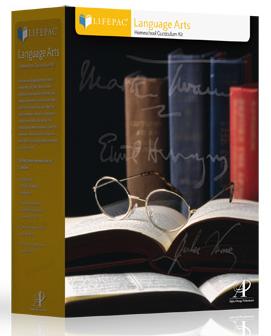
Alpha Omega Publications LAN 0409
The Written Report (Google Affiliate Ad)

If I complained about reading a book, an article, a recipe or other assignments, my mother made me write a report on a country in South America or the history of the telephone or a current world event or some other seemingly random topic that she pulled out of the air. I realize now that her topics were not randomly selected. Like everything else she did, subjects for writing reports were chosen carefully and were part of her education plan. 

Because my mother was such a good writer herself, she had the skills to evaluate my writing and would not accept sloppy reporting. Needless to say, my mother taught me to stop complaining, speak intelligently on many subjects and write convincingly, without a clue that, one day, I would be a published author and public speaker. 


Education was a priority in my mother's life and she made school a priority in my life, as well.


Littie Nash
Littie Nash, 1947

My mother, Littie Nash, had taken my hand when I was six years old and walked me to first grade on the first day of school. That was just three and a half months before Rosa Parks sparked the Montgomery Bus Boycott. Littie was angry that the Supreme Court decision, Brown v the Board of Education, just one year before, had not integrated or changed the Jim Crow school I would be attending. However, she was determined to squeeze as much from that school as they could offer me. 

"I thought things would be different for you than they were for me," she said to me. "But having a school is better than not having a school." And from that point on in my education, she made the best of the schools available to us and was convinced she could make up the difference on her own. And she did without complaining about it again. As far as my mother was concerned, there were excuses. "You see what you have to work with," she said. "And you work with it the best you can." That's what she did with me and my young relatives and friends, many of whom practically lived with us on occasion.

In 1947, when my mother graduated from high school, black students were less than half as likely to graduate than white students. An "A" student, my mother had ambitions, although she had attended Jim Crow schools and was acutely aware that Jim Crow laws would throw barriers into her path. Littie's mother, my Bigmama, who was born in 1890, lived through violent racial times in American history, managed to become literate and understood how to prepare her children for life under Jim Crow laws, preparation Bigmama's children passed on to their children.


To my mother, travel was as important a part of my education as reading books and going to school.


Colored Waiting Room - Public Bus Station 1940s
My mother's first ambition after graduating from high school was to travel, which she did. Visiting family and friends all over the country, she saw siblings in California and Colorado, who had gone West to get good jobs. She also had relatives and friends who had gone East for that purpose.

My mother made the rounds riding on Jim Crow buses and trains; eating, using facilities and waiting for departing connections in colored areas throughout Texas and the nation. Jim Crow laws and accommodations were disappointing to her but did not stop her from moving freely about the country. According to my mother, "Traveling is part of your education. If you never go anywhere but where you were born and raised, your understanding of people in other places is limited."

My mother was very demanding of herself and me. This was the example she gave me to grow by. She said good grades were my job. To make my job easier, my mother created a reading corner in the living room, more for herself than for me, and bought newspapers, magazines and books--history, science, art, biography, encyclopedia and other reference materials--and made me read them after she'd finished. She made me a study corner in my bedroom with a table and bookshelves. In that little reading corner, I learned what education was all about--reading and, later, it would be all of the reading that would earn me scholarships in college.

Somewhere along the way, my mother got off her original course to attend college, got married and had a family instead and became a great mother, my mother. Later in her life, she did get back on the college track, but in the meanwhile, she had me to nag about grades. When my mother enrolled in college to broaden her own professional possibilities, she brought home 'A' grades, using those credentials to build a profession in nutrition.

Because my mother loved to cook and was so good, she turned her talent into a marketable skill in health and medical support, for which she won regional and state cooking honors and corporate grants to develop recipes in coordination with physicians and other medical professionals. In these competitions, Littie put her cooking, as well as writing skills, into action against hundreds of contestants around the state and nation, and published recipes and methodologies in food journals, newsletters and instructional manuals.

"You have to read," my mother said. "How else will you know anything useful to say? Or be able to answer questions on tests and scholarship examinations? You have to write, too. How else can you ask for and get what you want?

"Do you write white?" I asked my mother, sarcastically."

No." she said. "I present correctly written English. I don't always win, but I am always a finalist. There is no color in the process, as long as the judges don't know I'm black, and I only enter competitions that do not require an appearance," she said, smiling. "That way, the judges do not know my color and cannot use my color to dismiss me before they get their team of chefs busy making my dishes."

My mother knew the limitations Jim Crow laws placed on her ambitions. She also knew, when I was growing up, Jim Crow laws were on their way out. Flickering black-and-white images on the television news broadcasts confirmed her belief that, one day, my color would not be an issue like hers had been. Rosa Parks, the Montgomery Bus Boycott, Dr. Martin Luther King, Jr., and the violence in Birmingham, Alabama, against school children came into America's living rooms nightly during media broadcasts showing me the future. "You have to be ready when the time comes," she said. "It won't matter what you will be allowed to do, if you are not prepared and cannot do it.

Textbooks.com

Although my mother always had time to hear my ideas, her word was the last word in the conversation. She reminded me that I was a child, and had not been in the world long enough to know what was best for me. I did not get an allowance for chores or money for good grades. "Those things are the least you can do to contribute around here," my mother said. "You are responsible to yourself for those things. Besides, we're poor. Now, go in your room and turn off the light. Lights don't grow on trees around here." Every day is Mothers' Day to me.

Buy
 by Sunny Nash

African American  National Biography Harvard & Oxford
African American
 National Biography
Harvard & Oxford
Bigmama Didn't Shop At Woolworth's by Sunny Nash
Bigmama Didn't Shop
At Woolworth's
by Sunny Nash
Bigmama Didn't Shop At Woolworth's (Texas A&M University Press) by Sunny Nash was chosen by the  Association of American University Presses as one of its essential books for understanding race relations in the United States, and also listed in the Bibliographic Guide to Black Studies by the Schomburg Center in New York and recommended for Native American collections by the Miami-Dade Public Library System in Florida.

Sunny Nash has work in the African American National Biography, a joint project by Harvard and Oxford, edited by Henry Louis Gates, Jr., and Evelyn Brooks Higginbotham; African American West, a Century of Short Stories; Reflections in Black, a History of Black Photographers 1840 - Present; Ancestry; Companion to Southern Literature; Texas Through Women’s Eyes; Black Genesis: A Resource Book for African-American Genealogy; African American Foodways L; Southwestern American Literature Journal and other anthologies. Nash is listed in references: The Source: guidebook to American genealogy; Bibliographic Guide to Black Studies; Interdisciplinary Journal for Germanic Linguistics; Ebony Magazine; Southern Exposure; Hidden Sources: Family History in Unlikely Places; and others.

© 2012 Sunny Nash
All Rights Reserved Worldwide.


My Zimbio

Bookmark and Share