Translate


Showing posts with label olympic games. Show all posts

Monday, August 15, 2016

Jesse Owens, Jim Crow and the Berlin Olympics

African American Track Star, Jesse Owens, won four gold medals at the 1936 Berlin Olympics, and won a victory for civil rights. 


Jesse Owens 1936 Berlin Olympics Track and Field Star
Jesse Owens
1936 Berlin Olympics


Jesse: The Man Who Outran Hitler, Jesse Owens

The 1936 Olympics belonged to track and field star, Jesse Owens, who hoped his track and field victories would change race relations in America.


With all that gold being earned at the 2016 Summer Olympics in Rio, we should remember the first African Americans to win Olympic gold medals, lest we forget who fought Jim Crow in sports and helped lay the groundwork for black gold medalists in the 2016 Summer Olympic in Rio.


After Jesse Owens' victories, British radio and newspapers fueled racism by circulating a rumor that lives on to this day claiming that Hitler snubbed Owens after his Olympic victories. 


Radio and newspapers reported Hitler refused to shake Owens' hand, an alleged gesture that angered civil rights groups around the world. Equally bothersome to other Olympics observers was the fact that two black women who qualified in track and field for the 1936 Berlin Olympics were replaced at the last minute with white runners by U.S. Olympic officials. 

Back in 1929, the all-black school, Tuskegee Institute, now Tuskegee University, had started one of the first women's track and field teams in the United States. In 1932, Tydie Pickett and Louise Stokes qualified for the Los Angeles Olympics on the 400-meter relay track team, but were replaced at the last minute by white runners they had beaten. Again in 1936, Pickett and Stokes qualified for the women's U.S. track and field team but Olympic officials replaced them at the last minute with white runners they had previously defeated. Some observers credit the change to racist Jim Crow laws in the United States. The U.S. blamed Hitler's regime for the Owens snub and U.S. civil rights groups blamed Jim Crow laws for the women's team replacements. 


The dynamics of the Berlin Olympics were troublesome to U.S. race relations.


Jesse Owens had another impression of what happened in Germany. Owens said, "Hitler didn't snub me—it was [FDR] who snubbed me. The president (Franklin D. Roosevelt) didn't even send me a telegram,” quoted from the book, Triumph: The Untold Story of Jesse Owens and Hitler's Olympics by Jeremy Schaap, about the 1936 Olympics. Owens said he was treated well at the Berlin Olympics and that Hitler sent him an inscribed photograph to congratulate him on his victories. Years later, Owens' widow confirmed the account. [source: The Hitler Snub Myth, The New Stürmer, 2003]

While in Berlin for the Olympics, Owens was not discriminated against by Jim Crow laws or separated from other athletes based on the color of his skin as Jim Crow laws required in the United States. Jesse Owens stayed in the same hotels, rode public trains, ate in restaurants and enjoyed friendships with white members of his own team and other international Olympians like Lutz Lang, German athletic star and European long-jump record holder. 

Back home for a post-Olympic ceremony at New York's Waldorph Astoria Hotel, however, track and field star Jesse Owens was not permitted to stay in the hotel or eat in the hotel restaurant and was forced to use the hotel freight elevator so as not to be seen by white hotel guests. 

Many people think the struggle for civil rights was unnecessary in northern states, especially New York, where race was not as much of an issue as it was in the South. However, northern U.S. states were slave states in early New England and continued a long and painful legacy of Jim Crow laws and treatment of African Americans, and other non-white groups and whites of a different ethnicity. The first slave auction held in New York took place in 1655, 300 years before Rosa Parks led the Montgomery Bus Boycott. Slaves in New York were not formally freed until 1827, ending bondage but not discrimination. 
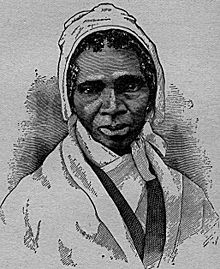
Sojourner Truth
Sojourner Truth
Abolitionist, civil rights and women's activist, Sojourner Truth, born a slave in New York, wrote extensively about her experiences in her autobiography. The first U.S. Census indicates that the slave population in New York grew to 21,324 by 1790, making New York the largest slave-owning state north of the Mason Dixon line, a distinction New York held throughout the two centuries the state practiced slavery; this from: New York Slave Law Summary and Record. Slavery in southern states like Alabama, the birthplace of Rosa Parks, and Georgia, the birthplace of Martin Luther King, was more brutal and lengthy, and did not end until 1865.


Rosa Parks and  the Montgomery Bus  Boycott (Lucent Library  of Black History)
Rosa Parks and 
the Montgomery Bus 
Boycott (Lucent Library 
of Black History)

Jesse Owens was born in Alabama in 1913, the same state and year as Rosa Parks. It would be easy to conclude that Rosa Parks and Jesse Owens may have experienced similar consequences of Jim Crow laws growing up and in adulthood.


Although many Americans observed Owens' victory at the 1936 Berlin Olympics as the birth of the Civil Rights Movement, it was nearly 20 years later, in 1955, that Owens' accomplishment was acknowledged by the White House when U.S. President Dwight D. Eisenhower honored Owens by naming him “Ambassador of Sports.” 

Jesse Owens' U.S. Sports Ambassadorship included meeting with school, government and sports officials in India, Singapore, Malaysia and the Philippines, and talking to underprivileged school children in those countries and the U.S. Audrey Patterson, the first African American woman to win a medal in Olympics history said, she felt that 1936 Olympic gold medal winner, Jesse Owens, was speaking to her in 1944 when he told a group at her school, Gilbert Academy in New Orleans, "There is a boy or a girl in this audience who will go to the Olympics."


Jesse Owens, 1958  & Vice President Richard Nixon
Jesse Owens, 1958
Vice President Richard Nixon
Jesse Owens was born in Alabama in 1913, the same state and year of Rosa Parks' birth. It easy to conclude that they experienced the same consequences of Jim Crow laws. However, in 1955, they both began historic journeys against racial discrimination. Although many observed Owens' victory at the Berlin Olympic Games in 1936 as the birth of the Civil Rights Movement, it was nearly 20 years later, in 1955, that his accomplishment was acknowledged by the White House when U.S. President Dwight D. Eisenhower honored Owens by naming him “Ambassador of Sports,” touring India, Singapore, Malaysia and the Philippines, meeting with government and sports officials and talking to underprivileged children.

The year Jesse Owens was invited to the White House, 1955, was the same year that Rosa Parks ignited the Montgomery Bus boycott in Owens' home state of Alabama and officially kicked off the modern Civil Rights Movement with Martin Luther King being hurled into the spotlight on national television as the leader of the Civil Rights Movement, which eventually led to Martin Luther King's I Have a Dream Speech in Washington D.C. in 1963 during the Poor People's March. It took many years before the Civil Rights Movement accomplished it goals, and still, some goals seem unfulfilled.

In 1956, Jesse Owens became President Eisenhower's personal Olympic Games representative in Australia. That was the year that the Montgomery Bus Boycott, led by Rosa Parks and Martin Luther King, ended with the Supreme Court striking down Jim Crow laws, set into legal motion with the U.S. Supreme Court decision, Plessy v Ferguson.

Remember Jesse Owens for his Olympics victories and for his role in civil rights, although several decades passed before President Lyndon Johnson signed the 1964 Civil Rights Act and 1965 Voting Rights Act.


Black Female Olympic Gold and Jim Crow

Black Female Olympic Gold Medal Winners helped to change the world's perception of black Women. 


Tydie Pickett (far left) and Louise Stokes (far right)  Track and Field, 1936 Olympic Games
Tydie Pickett (far left) and Louise Stokes (far right) 
Track and Field, 1936 Berlin Olympic Games

With all that gold having been earned by African American women at the 2016 Summer Olympics in Rio, we should remember the first African American women to win Olympic medals, lest we forget who fought Jim Crow in sports and helped lay the groundwork for black female gold medalists in the 2016 Summer Olympic in Rio. 


In 1929, the all-black school, Tuskegee Institute, now Tuskegee University, started one of the first track and field programs for women in the United States. In 1932, when violent Jim Crow traditions gripped the nation attempting to put down a growing Civil Rights Movement, Tuskegee Institute sent Louise Stokes and Tydie Pickett to Los Angeles, California, where the two female college track and field stars qualified for the U.S. Olympic 400-meter relay track and field team. However, the two black women were replaced by white runners they had beaten.

"By 1936, the year Alpine skiing was opened to women in the XI Olympiad in Berlin, Germany, the first African-American women, Louise Stokes and Anna “Tydie” Pickett, were permitted to compete in the games.[vi] Stokes and Pickett were initially qualified for the 1932 Olympics held in Los Angeles, California, but they were disqualified based on..." Read more at the Merry Dressmaker.

Rosa Parks Booking Photo Montgomery Bus Boycott
Rosa Parks Booking Photo
Montgomery Bus Boycott

Rosa Parks, a seamstress and not a track star, ran a race that lifted court rulings from paper to real life. 


The year the first two black American women were allowed to compete in the 1936 Berlin Olympics,  23-year-old Rosa Parks started her journey toward becoming "Mother of the Civil Rights Movement." This was during a time in American Jim Crow history that every positive move an African American made was used to fight discrimination and oppression. Eventually, Rosa Parks would spend 1955-56 leading the Montgomery Bus Boycott with Martin Luther King to start the demise of Jim Crow laws with a Supreme Court ruling. 


Audrey "Mickey" Patterson, President Harry S. Truman The White House 1948
Audrey "Mickey" Patterson
President Harry S. Truman
The White House 1948

Audrey Patterson


The Olympic Games were cancelled in 1940 and 1944 as many Americans were glued to the radio listening for developments of war with Germany. After Stokes and Pickett in 1936, the next time a black American woman competed in the Olympics was in 1948At this time, Rosa Parks had already started her long career with the Montgomery, Alabama, branch of the National Association for the Advancement of Colored People (NAACP). 

At the 1948 London Olympics, Audrey "Mickey" Patterson of Tennessee State became the first African American woman in Olympic history to win a medal. She won a bronze medal for the 200-meter dash, the first time the 200-meter race was included for female competitors. 

Alice Coachman first African American woman Olympic gold medal winner
Alice Coachman (1923-2014)
High Jump Gold Medal Winner 
1948 Summer Olympics in London, England


Days after Audrey Patterson won bronze, Alice Coachman became the only U.S. female athlete of any race to win gold at the 1948 Summer Olympics in London.

Coachman's gold medal provided more fuel for the civil rights struggle against Jim Crow in the U.S. and around the world.


Wilma Rudolph, first U.S. female to win three gold medals in track and field
Wilma Rudolph,
1960 Olympic Summer Games, Rome

Wilma Rudolph


In 1960, Wilma Rudolph of Tennessee State, who had overcome polio, made national headlines in radio, television, the black media and mainstream newspapers when she became the first U.S. female to win three gold medals in track and field at the 1960 Rome Olympics, picking up the athlete's civil rights struggle against Jim Cow where Alice Coachmen left off at the 1948 London Olympics.


Florence "Flo Jo" Griffith-Joyner and President Ronald Reagan
Florence "Flo Jo" Griffith-Joyner (1959-1998)
and President Ronald Reagan (1911-2004)

Florence “Flo Jo” Joyner

National television loved Florence Joyner of California State University, Northridge, as much as any African American actress in the movies in young black Hollywood. Joyner’s flashy, stylish speed at the 1988 Summer Olympics in Seoul, South Korea, won her the title of the fastest female in the world and most glamorous woman in track.

Dominique Dawes, first African American gymnast to win Olympic gold medal
Dominique Dawes
1996 Olympic Games, Atlanta

Dominique Dawes


In the 1996 Summer Olympics in Atlanta, Georgia, Dominique Dawes became the first African American gymnast to win Olympic gold, and remained the only gymnastics star until the 2012 London Olympics when Gabby Douglas, became the first African American gymnast to win the Olympic Individual All-around gold medal.

President Barack Obama  and 2012 U.S. Olympic gymnastics Fierce Five L-R: Aly Raisman, Gabby Douglas,  McKayla Maroney, Kyla Ross, Jordyn Wieber
President Barack Obama
and 2012 U.S. Olympic gymnastics Fierce Five
L-R: Aly Raisman, Gabby Douglas,
McKayla Maroney, Kyla Ross, Jordyn Wieber

Gabby Douglas


Gabrielle Christina Victoria "Gabby" Douglas was in 1995 in Virginia Beach, Virginia, where she began gymnastics at age six. At age eight, Douglas had won the Level-4 all-around gymnastics title at the 2004 Virginia State Championships. At age 14, Douglas moved from Virginia Beach, Virginia to West Des Moines, Iowa, to live with a host family, be home schooled and trained under Liang Chow, the former coach of 2007 World Champion and 2008 Summer Olympics gold medalist, Shawn Johnson.

In the 2012 London Olympic Games, Douglas won gold medals in both the team and individual all-around competitions. Douglas is the first African-American and first woman of color in Olympic history to become the individual all-around Olympic champion, and the first American gymnast to win gold in both the individual all-around and team competitions at the same Olympics. 

Serena and Venus Williams

Serena Williams and Venus Williams won third women's doubles Olympic Tennis gold medal. The doors for the sisters were opened on July 6, 1957, by Althea Gibson, the first African American woman to win the All-England Tennis Championships at Wimbledon. That was three decades before Venus and Serena were born in the 1980s.


Althea Gibson
(1927-2003)

Althea Gibson


Althea Gibson began tennis lessons at age 14 and fought her way through a segregated career during the Jim Crow era. When touring, she was denied rooms in hotels, tables in restaurants and comfortable accommodations while traveling in the United States. Her persistence made careers possible for other African American tennis players, including Arthur Ashe and the William sisters.

Gibson defeated fellow American, white tennis player, Darlene Hard, then teamed up with her former opponent to win the women’s doubles title. The following year, Gibson successfully defended her singles title at Wimbledon. Gibson and was named Woman Athlete of the Year in 1957 by the Associated Press, earning the honor again the following year.

Ora Washington ( 1898–1971)
Ora Washington
(1898–1971)

Ora Washington


The door for Althea Gibson was opened by black female tennis star, Ora Washington, who picked up a tennis racket and won her first American Tennis Association (ATA) singles title in 1929. She won the ATA's national singles title eight times in nine years and held the title until 1937, a record that stood until 1947, when Althea Gibson won 10 straight titles. Washington of Philadelphia, Pennsylvania, known as the "Queen of Tennis," also won 12 straight doubles championships.

This has been a review of a few female African American Olympians and their contributions to the Civil Rights Movement and the improvement of U.S. race relations through Olympic victories, social activism and politics. There are many other black females with amazing stories from the history of the Olympic Games and there will be many more to come.


Sunny Nash
Sunny Nash
Bigmama Didn't Shop  At Woolworth's by Sunny Nash
Bigmama Didn't Shop
At Woolworth's

by Sunny Nash

Hard Cover
Bigmama Didn't Shop 
at Woolworth's

Amazon Kindle
Bigmama Didn't Shop 
at Woolworth's
Sunny Nash is the author of Bigmama Didn't Shop At Woolworth's (Texas A&M University Press), about life in the with her part-Comanche grandmother during the Civil Rights Movement. Nash’s book is recognized by the Association of American University Presses as essential for understanding U.S. race relations; listed in the Bibliographic Guide to Black Studies by the Schomburg Center for Research in Black Culture in New York; and recommended by the Miami-Dade Public Library System in Florida for Native American collections.

Nash is also a producer, photographer, blogger and a leading writer on race relations in America--writes books, blogs, articles and reviews, and produces media and images on U.S. history and contemporary American topics, ranging from Jim Crow laws to social media networking, using her book, Bigmama Didn't Shop at Woolworth's, chosen by the Association of American University Presses for its value to understanding of U.S. race relations, to relate experiences about life with her part-Comanche grandmother.

Sunny Nash produces blogs, media, books, articles and images on history and contemporary topics, from slavery, the Civil War, Jim Crow and civil rights to post racism, social media, entertainment and technology using her book, Bigmama Didn’t Shop At Woolworth’s, as a basis for commentary and research.

"My book, 'Bigmama Didn't Shop At Woolworth's,' began in the 1990s. I was writing for Hearst and Knight-Ridder newspapers. The stories are about my childhood with my part-Comanche grandmother, Bigmama, my parents, relatives, friends, and others; and my interpretation of the events surrounding the Jim Crow South before and during the Civil Rights Movement.

Robin Fruble of Southern California said, "Every white person in America should read this book! Sunny Nash writes the story of her childhood without preaching or ranting but she made me realize for the first time just how much skin color changes how one experiences the world. But if your skin color is brown, it matters a great deal to a great number of people. I needed to learn that. Sunny Nash is a great teacher," Fruble said.


© 2012-2016 Sunny Nash. All Rights Reserved Worldwide.
~Thank You~


Sunny Nash – Race Relations in America

First African American Gymnast to Win Olympic Medal, Dominique Dawes

Dominique Dawes and her gymnastics team won gold in the 1996 Olympics. 


Dominique Dawes


Dominique Dawes, first African American gymnast to win Olympic gold medal
Dominique Dawes
First African American to Win Olympic Medals
Individual Bronze, Olympic Team Gold
1996 Olympic Games, Atlanta

With all that gold being earned by African American women at the 2016 Summer Olympics in Rio, we should remember the first African American women to win Olympic medals, lest we forget that Dominique Dawes helped lay the groundwork for black female gymnastics gold medalists in the 2016 Summer Olympic in Rio. 


Dominique Dawes won an individual bronze medal, becoming the first African American to win an individual Olympic medal in women's gymnastics in 1996 and won Olympic team gold. Dawes remained the only black American female to win an Olympic medals until the 2012 London Olympics, in which Gabby Douglas, became the first African American gymnast to win the individual all-around Olympic gold medal. 

Dominique Dawes

Dominique Dawes sported the nickname, Awesome Dawesome, while she was a 10-year member of the medal-winning U.S. national gymnastics team.


  • Barcelona 1992 (bronze)
  • Atlanta 1996 (gold)
  • Sydney 2000 (bronze)


In 2000 for the Olympic Games in Sydney, Dawes earned a spot on the U.S. women's gymnastics team a third time. They placed fourth. When a Chinese gymnast was found to be underage, however, China lost their medal. Dawes was the first U.S. gymnast in history to be a member of three medal-winning gymnastics team. Dawes retired from gymnastics for good after the 2000 Games. 


Dominique Dawes 1996 Olympics Event Finals Floor


Dominique Dawes Grows Up!


Dominique Dawes, Olympic Gold Spokesperson
Dominique Dawes, Spokesperson
Dominique Dawes, born in 1976 in Silver Spring, Maryland, was the first black person of any nationality or gender to win an Olympic gold medal in gymnastics, winning an individual Olympic gold medal in artistic gymnastics. The youngest President in the history of the Women's Sports Federation, Dawes served from 2004–2006. In 2002, she was the first spokeswoman for the Girl Scouts of America's Uniquely Me self-esteem program, supports events for autism awareness, such as the 2001 Power of One rally in Washington D.C., and serves on the Advisory Board of Sesame Workshop's Healthy Habits for Life program.